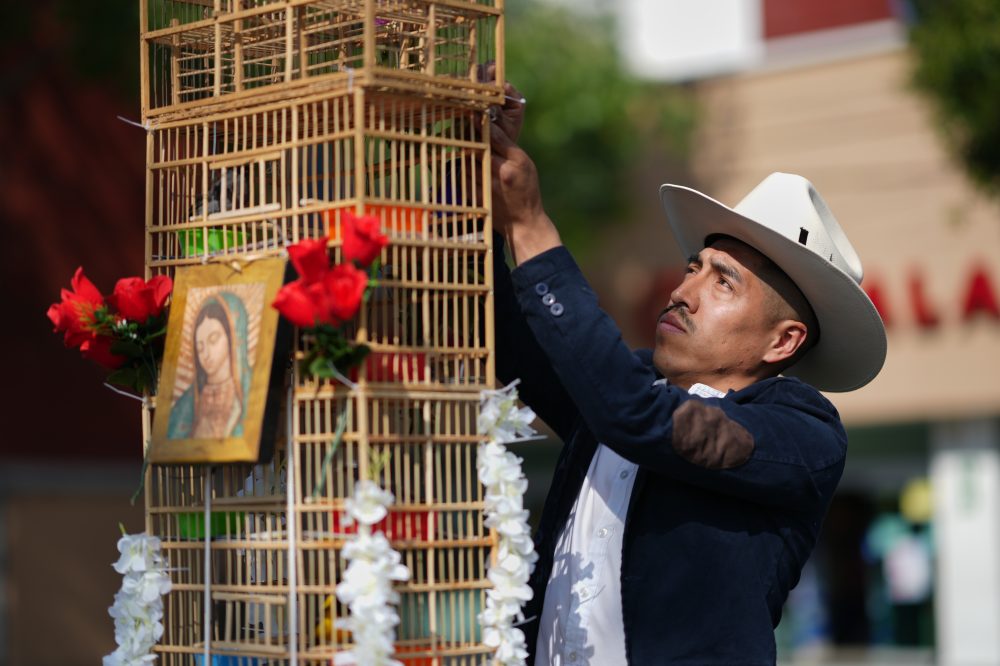

SAN BARTOLO MORELOS, Mexico (AP) — Cruz Monroy has spent over three decades navigating the streets of a small community near Mexico’s capital city, balancing towering structures of tiny cages containing colorful birds.
The songs of crimson cardinals, emerald and sapphire parakeets, and vibrant finches provide the soundtrack for “pajareros” — street vendors who sell birds like Monroy.
The practice of marketing birds in towering cage formations, often reaching heights that dwarf the vendors themselves, spans multiple generations. These sellers have remained a constant presence in Mexican marketplaces and represent part of the 1.5 million street vendors operating throughout Mexico.
“Hearing their songs, it brings people joy,” Monroy said, the sounds of dozens of birdsongs echoing over him from his home in his small town outside Mexico’s capital, where he cares for and raises the birds. “This is our tradition, my father was also a bird-seller.”
Each Palm Sunday during the Catholic celebration, hundreds of bird vendors from throughout the nation gather in Mexico City, creating elaborate 10-foot cage displays decorated with vibrant flowers, shimmering tinsel, and pictures of the Virgin of Guadalupe, the country’s beloved patron saint.
These vendors journey for miles on foot through the capital’s streets alongside their families and feathered companions, making their way to the city’s famous basilica.
However, the number of pajareros working the streets has steadily declined in recent times due to increasing government regulations and harsh opposition from animal welfare organizations, who label the practice as cruelty and illegal wildlife trade.
Monroy and fellow vendors maintain they avoid capturing prohibited species like parrots and other birds banned by Mexican officials — who classify tropical varieties as “wild birds, not pets” — and instead often raise their own birds while providing proper care. Nevertheless, Monroy acknowledges that within his own family, this time-honored practice is fading away.
Facing pressure from officials and growing opposition, he hopes his children will pursue more reliable employment opportunities.
“Because of the restrictions, harassment by certain authorities, many friends have left selling birds behind,” Monroy said. “For my children, it’s not stable work anymore. We have to look for other alternatives.”