
Maryland anglers have weathered the bitter cold of January and February, with perhaps only scattered snow patches and hefty heating bills serving as reminders of winter’s grip. Ice fishing enthusiasts celebrated the frigid conditions, finding excellent angling opportunities across numerous western Maryland reservoirs.
Fishermen should be aware that most Maryland tidal waterways are now off-limits for catch-and-release striped bass fishing. These fish are beginning their migration into spawning areas this month and require protection from the stress of catch-and-release activities in the low-salt waters of tidal rivers. The Maryland DNR website provides guidance on which zones remain open or closed for striped bass catch-and-release fishing.
Weekly Outlook: March 4 – March 10:
Anglers can anticipate cool, bright fishing conditions with relatively steady weather patterns across Chesapeake Bay waters throughout the week. A slight possibility of snow exists for Friday. According to NOAA monitoring stations, main Bay surface temperatures currently register in the upper 40s. Warmer bay waters can be located in deeper sections of river mouths and main Bay locations. River temperatures run slightly cooler, hovering around the low 40s.
Maryland’s salt levels remain somewhat elevated compared to typical conditions for this season. Oxygen levels throughout the main Bay and Maryland’s tributary systems are adequate down to the bottom. The week will feature stronger than normal tidal movements due to the December 4-5 full moon.
Upper Chesapeake Bay
The lower Susquehanna River showed murky conditions over the past weekend with water temperatures steady at 40 degrees. Large coves near the North East River mouth and Charlestown still contain substantial ice sections that are rapidly breaking up. Fishermen were observed anchoring in the lower Susquehanna targeting blue catfish and yellow perch. Both species are concentrated in deeper channel areas. Cut bait or scented offerings will attract blue catfish. Since yellow perch are holding in deep water, a two-hook dropper setup with small minnows proves most effective.
Throughout upper Bay tidal rivers, yellow perch can be located in deeper waters within the upper river sections. Casting Beetle-spin style lures, shad darts, or small soft plastics works well in these transition zones below spawning areas. Chain pickerel also inhabit these locations near submerged timber, responding to various spinners, paddletails, and spoons. The Bush, Sassafras, Chester, and Magothy rivers provide excellent exploration opportunities for pre-spawn yellow perch.
Middle Bay
The Choptank River shows potential for anglers this week despite quite cold water temperatures. Cambridge area readings recently hit 38.5 degrees, while Denton and Hillsboro waters measured 41 degrees. Anglers will discover yellow perch staging in deeper waters, miles downstream from spawning locations. Blue catfish occupy channels from Cambridge upstream past Denton. Cold conditions don’t create ideal circumstances for blue catfish, but they will take bait. Yellow perch remain deep, making lip-hooked minnows or small soft plastic jigs worked slowly near bottom the preferred approach.
Numerous upper sections of western shore tidal rivers provide excellent chain pickerel fishing. Targeting submerged wood along shorelines with paddletails or spinners delivers exciting action. Single inline hooks help minimize gill damage to chain pickerel intended for release.
Lower Bay
Lower Bay anglers have several choices this week for catch-and-release striped bass fishing. The warm water discharge at Calvert Cliffs Nuclear Power Plant consistently attracts both anglers and striped bass during March’s cold weather. Drifting through the discharge current while jigging with large soft plastics can provide entertaining catch-and-release opportunities. Bay temperatures remain cold, making school-sized striped bass reluctant to show interest in jigs. Maryland’s tidal rivers are now closed to catch-and-release fishing, though the tidal Potomac River remains open.
It’s still early for anticipated spring runs of yellow perch, white perch, and hickory shad, but conditions can change rapidly. Yellow perch are staging in transition areas below spawning zones and can be found holding deep. Dropper rigs using minnows or small plastic jigs effectively target them.
Blue catfish fishing represents a worthwhile pursuit this week. The Nanticoke River in the Marshyhope/Sharptown area contains abundant blue catfish, concentrated in deeper channel waters. The tidal Potomac holds numerous blue catfish, with the largest specimens often found in deep channel waters near Fort Washington.
Anglers will observe yellow perch staging throughout many regional tidal rivers on both eastern and western bay sides this week. The Wicomico, Pocomoke, and Marshyhope represent Eastern Shore options. The Patuxent, Wicomico rivers, and Mattawoman Creek offer western bay alternatives.
Freshwater Fishing
Put-and-take trout management waters have drawn significant angler interest over the past month. The trout stocking program has experienced exciting modifications based on angler survey feedback. Eastern, southern, and central region trout management waters receive priority stocking during February and March when water temperatures favor trout. Western counties of Allegany and Garrett will receive trout stockings from March through May since those waters maintain cooler temperatures longer.
A new monthly schedule is now available on the trout stocking website. Some trout stocking efforts faced delays due to ice conditions. The most exciting development for trout anglers is the program’s expectation to stock 26% more trout in 2026 than in 2025, thanks to increased production. The Albert Powell trout hatchery will receive major improvements to facilitate expanded trout production for the stocking program.
Mark calendars for the annual Youth-Only Trout Fishing Day on March 21 from 6:30 a.m. until 10 p.m. Closure 1 management waters will be open exclusively to young anglers under age 16, providing optimal trout fishing opportunities. The daily limit for young anglers will be two trout per child (brook trout excluded). Traditional opening day for all closure 1 and 2 trout waters arrives Saturday, March 28.
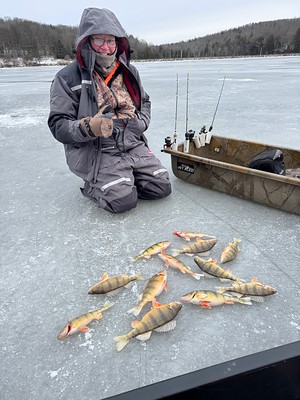
Many ice fishing enthusiasts enjoyed their sport during February on numerous western region reservoirs, catching various fish species. Yellow perch and bluegill sunfish proved popular targets. Piney Reservoir received saugeye, a walleye-sauger hybrid introduced by biologists to better manage yellow perch populations. Saugeye tolerate warmer waters much better and have proven highly successful, offering anglers an exciting and flavorful catch.
With ice retreating from most areas, anglers can anticipate fishing for chain pickerel and crappie in upper tidal river reaches and impoundments statewide. Casting various lures near submerged structure for chain pickerel remains a cold-water favorite. Crappie can be found near submerged brush, fallen treetops, and marina docks.
Atlantic Ocean and Coastal Bays
Ocean City boats have been transporting anglers to offshore wreck and reef sites for outstanding tautog fishing. The 2026 tautog season continues through May 15 with a four-fish daily limit per angler. The season closes May 16 through July, reopening through October 31 with a two-fish daily limit. From November 1 through December 31, the daily limit returns to four fish per angler.
Maryland’s black sea bass season remains closed until May 15, but boat captains made extended runs to Virginia’s offshore waters during Virginia’s February bonus black sea bass season. Anglers returned to Ocean City docks with impressive deep-water black sea bass catches.