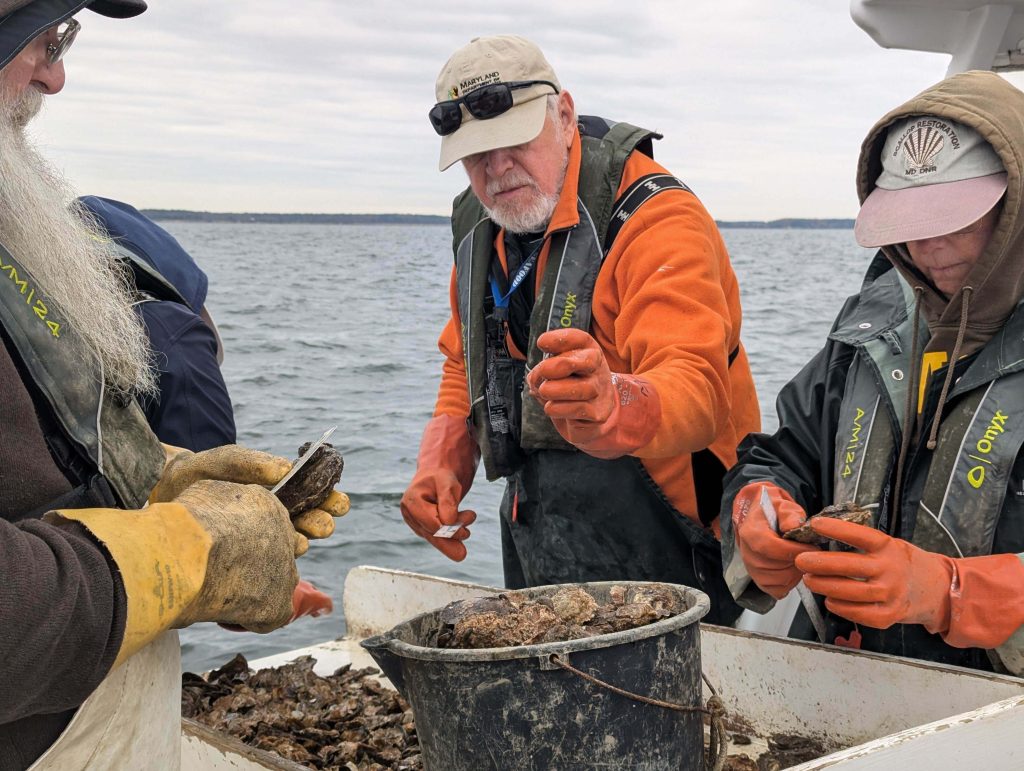

Maryland Governor Wes Moore revealed today that the state’s oyster population experienced unprecedented growth in 2025, with reproduction rates soaring to levels not seen in nearly three decades. The Maryland Department of Natural Resources reported that young oyster concentrations reached nearly six times the historical average, representing the second-highest numbers ever documented in four decades of monitoring.
“Oysters are the bedrock of the ecosystem in the Chesapeake Bay and provide economic opportunities for communities throughout the state,” Moore stated. “Maryland is now seeing the best news for our oysters in decades; our robust and growing oyster population will help make sure we pass our Bay along to future generations as an heirloom—both as an economic driver for our seafood industry and for the environmental health of our waterways.”
The survey findings mark a significant milestone in Chesapeake Bay restoration efforts. Scientists documented that Maryland’s oyster populations are expanding across state waters at unprecedented rates, while death rates and disease levels remain minimal.
Key findings from the annual assessment reveal remarkable statistics. Researchers counted an average of 250 juvenile oysters per bushel at primary monitoring locations, the highest reproductive success recorded since 1997 and more than triple the strong reproduction seen in 2023. The historical average stands at just 42.2 young oysters per bushel.
The study also documented the second-widest distribution of juvenile oysters since records began in 1985, trailing only the 1991 season. Certain areas showed exceptional concentrations, with Broad Creek producing 3,600 young oysters per bushel on two underwater bars and the St. Marys River restoration area yielding more than 2,100 per bushel.
Oyster death rates dropped to the third-lowest levels since 1985, continuing a sharp decline driven by reduced disease pressure. The presence and severity of Dermo disease reached among the lowest levels in 36 years during 2025, while preliminary data shows minimal occurrence of MSX, another major oyster ailment affecting the Bay.
State shellfish experts calculated that total oyster biomass—the combined weight of all oysters in Maryland waters—reached the highest point in 33 years of measurements. Current biomass exceeds the devastating 2002 low point by more than five times, when disease outbreaks decimated oyster populations.
Available oyster habitat also peaked, with the three-year average from 2025 matching the highest levels recorded in 21 years of hard-surface habitat monitoring by state biologists.
“This has been an exceptional year for the oysters of the Chesapeake Bay,” declared Maryland Department of Natural Resources Secretary Josh Kurtz. “In the past year, we learned that the state’s oyster populations have tripled in two decades and we also wrapped up major projects at our oyster restoration sanctuaries. Now we’re finding that oysters are reproducing at levels we haven’t seen in nearly 30 years. For an important species that’s struggled for many decades, these are great signs of recovery.”
Oysters represent a crucial economic driver for Maryland’s fishing industry, ranking second only to crabbing in waterfront value. Oyster harvesting has generated an average of more than $18 million annually over the past five years, with watermen collecting an average of 475,000 bushels annually from 2021 to 2025.
Earlier research by the Maryland Department of Natural Resources and the University of Maryland Center for Environmental Science found that Maryland oyster populations had more than tripled since 2005, reaching over 7.6 billion adult oysters by 2023. In August, Governor Moore announced Maryland had finished initial restoration work on an ambitious project to rebuild oyster populations and habitats across five rivers by 2025.
“The continued strong reproduction and low mortality rates are great news for Maryland’s oyster population,” said University of Maryland Center for Environmental Science President Fernando Miralles-Wilhelm. “This continues the trend seen over the last 20 years and should fuel future increases in the number of oysters.”
The positive survey results come during challenging times for the Chesapeake Bay oyster market. This past winter, market conditions, weather impacts, and other factors caused market declines at the beginning of the 2025-2026 season. Frozen waterways prevented oyster boats from harvesting for extended periods, and the commercial oyster industry has experienced reduced market demand.
To assist watermen in recovering lost harvesting opportunities, the Maryland Department of Natural Resources extended this year’s commercial harvest season by two weeks. In February, the governor also requested a federal disaster declaration for the oyster fishery to support the industry’s long-term viability.
The Maryland Department of Natural Resources, working with the Maryland Department of Health and the Maryland Department of the Environment, supervises the safety and quality of commercial shellfish production using strict national standards under the National Shellfish Sanitation Program to assess growing waters for commercial shellfish harvesting.
Oysters reproduce during summer months, with their larvae floating freely in the water before settling on hard surfaces—typically other oyster shells—where they develop and remain for life. Each fall, Maryland Department of Natural Resources scientists survey hundreds of locations and count the juvenile oysters growing on oyster shells, rocks, and other materials.
“These results show what’s possible when Maryland sustains its commitment to oyster restoration and responsible fishery management,” said Oyster Recovery Partnership Executive Director Ward Slacum. “Following the milestone of completing restoration in five Chesapeake tributaries, it’s encouraging to see such strong reproduction across the Bay. ORP is proud to work alongside the state and our partners, and we remain committed to building on this momentum to strengthen oyster reefs, support the seafood industry, and restore the health of the Chesapeake Bay.”
Juvenile oysters typically require one to three years to mature into adults. A fully grown oyster processes gallons of water each day, improving water quality and clarity by consuming algae. Oysters create extensive reef systems that serve as vital habitat for fish, crustaceans, and other marine species.
Maryland agencies have conducted annual underwater surveys of oyster reefs since 1939, representing one of the world’s longest-running monitoring programs of its type. The current standardized survey format has operated since 1985.
The Maryland Department of Natural Resources presented the preliminary survey findings to the Oyster Advisory Commission this evening. The complete survey report and detailed results will be published on DNR’s fall oyster survey website.