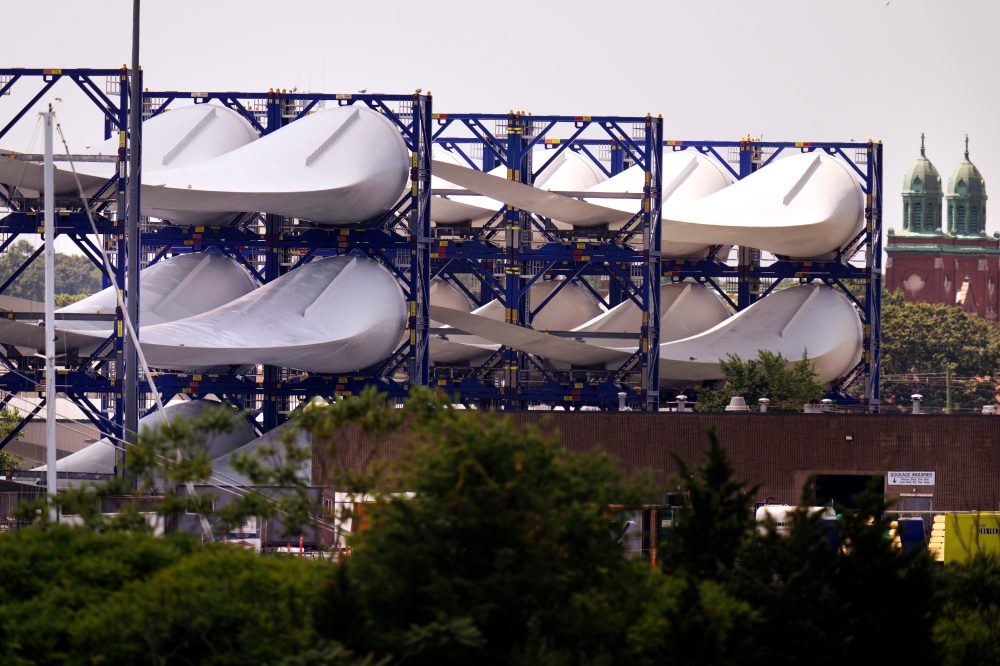

A significant offshore wind energy project off the Massachusetts coast has reached completion, becoming the first major installation to finish construction while President Donald Trump holds office.
The final turbine blades were installed Friday evening at the Vineyard Wind facility, according to project spokesman Craig Gilvarg, who announced the milestone Saturday.
The completion comes despite Trump’s well-documented opposition to wind energy development. The president has frequently expressed his disdain for wind power and has stated his intention to prevent any new “windmills” from being constructed. Just days before Christmas, the Trump administration ordered construction to stop on five major offshore wind projects along the East Coast, including Vineyard Wind, claiming national security threats. Project developers and state governments challenged these decisions in court, with federal judges permitting work to continue after determining the administration failed to demonstrate an immediate security risk warranting construction halts.
Among the five affected projects, Revolution Wind achieved another milestone Friday by delivering electricity to New England’s power grid for the first time. The facility will gradually increase output over the coming weeks until reaching full capacity.
While Revolution Wind is just beginning power delivery, Vineyard Wind has been supplying electricity for more than a year as individual turbines came online. The facility represents a partnership between Avangrid and Copenhagen Infrastructure Partners, positioned 15 miles south of Martha’s Vineyard and Nantucket. Its 62 turbines will produce 800 megawatts of electricity, sufficient to supply approximately 400,000 households with clean energy.
Massachusetts Attorney General Andrea Joy Campbell has emphasized that completing this project is crucial for the state to reduce energy costs, accommodate growing electricity demand, achieve environmental objectives, and maintain thousands of well-paying employment opportunities.
The Trump administration has particularly scrutinized Vineyard Wind following a blade malfunction incident. In July 2024, during peak tourism season, fiberglass pieces from a damaged blade broke off and washed ashore on Nantucket beaches. Turbine manufacturer GE Vernova agreed to a $10.5 million settlement to reimburse local businesses for their losses.
The Vineyard Wind project originated in 2017 when developers filed state and federal applications for the offshore installation. Massachusetts had already committed to wind energy by mandating its utilities seek proposals for up to 1,600 megawatts of offshore wind capacity by 2027. The project nearly faced termination when federal officials delayed approval by withholding a crucial environmental impact assessment in 2019. Democratic Representative William Keating of Massachusetts accused the Trump administration of deliberately obstructing the renewable energy initiative just as it neared approval.
The Biden administration approved the project in 2021 as part of its strategy to expand offshore wind development to address climate change. Ground-based construction commenced in Barnstable, Massachusetts.
The United States’ inaugural offshore wind installation began operating near Rhode Island’s Block Island in 2016 during President Barack Obama’s final year. However, with only five turbines, it did not qualify as a commercial-scale operation. The country’s first full-scale commercial offshore wind facility officially launched in March 2024 under President Joe Biden’s administration. Danish developer Orsted partnered with utility company Eversource to construct the 12-turbine South Fork Wind project, located 35 miles east of Montauk Point, New York.
On his first day back in office, Trump initiated a series of executive actions to reshape the nation’s energy strategy, prioritizing oil, natural gas, and coal development. White House spokesperson Taylor Rogers stated Friday evening that Trump “reversed course on Joe Biden’s costly green energy agenda that gave preferential treatment to intermittent, unreliable energy sources and instead is aggressively unleashing reliable and affordable energy sources to lower energy bills, improve our grid stability and protect our national security.”