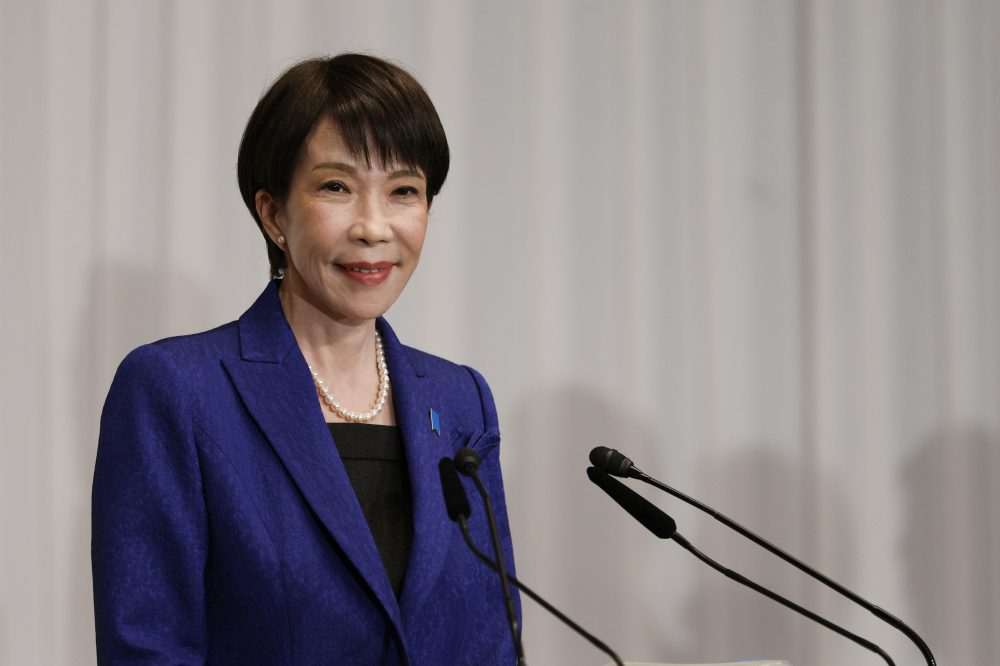

TOKYO (AP) — Following a decisive electoral victory last week, Japanese Prime Minister Sanae Takaichi is preparing to leverage her mandate to shift the nation’s policies in a conservative direction. Parliament will formally reinstall her as prime minister on Wednesday, when she’ll also establish her second Cabinet.
While the parliamentary vote represents a procedural step, Takaichi plans to utilize the occasion’s symbolic importance to strengthen her Liberal Democratic Party’s position. The party now controls a commanding two-thirds majority in the lower parliamentary chamber, which holds greater authority than its upper counterpart.
Takaichi’s agenda encompasses expanding military strength, increasing government expenditures, and reinforcing traditional social policies.
The Liberal Democratic Party’s control over two-thirds of the lower house’s 465 seats enables them to secure leadership roles on key committees and override legislation blocked by the upper chamber, where their ruling coalition doesn’t hold majority control.
Among Takaichi’s priorities are enhancing Japan’s defense capabilities and weapons exports, implementing stricter immigration measures, maintaining male-exclusive imperial succession protocols, and upholding contested customs that compel women to change their family names after marriage.
While Takaichi aspires to amend the American-authored postwar pacifist Constitution, immediate pressures including inflation concerns, demographic decline, and security threats may postpone this constitutional revision.
Her most pressing challenge involves tackling inflation and stagnant income growth, along with advancing a budget proposal to fund these initiatives — legislation postponed due to the recent election cycle.
Takaichi has outlined a two-year reduction in sales taxes on food items to alleviate financial burdens on households.
Policy analysts warn that her expansive fiscal approach could potentially increase inflation and hinder efforts to reduce Japan’s substantial national debt burden.
Takaichi is positioning herself for an important meeting next month with U.S. President Donald Trump, who is scheduled to travel to Beijing in April.
Trump supported Takaichi before Japan’s election, and he likely anticipates her fulfillment of a $550 billion investment commitment Japan made in October.
Japan also faces expectations to boost its annual military spending.
“Japan will keep spending more and more for the U.S. … The question is whether the public wants her to speak out against Trump or be obedient to ensure Japanese security,” said Masato Kamikubo, a Ritsumeikan University professor of policy science. “For China, it’s simple. Japanese people want her to be tough.”
In November, Takaichi indicated Japan might respond if China takes military action against Taiwan, the independently governed territory Beijing considers its own. This statement prompted diplomatic and economic retaliation from Beijing.
Numerous Japanese citizens, frustrated with China’s increasing aggression, supported her Taiwan remarks.
Political experts suggest Takaichi’s substantial electoral success may encourage her to adopt a more confrontational approach toward China.
Shortly after her election victory, Takaichi announced efforts to build support for visiting Tokyo’s disputed Yasukuni Shrine. Neighboring countries view such visits as demonstrating Japan’s insufficient regret for its wartime actions.
Takaichi has committed to updating security and defense strategies by December to strengthen Japan’s military capacity, removing restrictions on deadly weapons exports and further departing from postwar pacifist ideals. Japan is also exploring nuclear-powered submarine development to enhance offensive capabilities.
Takaichi seeks to enhance intelligence operations and create a national agency for closer collaboration with Washington and defense allies including Australia and Britain.
She endorses a disputed anti-espionage law primarily targeting Chinese intelligence operatives. Some analysts worry it could compromise Japanese civil liberties.
Takaichi has suggested stricter immigration and foreign national policies, appealing to rising public frustration in Japan.
Her administration approved stricter permanent residency and citizenship requirements in January, along with measures preventing unpaid taxes and social insurance obligations.
Takaichi backs the imperial family’s male-only succession tradition and opposes same-sex marriage recognition.
She also rejects modifying the 19th-century civil code that would permit separate surnames for married couples, preventing women from feeling pressured to abandon their family names.
In what rights advocates describe as an effort to obstruct a dual-surname system, Takaichi proposes legislation expanding maiden name usage as aliases instead.