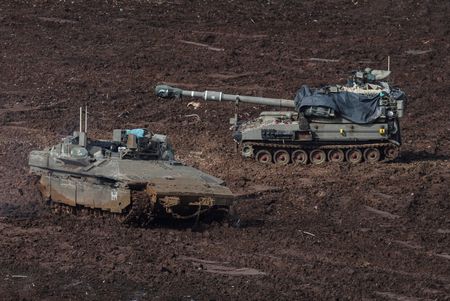

Israeli forces launched military strikes against Iran and Lebanon on Saturday while the United States announced plans to deploy thousands of additional Marines to the Middle East, as President Donald Trump criticized NATO partners for their unwillingness to assist in reopening the Strait of Hormuz.
The death toll has exceeded 2,000 since U.S. and Israeli forces began their offensive against Iran on February 28, with growing American concerns about the conflict’s potential expansion as it continues into its fourth week.
Saturday’s Israeli operations targeted Hezbollah positions in Lebanon’s capital city, marking an escalation in airstrikes against the Iranian-supported group. This represents the most significant expansion of the Iranian conflict since Hezbollah began attacking Israel on March 2 in solidarity with Tehran.
Israeli military officials confirmed they also conducted fresh strikes against Iranian targets Saturday, including locations within Tehran itself.
Critical energy facilities throughout Iran and neighboring Gulf nations have come under attack, causing oil prices to spike 50% since hostilities began and raising fears of worldwide economic disruption.
United Airlines responded to the crisis by announcing a 5% reduction in scheduled flights for the second and third quarters, anticipating continued elevated fuel costs.
The strategically important Strait of Hormuz, which handles approximately one-fifth of the world’s oil and liquefied natural gas shipments, has remained largely inaccessible to commercial vessels since the U.S.-Israeli military campaign commenced.
President Trump criticized American allies as “cowards” on Friday for refusing to participate in efforts to reopen the waterway while combat operations continue.
Multiple allied nations, who were not briefed prior to the conflict’s start, have committed to joining “appropriate efforts” to restore safe maritime passage through the strait. However, Germany and France have insisted that fighting must cease first. German Chancellor Friedrich Merz indicated he would discuss the situation with Trump over the weekend.
Iran has signaled willingness to permit Japanese-affiliated ships to transit the Strait of Hormuz, according to Kyodo News reports Saturday, citing Iranian Foreign Minister Abbas Araqchi. Japan relies on the strait for approximately 90% of its oil imports.
In an attempt to boost supply and reduce prices, the Trump administration announced a 30-day sanctions waiver allowing the sale of 140 million barrels of Iranian oil currently held on tankers due to the conflict. The administration had previously implemented similar relief measures for sanctioned Russian oil.
Before Saturday’s attacks, Israeli military personnel issued evacuation orders for seven neighborhoods in southern Beirut suburbs. Lebanese casualties have surpassed 1,000 deaths, with more than one million people displaced by Israeli strikes.
Friday saw Israeli forces execute two major bombing campaigns against Tehran and central Iran, while Israel endured several rounds of Iranian missile attacks, according to Israeli military reports.
As Muslims throughout the region began Eid al-Fitr celebrations marking Ramadan’s end Friday evening, and Iranians observed Nowruz, their traditional New Year, Iran’s new Supreme Leader Mojtaba Khamenei released a defiant statement.
Khamenei, who has remained out of public view since an Israeli attack killed his father, Ayatollah Ali Khamenei, on the conflict’s opening day, declared that Iranians had responded with “unity and resistance” and “dealt a disorienting blow to the enemy.”
A U.S. intelligence official, speaking anonymously, suggested Khamenei’s written statement raises concerns about his wellbeing, noting his father traditionally delivered New Year messages via video.
Three U.S. officials informed Reuters Friday that 2,500 Marines, accompanied by the amphibious assault vessel Boxer and supporting warships, would be dispatched to the region, though their specific mission remains undisclosed.
A recent Reuters/Ipsos survey revealed nearly two-thirds of Americans expect Trump to authorize troops for large-scale ground combat, with only 7% supporting such action.
Two officials confirmed no final decision has been made regarding ground troop deployment into Iran. Sources previously told Reuters that potential targets might include Iran’s coastline or the Kharg Island oil export facility.
When questioned Thursday about troop deployment plans, Trump stated he was “not putting troops anywhere,” adding, “If I were, I certainly wouldn’t tell you.”
Trump indicated the United States was approaching its military objectives, which include weakening Iran’s armed forces and preventing nuclear weapons development, and suggested the possibility of reducing military operations.