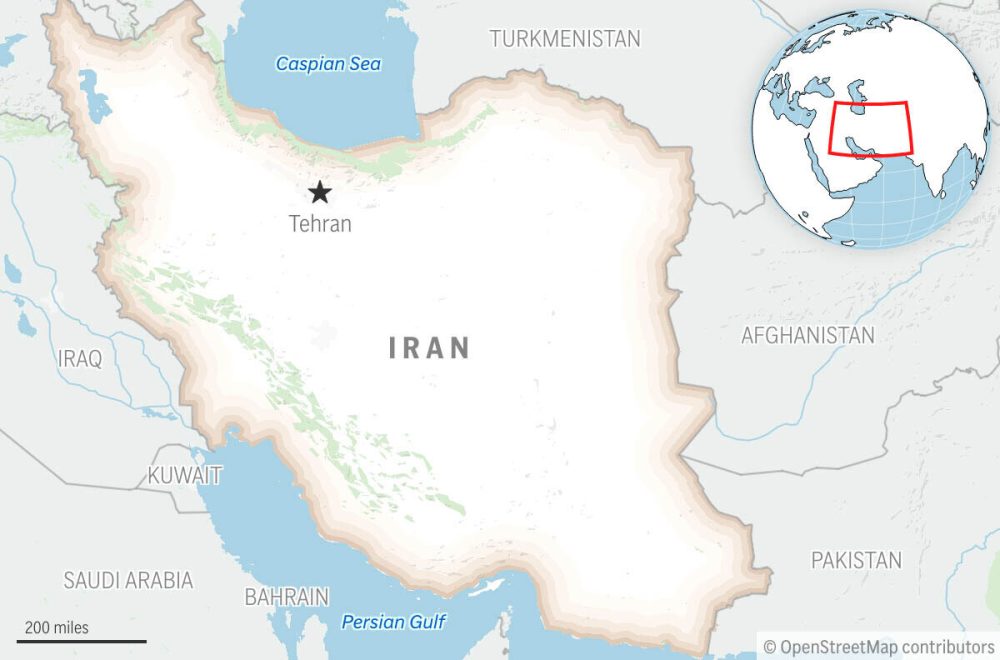

CAIRO (AP) — University campuses throughout Iran’s capital became centers of opposition demonstrations Monday, with eyewitness accounts and online footage showing renewed civil unrest while American military assets position themselves in the region for potential military action.
The campus demonstrations, which saw numerous students voicing backing for Iran’s exiled royal heir from the former monarchy, started over the weekend. Monday witnessed protest activity on no fewer than three university grounds, with one incident resulting in physical confrontations involving the paramilitary Basij force.
Iranian authorities launched a brutal suppression campaign in January targeting widespread demonstrations, resulting in thousands of deaths and the imprisonment of tens of thousands more. President Donald Trump issued threats of military intervention in response before redirecting attention to Iran’s controversial atomic program and demanding negotiations.
American and Iranian representatives plan to conduct another session of indirect negotiations in Geneva this week, with Iran anticipated to present a comprehensive plan for limiting its nuclear activities. The USS Gerald R. Ford, representing the globe’s most massive aircraft carrier, is currently en route to the Middle East to supplement another carrier already deployed.
Iranian officials maintain their atomic program serves entirely civilian purposes and claim no uranium enrichment has occurred since 12 days of combined Israeli and American bombardments last June. The United States and international partners have historically questioned Iran’s intentions regarding nuclear weapons development. Iran has blocked inspections of atomic facilities following extensive bombing campaigns last year.
Country-wide demonstrations began late last year following Iran’s currency collapse under persistent American sanctions targeting the nuclear program. Protesters have demanded the removal of the Shiite religious government that has controlled the nation since the 1979 Islamic Revolution.
Monday’s demonstrations included activity at Sharif University, a prestigious institution in the capital, according to a student witness. The student described how he and fellow classmates assembled outside dining facilities at midday before covering their faces and applauding while chanting during the Muslim prayer call broadcast through speakers.
As participant numbers grew, one student displayed a printed banner featuring the lion-and-sun symbol of the former monarchy, while dozens voiced support for exiled crown prince Reza Pahlavi.
The student reported physical altercations between demonstrators and Basij members, who have historically suppressed opposition activities, as campus security personnel attempted to keep the groups apart.
At the University of Tehran, protest activity occurred during commemorative services for a student killed in previous demonstrations, another student reported. Participants chanted “women, life, freedom” — the rallying cry from 2022 protest movements — and demanded the removal of Supreme Leader Ayatollah Ali Khamenei.
The student noted that university security did not intervene. Both student sources requested anonymity citing safety concerns.
Video footage reviewed and confirmed by The Associated Press documented additional protests at Al Zahra University, where female students assembled and voiced pro-Pahlavi messages.
Measuring Pahlavi’s actual support within Iran remains challenging, though some of the largest demonstrations in years erupted in early January following his public call for street protests. Trump issued military action threats regarding protester killings and potential mass executions as authorities worked to eliminate those demonstrations.
The United States-based Human Rights Activists News Agency reports at least 7,015 deaths during recent protest activities and government crackdowns, including 214 government personnel. The organization has demonstrated accuracy in documenting casualties during previous Iranian unrest periods and uses activist networks within the country to confirm deaths. The casualty count continues increasing as the group verifies information.
Iran’s government provided its sole official death count from earlier protests on January 21, claiming 3,117 fatalities. Iran’s religious leadership has historically undercounted or failed to report deaths from past civil unrest.
The Associated Press cannot independently verify casualty figures, partly due to significant disruptions affecting Iran’s communication infrastructure.