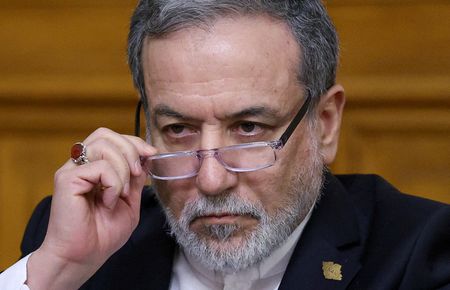

Iran’s Foreign Minister Abbas Araqchi, whose father sold carpets in Isfahan, has likened his country’s diplomatic approach to marketplace haggling – a method that demands “patience and great time.”
However, the clock may be ticking for this seasoned diplomat as he confronts the most crucial talks of his lengthy career, working to secure a nuclear agreement that could prevent military strikes threatened by President Donald Trump.
Since becoming Iran’s chief diplomat in 2024, Araqchi has drawn on his experience from the 2015 nuclear negotiations with global powers – the same accord that Trump abandoned in 2018.
Sources within Iran’s political circles indicate that Supreme Leader Ayatollah Ali Khamenei has complete trust in Araqchi, with many considering him among the Islamic Republic’s most influential foreign ministers to date.
Iran’s religious leadership appears to have faith in his diplomatic skills as American military presence increases across the Middle East, coming just eight months after U.S. forces struck Iranian nuclear facilities.
In his 2024 publication “The Power of Negotiation,” Araqchi explained that Iranians’ diplomatic method is often called “the style of the bazaar,” which involves “continuous and persistent bargaining.” He included a personal note about his deceased mother’s skill at negotiating prices.
However, he warned against excessive demands, writing: “When you sell snow under the sun, bargaining more than necessary is a loss.”
MILITARY BUILDUP ‘CANNOT PRESSURIZE US’
During nuclear discussions more than ten years ago, Araqchi built his reputation as an expert in challenging negotiations. The original agreement required Iran to accept strict limits on its nuclear activities in return for lifting economic sanctions.
International diplomats who participated in those discussions have characterized him as focused, well-informed on technical matters, and direct in his communication.
Last year, he headed Iran’s team during unsuccessful discussions with the United States before American airstrikes occurred.
The soft-spoken Araqchi participated in Iran’s 1979 Islamic Revolution as a young person and served in the Iran-Iraq conflict during the 1980s before pursuing diplomacy.
A longtime acquaintance described him as composed and patient, while also being argumentative and determined.
This past Sunday, Araqchi expressed optimism about achieving “a diplomatic solution based on a win-win game.”
During his CBS News “Face the Nation” appearance, he stated: “So there is no need for any military buildup,” emphasizing that military pressure “cannot pressurize us.”
KEEPS DISTANCE FROM ‘POLITICAL FRAYS AND INFIGHTING’
Trump has shown impatience with negotiators’ inability to reach an agreement. “They want to make a deal, but we haven’t heard those secret words ‘We will never have a nuclear weapon’,” Trump declared during Tuesday’s State of the Union address.
Iran has consistently rejected accusations of pursuing nuclear weapons.
Araqchi spearheaded failed attempts to revive the 2015 agreement during President Joe Biden’s 2021-25 term, until a more hardline official took his place.
Shortly after, he received appointment as secretary of Iran’s Strategic Council on Foreign Relations – an important advisory group to Khamenei, bringing him closer to Iran’s highest decision-maker.
Born in Tehran during 1962 to an affluent religious merchant household, Araqchi was just 17 when the Islamic Revolution swept through Iran, inspiring radical passion among many young people.
Motivated by the removal of the American-supported Shah’s royal government and hopes for transformation, he joined the Islamic Revolutionary Guard Corps, Iran’s elite military force, to serve in the 1980-88 conflict with Iraq.
He began working at the foreign ministry in 1989 and held ambassador positions in Finland from 1999 to 2003 and Japan from 2007 to 2011, before taking the foreign ministry spokesperson role in 2013.
After earning his political science doctorate from Britain’s University of Kent, he became deputy foreign minister in 2013.
As a committed Muslim, Araqchi has worked under various presidents with approaches ranging from moderate to conservative.
Though he maintains insider status with strong connections to Khamenei, Araqchi has stayed away from “political frays and infighting” among different groups, according to a high-ranking Iranian official.
“He has good relations with the Supreme Leader, the Revolutionary Guards and all political factions in Iran,” the official explained.