
MANCHESTER, Iowa — The state of Iowa serves as a striking illustration of water contamination challenges facing the Midwest region.
As a major farming state with numerous waterways, agricultural drainage containing nitrates and phosphorus flows from fertilized fields and livestock operations into local rivers and streams. This contamination makes Iowa a significant source of pollution feeding an oxygen-depleted zone in the Gulf of Mexico.
For generations, locals have dealt with polluted waterways. The contamination impacts both community health and recreational water activities during summer months.
Toxic algae growth creates hazardous beach conditions, while sediment runoff leaves water feeling unpleasant. Bacterial contamination, sometimes from human waste, prevents young people from using streams. State monitoring in 2024 found over half of surveyed river, stream and lake sections failed to meet safety standards for recreation, consumption or marine ecosystems.
Despite being inland, Iowa’s character is defined by major waterways like the Missouri and Mississippi Rivers that border the state. The region features scenic lakefront areas and quality trout fishing locations. These water bodies represent some of the state’s limited natural recreation areas.
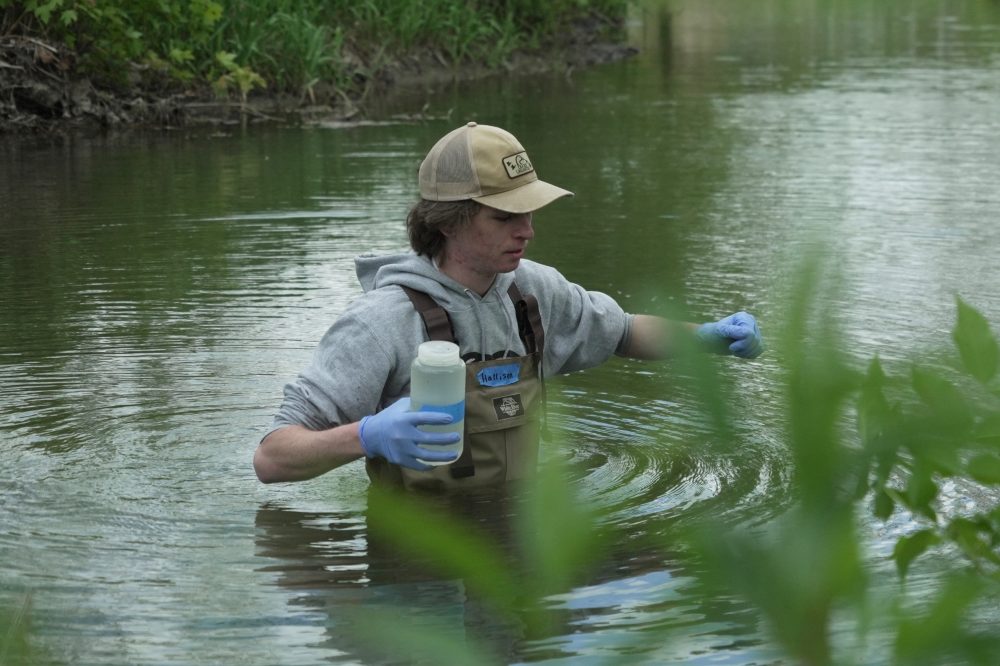
During a recent outing, Hannah Ray J Childs navigated her kayak through Maquoketa River rapids, using her paddle to lift her boat’s bow skyward. She enjoys performing whitewater kayaking stunts that submerge her completely — these waters provided her with a sense of belonging.
However, waterborne illness has affected her, prompting her to use protective nose and ear gear to reduce exposure. Many people question her decision to enter the water at all.
“People’s first response when I tell them that I like to kayak and be upside down in the river,” Childs said, “is, ‘Ew, that’s disgusting. Why would you do that?’”
While she believes the risk is acceptable, water quality issues have become too concerning for others to feel safe.
Mary Swander, a 75-year-old theater director and former state poet laureate, recalls fondly learning water sports and swimming outdoors during her youth near waterways. Summer meant water play, while winter brought ice skating opportunities.
“I had a little group of friends and we played hooky once, and we all got our swimsuits and drove over to Lake MacBride and spent the whole day in the lake, in the water, swimming, and we had a whole picnic,” she said.
Swander now stays away from water following negative encounters. During one state park visit, the water felt unusual — sticky to the touch. On another occasion, a park official warned her canoeing party against any water contact.
“I was like, ‘Well, what the hell are we doing out here, then?’” she said.
Bacterial pollution represents the primary factor making waterways unusable. Sources include livestock, wildlife and other animals, though human sewage creates the most significant issues in certain areas. Specialists indicate heavy rainfall poses major risks by washing away animal waste — a threat that climate change will worsen — making sewage system improvements and septic repair essential.
Nutrients from livestock waste and farm fertilizers also drive the contamination crisis. Extensive farmland uses underground plastic drainage systems — known as tile drainage — to rapidly channel water toward streams. These nutrients fuel algae growth, resulting in lake warnings and endangering water supplies.
Environmental advocates view the state as unable to regulate agricultural interests effectively.
Minnesota has required protective vegetation along waterways to limit runoff, while Iowa has chosen an alternative strategy. The state depends on agriculture and natural resource agencies, working with Iowa State University, to create voluntary programs including reduced fertilizer application, better crop practices and wetland restoration to decrease runoff.
Farmers also face significant pressures. Input costs have increased dramatically recently, with fertilizer expenses rising following conflict in Iran, according to Aaron Lehman, president of the Iowa Farmers Union, which advocates for family operations and environmental practices.
“There’s a lot less control that farmers have,” Lehman said.
Additionally, producers may wait years to see financial benefits — if any — from adopting improved methods. Requests for federal and state assistance exceed available resources, according to Rachel Curry, an agriculture educator at the University of Illinois Extension.
Someone once described the situation to her this way: Modifying agricultural practices resembles steering a cruise ship — progress takes time, but with proper support, change is achievable.