
WASHINGTON — Cabinet members usually begin their day in relative anonymity and, fortunately, conclude it the same way.
However, during major government gatherings such as President Donald Trump’s State of the Union address Tuesday evening, one official is deliberately stationed elsewhere to guarantee someone in the presidential succession line remains safe.
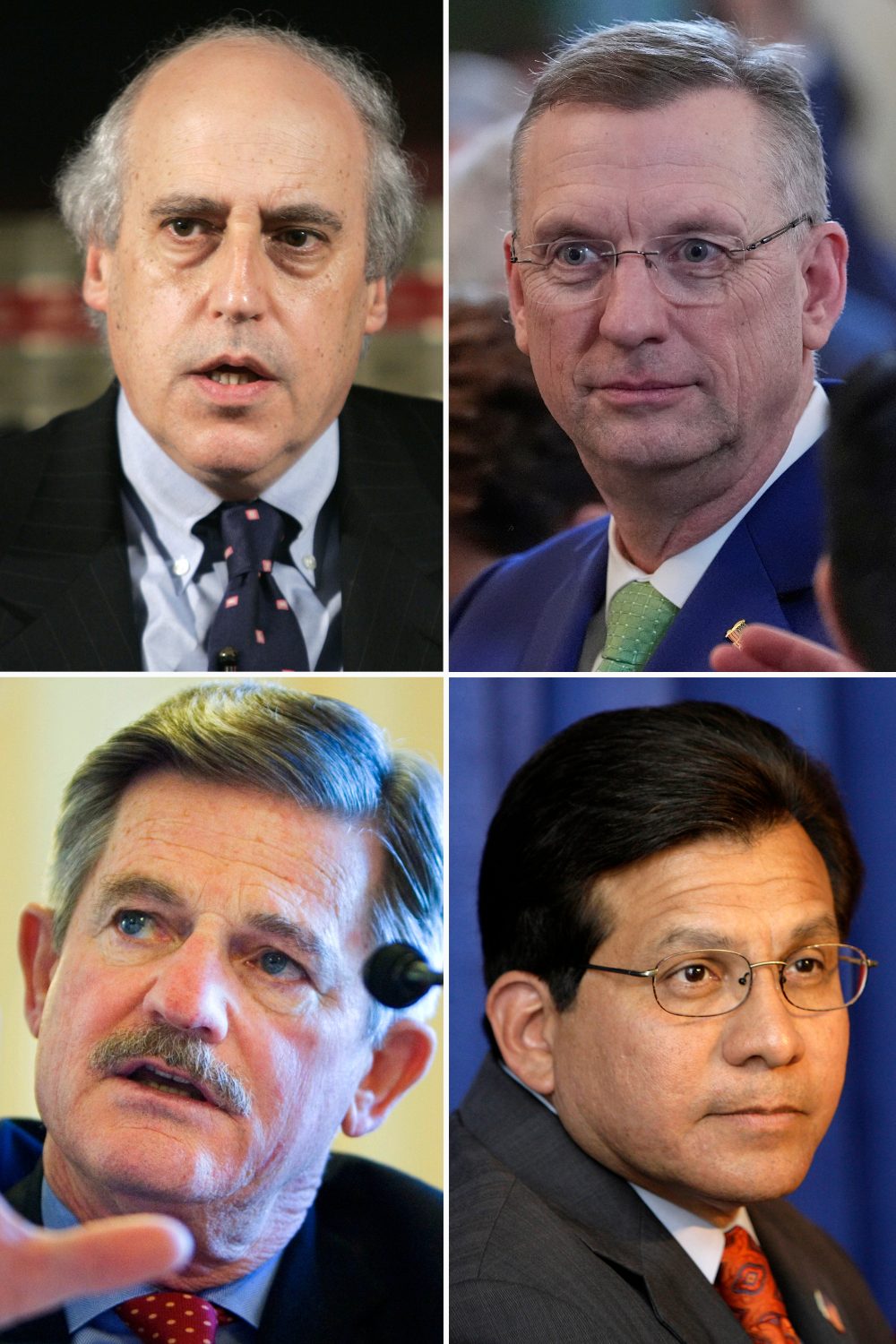
This backup plan for catastrophic scenarios that could eliminate other leaders originated during the Cold War era. The concept gained popular attention through books and the ABC television show featuring Kiefer Sutherland that ran from 2016 to 2019. During Trump’s congressional address last March, Veterans Affairs Secretary Doug Collins served in this capacity.
The administration has not yet revealed who will assume this responsibility this time.
Serving as the backup leader creates intense moments and sobering reflections about potentially being thrust into the presidency amid unimaginable tragedy — although the actual experience typically lacks the dramatic elements seen in fictional depictions, according to those who have fulfilled this duty.
“It sharpens your focus. It also strengthens your hope that such circumstances never arise,” said James Nicholson, who served as President George W. Bush’s veterans affairs secretary and backup during the 2006 State of the Union, regarding the possibility of ascending to the presidency following a catastrophic incident.
Author and historian Garrett M. Graff explained that this backup concept has long fascinated Americans because it merges public intrigue with danger and the appealing notion of an ordinary person suddenly becoming president.
“The concept is, you’re simply a regular Cabinet member, and then disaster strikes and suddenly, you’re leading the United States,” explained Graff, who wrote “Raven Rock: The Story of the U.S. Government’s Secret Plan to Save Itself — While the Rest of Us Die.”
Before the September 11, 2001, terrorist attacks, backup officials enjoyed greater flexibility in choosing their locations outside Washington. The late Bill Richardson, President Bill Clinton’s energy secretary, was selected in 2000 and simply rescheduled a planned weekend visit to Oxford, Maryland, a coastal community approximately 80 miles away, to coincide with the State of the Union.
During Clinton’s 1997 State of the Union, Agriculture Secretary Dan Glickman was chosen but found his Wichita, Kansas, hometown too distant, so he opted for New York, where his daughter resided.
“I found it somewhat thrilling. However, I wasn’t anxious about potential dangers,” Glickman recalled. “I don’t believe anyone even advised me to exercise caution.”
Attorney General Alberto Gonzales served as Bush’s backup during the 2007 State of the Union. He remembered White House chief of staff Josh Bolten contacting him days earlier with location alternatives.
Gonzales decided to remain airborne, arriving at what was then Andrews Air Force Base in Maryland to discover “representatives from every major department and agency” prepared to accompany him. They brought substantial binders filled with memoranda and procedural guidelines, prepared for any scenario.
He remembered extensive briefings that possibly continued during Bush’s address, which he viewed from the aircraft.
“During that period, the reality suddenly struck me that if something occurred at the Capitol and everyone perished, I would become president,” Gonzales reflected. “It’s quite sobering. And you question, ‘Could I successfully lead a traumatized nation?’”
In “Raven Rock,” Graff describes how the Carter and Reagan administrations formalized this backup concept due to concerns that Soviet submarines positioned off the Atlantic coast could launch nuclear weapons and destroy Washington with merely 10 minutes’ advance warning.
Starting in April 1980, the White House Military Office assigned the Federal Emergency Management Agency with ensuring succession. An assistant was instructed to advise the president on which official should miss events when all potential successors gathered outside the White House.
Officials continue preparing for major attacks or disasters. The military helicopter that crashed with a regional aircraft near Reagan National Airport in January 2025 was conducting a continuity of government exercise — practicing to maintain federal operations during catastrophes.
The initial public disclosure of a Cabinet member being kept away from a presidential congressional speech involved President Ronald Reagan’s Education Secretary Terrel Bell in 1981. However, Bell’s identity wasn’t revealed until later. Currently, television coverage from the House chamber enables political observers to identify the absent Cabinet member within minutes.
Nicholson said Bush’s chief of staff Andy Card approached him weeks before the State of the Union to serve as the backup. He was well-suited given his agency’s crucial role in continuity exercises due to its extensive network of hospitals and medical facilities nationwide.
Nicholson traveled by helicopter to an undisclosed location revealed only during flight and later sat in a command center, receiving briefings before viewing Bush’s address.
He enjoyed an “excellent” meal, prepared on-site by White House mess personnel, though he couldn’t remember whether it was T-bone steak, prime rib, or something comparable. “It made you realize that, at least if this terrible event occurred, you’d be well nourished,” he remarked.
“The magnitude of that responsibility. You consider, however unlikely it is, this is something you might need to undertake,” Nicholson said about potentially becoming president. Nicholson’s wife attended the State of the Union, meaning if disaster struck, she could be among the casualties, which intensified the burden.
When finished, Nicholson wasn’t requested to brief future backup officials like Gonzales about what to anticipate.
“We don’t maintain a club,” he chuckled. “We should.”
Glickman remembers boarding an Air Force G-3 from Andrews with Secret Service personnel, a military officer and various advisers not typically on his staff. A three-vehicle convoy later transported him from LaGuardia Airport to his daughter’s residence near Union Square.
She wanted to invite friends to watch the speech together, but Glickman refused. “This wasn’t a celebration,” he stated.
However, it wasn’t entirely serious. Glickman said he was informed formal attire wasn’t necessary, so he skipped wearing a suit. Instructions against studying spared him from reviewing briefing materials or learning security procedures.
Following the speech, the Secret Service offered Glickman airport transportation. He declined, explaining his dinner plans with his daughter. When the convoy departed without him during a sleet storm, taxis became scarce — making his return to ordinary life particularly jarring.
“I was theoretically the most powerful person on Earth,” Glickman remembered joking afterward. “And then I couldn’t even hail a taxi.”