
A newborn infant has died from Ebola at a religious orphanage in eastern Congo, underscoring the heightened dangers the deadly virus poses to children during the ongoing outbreak.
The baby, named Buswaza, arrived at the church-operated facility in Bunia after losing her mother in late May. Nuns caring for the infant noticed she had developed a fever, and within several days, the newborn succumbed to what was later confirmed as Ebola.
Following Buswaza’s death, medical staff and caregivers reported that six additional infants at the 69-child orphanage in Bunia became suspected Ebola cases. The city sits in Ituri province, which has become the center of the Democratic Republic of Congo’s current outbreak.
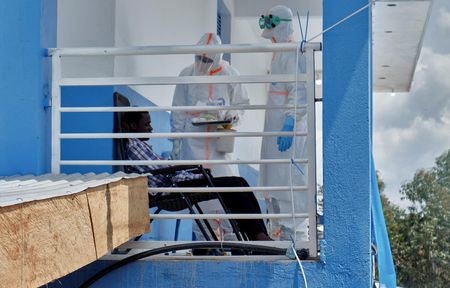
Medical personnel transported the six babies to a hospital facility, where five eventually received negative test results and were released from isolation on Tuesday. Staff wearing complete protective equipment handed the infants over to joyful nuns at the Evangelical Medical Centre (CME).
“We thank the hospital staff, we are very grateful,” said Sister Clarisse, carrying a baby in a pink hooded gown.
However, one infant remains hospitalized with confirmed Ebola – an orphaned triplet girl under one year old who goes by the nickname “Cherie” or “darling,” according to medical professionals and caregivers who spoke with Reuters.
Dr. Freddy Kibwana, who heads the CME, reported on Wednesday that the child’s condition had worsened over recent hours. “The intensive care team and paediatricians are evaluating her,” he said. He noted that a nun from the orphanage is also receiving treatment at the medical center for Ebola and shows minimal disease symptoms.
Young children and infants can readily spread the illness through bodily fluids including vomit, waste, and saliva, which become highly contagious when individuals contract Ebola.
Beyond the hospitalized infant, three caregivers who looked after the deceased newborn, including one nun, have received positive Ebola test results, aid organizations and medical staff confirmed.
The sisters working at the orphanage, which Belgian nuns founded during the colonial period, are offering prayers for those affected.
“We are nuns but we are also humans and it has been very emotional,” one sister told Reuters, requesting anonymity due to concerns about Ebola-related stigmatization.
Buswaza, whose life lasted fewer than two weeks, represents one of the youngest casualties in the epidemic that has infected nearly 600 individuals and claimed at least 115 lives throughout Congo.
Beyond fluids such as blood and saliva, the World Health Organization reports Ebola has been found in amniotic fluid and placental tissue, suggesting her mother could have passed the virus to her before birth or during delivery.
Should the mother have contracted the virus following childbirth, transmission to her child might have occurred through breast milk, where medical experts have also identified the virus.
Children currently represent nearly one-fifth, approximately 17% of confirmed Ebola cases in this outbreak, according to preliminary data from the U.N. children’s charity (UNICEF). The U.S. Centers for Disease Control and Prevention has warned this outbreak could exceed the 2014-2016 West Africa epidemic. The number of child fatalities remains unknown.
Although young children comprise a smaller percentage compared to other age categories, the World Health Organization indicates they may face elevated risks of serious complications and death.
However, limited information exists regarding this uncommon virus strain, Bundibugyo, and how it affects children, the organization stated.
UNICEF expresses concern that children’s survival prospects could be compromised by existing health issues in a region marked by widespread malnutrition and incomplete vaccination coverage.
A 2023 study in Ituri documented a chronic global malnutrition rate of 52.1% among children under five years old. Many youngsters at the orphanage have survived armed conflicts throughout eastern Congo.
“In this fragile context, children could deteriorate more quickly if they become infected,” said UNICEF’s Douglas Noble, who leads on health emergencies and visited Bunia last month.
Buswaza received burial in late May inside a sealed, waterproof body bag designed to prevent disease transmission.
The International Federation of Red Cross and Red Crescent Societies reports maintaining supplies of child-sized body bags to perform safe and respectful burials for children in the region.
Medical teams now conduct daily visits to the orphanage to monitor both children and staff members.
“This epidemic has hit an area already in humanitarian crisis,” said Babou Rukengeza, a senior health adviser with Save the Children aid group. “This place is the only refuge for these children.”