
A battle between two neighboring states is heating up over one of the NFL’s most storied franchises, as Indiana attempts to steal the Chicago Bears away from Illinois.
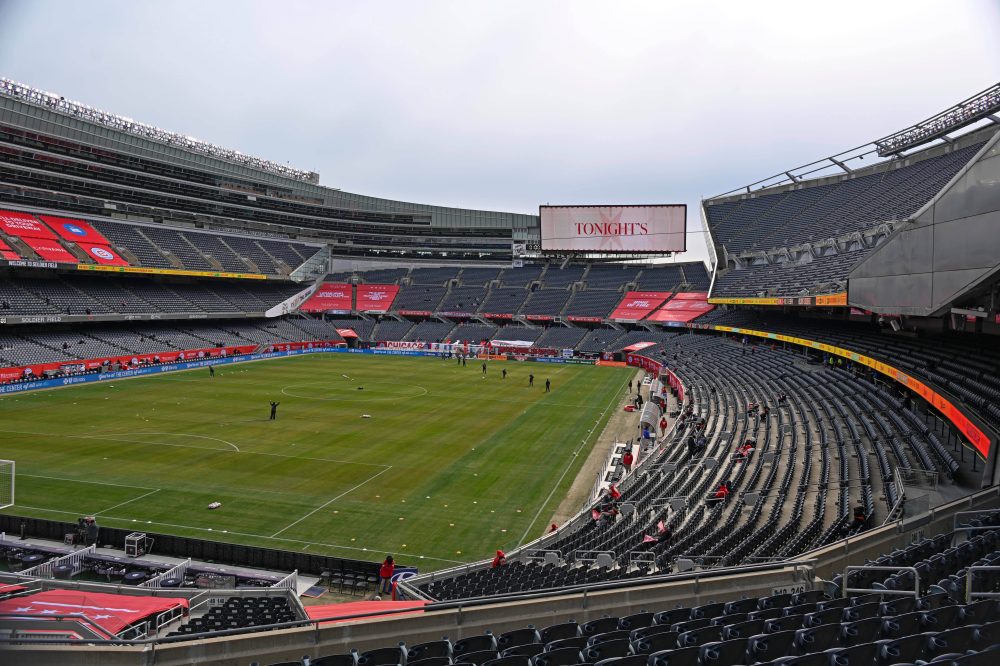
The legendary Bears are looking to move away from Soldier Field, their home for the past 50 years. Indiana legislators have crafted an enticing offer to bring the team across state lines, proposing to finance and construct a covered stadium in Hammond, Indiana – roughly 25 miles from the Bears’ current lakefront location.
Illinois lawmakers have fired back with their own proposal, introducing legislation that would provide tax incentives for major developments worth at least $100 million. This package would cover the Bears’ plans to create a new complex in Arlington Heights, a northwestern Chicago suburb located about the same distance from Soldier Field as the Indiana option.
However, the Illinois proposal faces criticism from those who argue it’s unfavorable for a state already burdened with some of the nation’s steepest property taxes. Adding to the controversy, taxpayers are still paying off hundreds of millions in debt from Soldier Field improvements completed 20 years ago.
The Bears represent one of just two original NFL franchises still in operation. With nine championship titles, including one Super Bowl victory, their trophy case trails only their bitter rivals, the Green Bay Packers. Despite recent struggles on the field, Forbes values the franchise at $8.9 billion, ranking it among the league’s most valuable teams.
Founded in Decatur, Illinois in 1920, the Bears have made Chicago their home for 105 years. Losing the team to neighboring Indiana would represent a significant blow to the city’s pride.
Soldier Field presents several limitations for the organization. Housing only 61,500 spectators, it ranks as the NFL’s most compact venue. Throughout their history, the Bears have operated as tenants – first at Wrigley Field from 1921 to 1970, then at Soldier Field under Chicago Park District management. Like most modern franchises, they desire stadium ownership to control operations, scheduling, and various revenue sources including tickets, concessions, parking, and naming rights.
The outdoor nature of Soldier Field also restricts opportunities to host premium events like Super Bowls, NCAA Final Four tournaments, or major entertainment spectacles that require enclosed facilities.
The interstate rivalry extends beyond sports, rooted in cultural, economic, and political differences, plus intense college basketball competition. Tensions escalated recently when Indiana established a commission to explore incorporating certain central Illinois counties whose residents have voted in favor of separating from the Chicago metropolitan area.
This isn’t the Bears’ first threat to relocate. When the team considered leaving in 1975, then-Mayor Richard J. Daley famously responded, “Like hell they will.”
Chicago’s concerns became more concrete in 2023 when the Bears invested approximately $200 million in a 326-acre former horse racing facility in Arlington Heights. Their vision includes a $5 billion development featuring a domed stadium surrounded by residential units, hotels, entertainment venues, and shopping centers, with partial taxpayer support.
When the Bears presented a $5 billion proposal in 2024 for an enclosed stadium adjacent to Soldier Field, also seeking partial public funding, Springfield officials showed minimal enthusiasm. By late fall, the team began exploring Indiana opportunities.
Indiana’s attraction package establishes the Northwest Indiana Stadium Authority to fund, build, and lease a domed facility near Hammond’s Wolf Lake. Governor Mike Braun approved the legislation on February 26th. The arrangement would lock the Bears into a 35-year lease agreement, with state borrowing covering construction costs and repayment coming through enhanced local hospitality taxes.
Illinois Democrats have pushed forward House legislation offering incentives for major developments worth at least $500 million, or as low as $100 million based on job creation numbers. Developers would benefit from property taxes frozen at pre-construction levels for up to 45 years, making negotiated payments to local governments instead. The package also includes sales tax exemptions on construction materials lasting up to 15 years.
Critics argue the Illinois legislation’s extended property tax freeze would shift tax burdens to homeowners and other businesses, with the alternative payments serving as additional revenue rather than replacements.
Democratic Governor JB Pritzker defended the proposal last week, stating it would stimulate development on currently non-productive land while guaranteeing increased revenue for local governments.
Taxpayers continue servicing debt from previous accommodations. The 2001 public investment of $399 million helped finance Soldier Field’s $587 million renovation. Including interest, the outstanding balance reaches $467 million, according to the state’s Commission on Government Forecasting and Accountability.
The Bears’ current $7 million annual lease extends through 2033. Early termination would cost the organization $10.5 million for each remaining year on the contract.