
Tata Motors has decided to partner with Chinese automaker Chery to obtain cutting-edge technology for its high-end electric vehicles, according to four sources with knowledge of the arrangement.
The Indian automotive company confirmed to Reuters that it will utilize the Freelander platform developed through a partnership between Chery and Jaguar Land Rover in China. Production will take place at Tata’s recently opened manufacturing facility in Tamil Nadu, located in southern India.
This development highlights how Chinese automotive technology is becoming increasingly essential in the global market, even as Chinese car manufacturers face barriers to entry in India, the world’s third-largest automotive market.
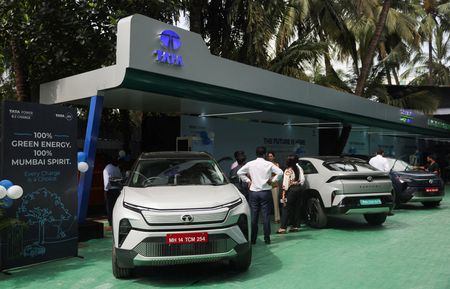
As India’s leading electric vehicle manufacturer, Tata will employ Chery’s platform to produce electric cars domestically under its upscale Avinya brand, with plans for a minimum of two vehicles. Sources indicate the initial model will debut in 2027.
This approach represents a significant change from Tata’s initial strategy, which involved using JLR’s electrified modular architecture for Avinya vehicles scheduled for 2025 release. That timeline fell apart last year when JLR abandoned its plans to manufacture EMA-based electric vehicles in India, forcing Tata to reconsider its approach.
The partnership with Chery is anticipated to help Tata recover from these delays, providing access to sophisticated features and technology that would otherwise require more time and investment to create independently, sources explained.
The debut Avinya vehicle using Chery’s platform is scheduled for 2027 and will initially arrive from China as a kit for assembly in India, with efforts already underway to source local components. A second electric vehicle is planned for 2029, with potential for two additional models thereafter.
“Avinya is being developed as a global premium brand. Our collaboration with JLR and its partners will be an important pillar of our global premium EV journey,” Tata stated, emphasizing that this agreement will help deliver the desired proposition for its luxury electric vehicle segment at scale.
Chery responded that its agreement with Tata builds upon the success of its existing collaboration with JLR.
“Chery will act as a supplier to Tata Motors Passenger Vehicles. Each project operates under its own separate agreement with standard commercial terms,” the Chinese manufacturer explained.
JLR has enlisted Chery, a long-standing partner, to develop and manufacture electrified vehicles, including electric and hybrid models, under its revived Freelander brand. These vehicles will utilize the Chinese company’s architecture and be produced at its Changshu facility.
One source characterized the Chery deal as a “stop-gap arrangement” because Tata risks losing its electric vehicle market position without new products, while noting the company still plans to develop its own dedicated platform eventually.
All sources requested anonymity as they lack authorization to speak with media.
Electric vehicles currently represent 14% of Tata’s total sales, with a goal to increase that figure to 30% by 2030. However, competitors Mahindra & Mahindra and JSW MG Motor are narrowing Tata’s lead, revealing weaknesses in its electric vehicle portfolio and increasing the possibility of additional market share decline.
These partnership discussions reflect a broader transformation occurring within India’s automotive sector. Indian automakers are increasingly importing Chinese electric vehicle technology while avoiding deeper equity partnerships due to political sensitivities.
Since 2020, New Delhi has implemented strict limitations on investment from neighboring countries, primarily targeting China, effectively halting large-scale participation in the automotive industry. While restrictions have relaxed somewhat in sectors like electronics, car manufacturers continue to face significant obstacles.
JSW Motor, the independent automotive venture of steel-to-cement billionaire Sajjan Jindal, also maintains a similar platform licensing arrangement with Chery.
Indian automotive companies have increased their research and development spending on new technologies and powertrains in recent years, but like many global competitors, they cannot match China’s speed, cost efficiency, and technical expertise in electric vehicles.
Chery, China’s largest automotive exporter, has rapidly expanded its international presence.
Taking inspiration from Toyota and Tesla, the Chinese automaker has pursued joint manufacturing agreements with foreign companies across key markets, including Europe, Southeast Asia, and Latin America.