
India’s chief drug regulator announced Monday that comprehensive inspections of the country’s cough syrup manufacturing facilities have revealed widespread safety violations, as the nation works to address international concerns over contaminated medications.
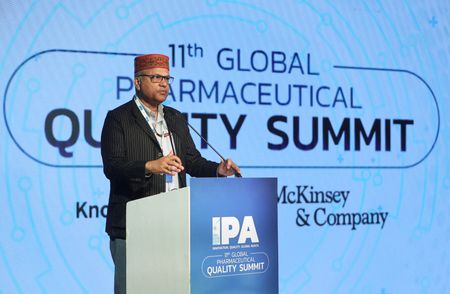
Speaking at a pharmaceutical summit in Mumbai, Drugs Controller General of India Rajeev Raghuvanshi disclosed that regulatory officials have examined approximately 1,100 facilities representing nearly 90% of all cough syrup producers in the country.
The extensive inspection campaign was launched following a tragic incident last October when 24 children died after consuming contaminated cough syrup. The deadly product, called Coldrif and manufactured by Tamil Nadu-based Sresan Pharmaceutical, contained dangerous levels of diethylene glycol.
“We took serious actions on serious non-compliances, and our belief is that the rot of cough syrup manufacturing will be removed,” Raghuvanshi stated during his address at the IPA 11th Global Pharmaceutical Quality Summit.
The regulatory crackdown comes as India faces mounting international pressure to strengthen oversight of its massive $42 billion pharmaceutical sector, which consists primarily of smaller manufacturing operations. Since 2022, Indian-produced cough syrups have been implicated in the deaths of over 140 children across Africa and Central Asia, damaging the country’s reputation as a global medicine supplier.
According to Raghuvanshi, the inspections revealed multiple serious violations including poor manufacturing standards, inadequate testing of raw materials, and the use of improper production methods. However, he did not identify which specific companies were found to be non-compliant.
Beyond the cough syrup facilities, regulators have also conducted preventive inspections at an additional 1,250 drug manufacturing plants since 2022 to assess potential risks. Raghuvanshi declined to specify how many of these facilities had compliance problems or were temporarily shut down.
The regulatory agency is now working toward achieving standards comparable to the U.S. Food and Drug Administration through various reforms including addressing staff shortages, accelerating approval processes, and increasing available resources.
Plans are underway to establish 1,500 new positions within the regulatory framework, with approximately 40% designated as flexible contract roles. The agency may also recruit international industry specialists as advisors and is testing artificial intelligence technology to streamline application reviews.
In a separate development, the regulator has simplified export procedures by eliminating no-objection certificate requirements for medications shipped to the United States, Europe, Australia, Japan, the United Kingdom, and Canada. This change is expected to reduce processing time and administrative costs.