
Reflecting on five decades of pursuing whitetail deer, a seasoned hunter recalls both the trophy bucks displayed on his wall and the painful memories of missed opportunities caused by poor decisions and inadequate preparation.
Growing up in southern West Virginia during the 1950s and early 1960s, whitetail deer were rarely spotted in local hunting areas. Time was spent fishing and hunting smaller game while dreaming of future deer hunting opportunities. That dream became reality at 15 when a friend extended an invitation to hunt Peters Mountain near the Virginia border. Armed with borrowed orange clothing and a rifle, he felt prepared despite minimal planning but unlimited enthusiasm as he climbed the mountain seeking a good vantage point.
Within moments, rustling leaves caught his attention, stopping in a nearby laurel thicket. Four to six deer moved through the vegetation, and antlers were briefly visible. Straining to see clearly through the peep sight on the 03A3 bolt action rifle proved challenging. With buck-only regulations in effect, shooting a doe by mistake was not an option. When the buck’s body finally appeared, he quickly disappeared down the ridge with his does following. Dreams of a trophy were shattered by a gunshot from below. With no further activity, lunch beckoned from down the mountain. Next to their truck stood a hunter with the massive 14-point buck that should have been his. After offering congratulations, the realization hit that unfamiliarity with equipment, terrain, and whitetail behavior had cost him a tremendous opportunity.
Despite the disappointment, deer hunting had become an obsession, sparking excitement about learning before the next outing. During the 1960s, hunting information and equipment knowledge was limited to Outdoor Life magazine and conversations with fellow hunters. The following year, the West Virginia Department of Natural Resources held a lottery for the first firearm doe permits in select counties. A tag was drawn for the opening week at Sherwood Lake in Greenbrier County. His father and two friends would accompany him on the season’s first Saturday. Equipment choices included a 12-gauge Browning with slugs or a single-shot .30-30. Five quick shots seemed preferable to one.
The temperature was 10 degrees with heavy snow when he left the station wagon on a gravel road. A logging trail led to fresh deer tracks in snow heading into dark timber. An old fallen tree provided wind protection for his stand. After four hours of freezing conditions, returning to the road seemed wise. Before moving, brown shapes appeared running through snow 100 yards away. A nice buck led the group, and two shots resulted in dirt flying five feet in front of his hooves. The shots caused does to run toward him, turning broadside at 40 yards. Two more shots were fired at the largest doe as they continued running. After settling down, he walked to where the deer was last seen and discovered blood droplets in snow. Two additional shells were loaded, and the trail was followed to where she lay in the frozen creek bed. His father witnessed the entire episode and assisted with field dressing and dragging the deer out.
After securing the doe on the luggage rack, an older hunter approached offering a Centennial Model 94 Winchester in trade for the deer. That lasting memory with his father and first deer held more value than any firearm he would ever own. Though successful, the lesson learned was never to borrow an unsighted rifle—one accurate shot surpasses five poor ones.
Christmas that year was exceptional. A Marlin 37 lever-action .35 caliber rifle arrived along with blaze orange coveralls, cap, and boots. The next hunt would surely produce a large buck. Limited hunting time during his high school senior year due to varsity football and wrestling led to a full scholarship at Marshall University pursuing his passion. During sophomore year, a break allowed hunting on Thanksgiving Day. A teammate drew a map to public land in Mason County, West Virginia, bordering the Ohio River. He knew it held nice bucks with few hunters on the property.
Daybreak found him parked and heading toward thickets along the river. A small clearing with several shooting lanes was discovered, and he settled against a large pine tree. After two hours without action, he dozed off but was awakened by shouting and shots from his left. Opening his eyes revealed a nice buck in the clearing looking back at the noise. Like a dream, crosshairs aligned with vital organs and the rifle fired. A few leaps later came the crash, accompanied by voices asking if he got him. A farmer with two sons congratulated him but noted he was on private land. After apologies and stern discussion, he was permitted to load his first buck and return to school. Proudly hanging and processing the buck behind the apartment complex provided a reality check on some people’s feelings about hunting.
Fast-forwarding 10 years, accumulated knowledge from previous hunts began producing seasonal success with both bow and rifle hunting. Bowhunting—observing deer and waiting for quality shots—quickly improved rifle and muzzleloading success. Having three months to hunt and observe deer was transformational compared to two weeks of firearm season. With liberal big game tags and magazines featuring exciting deer adventures and hunting tactics, both the orange army and camouflaged bowhunters were growing. He joined a local archery club, began year-round bow shooting, and learned of superior hunting areas in the tri-state region bordering Ohio and Kentucky.
The realization soon came that trophy buck opportunities now existed locally, and expanding to new locations could increase success odds. This recalled an old-timer’s advice: “If you do what you have always done, you will get what you always got.” Finding new hunting locations in Ohio and Kentucky just an hour away proved adventurous. Permission was easily obtained during the 1980s and 1990s, especially for bowhunting. Tom Nixon became an excellent hunting companion who enjoyed scouting and sharing hunting trips. Both were attempting to break the 150-inch mark, making trophy hunting solo and extremely competitive.
While driving to a Kentucky job, an exceptional buck was spotted on a 300-foot-high wall bordering Kentucky Power property. The landowner was located and permission granted—but no one else could be brought. The first year brought two buck sightings but ended with taking a doe at season’s end. The nine-point had perfect bedding in a dense thicket with his back to the highwall and nose in thermals rising from both ridge sides.
The only opportunity to take him would be during the rut or when checking scrapes on his rub line during daylight. A climbing stand was positioned on a flat above and downwind of the scrapes. After two weeks of seeing only does and smaller bucks, he decided to wait until Kentucky gun season began at the rut’s start. While bowhunting with Tom locally and filling the freezer, trophy hunting tactics in private areas remained a discussion topic. Finally, gun season morning arrived with fog, wind, and rain forecasted. Upon reaching his parking spot, a familiar truck was noticed—Tom’s. He had discovered the hunting property and gained permission without disclosure. Visibly upset, he headed up the ridge to his stand without speaking.
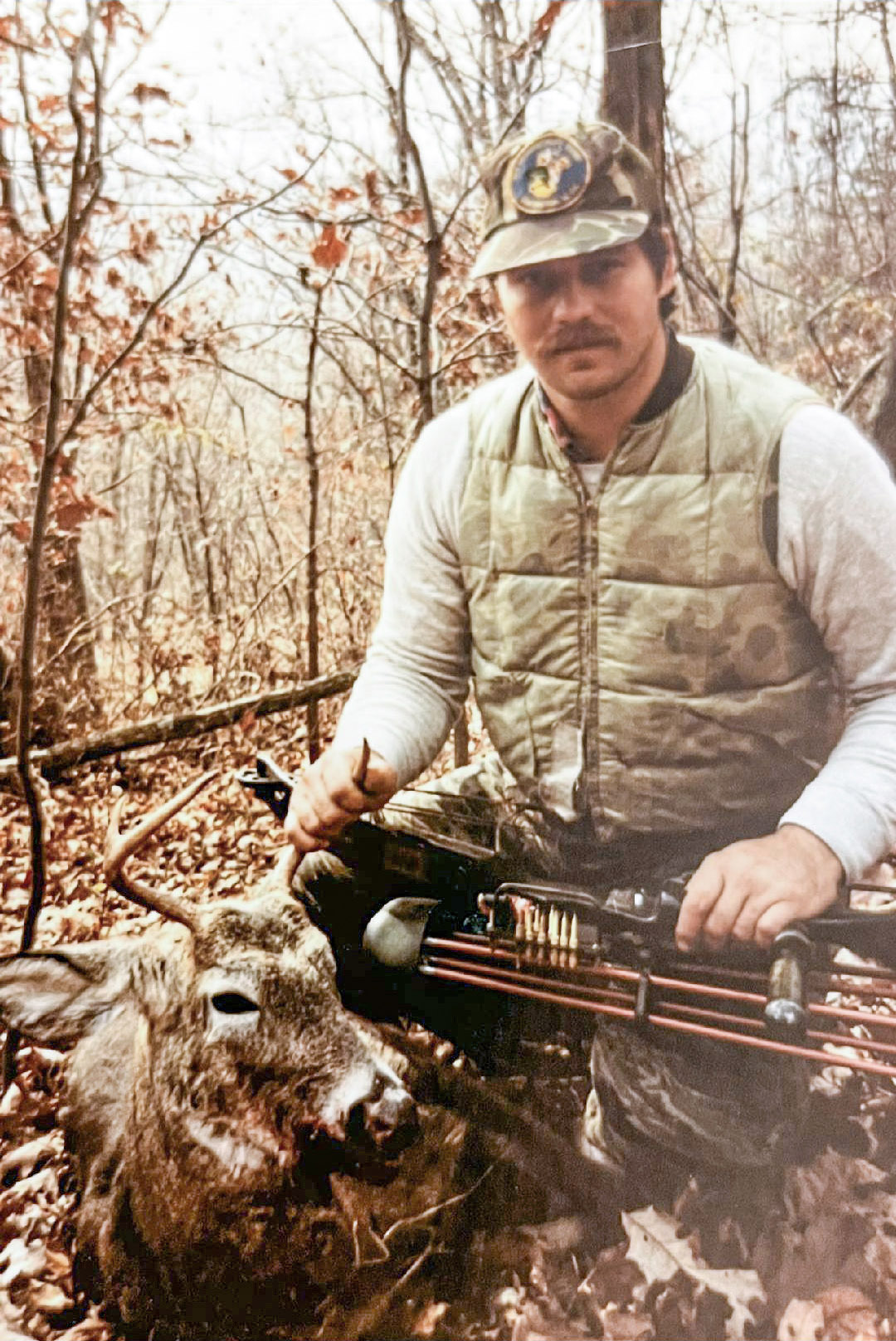
After settling in, rain intensified, and Tom was visible 100 yards away on the same flat. Thirty minutes later, three does, a spike, and a six-point headed Tom’s direction. He took the shot, field dressed the six-point, and left the ridge. All day was spent in rain, watching several more deer and younger bucks cruise by—wondering why this betrayal occurred. The entire week was hunted, finally killing the large nine-point on the last day as he followed a doe 40 yards below the stand. Elation and pride came with finally killing a trophy whitetail—but a good friendship was lost.
After becoming a professional firefighter, more time could be devoted to archery and whitetail hunting passions. Soon, 40 acres and a country house were acquired, beginning construction of an excellent wildlife area for his family. With new property and hunting across three states, whitetail heaven was achieved. Trophy pursuits could be enjoyed while filling the freezer hunting with family and friends. With increasing deer populations and availability of more property and additional tags, success became normal. However, tagging a 4- to 5-year-old trophy buck remained the ultimate challenge.
More hunting brought increased learning—and missed opportunities. A large Ohio buck walked across his bow when it was lowered too early before dark. On his property, two nice 150-class bucks chased a doe under his stand when he was late pulling his bow up. Both stopped at 20 yards and watched the bow slowly ascending before walking away.
An opportunity arose to hunt Illinois where a 180-plus buck had been spotted during summer. The first morning showed him walking into a thicket and wood lot hit by a tornado the previous year. Scouting the next day revealed a trail to the middle, and within minutes of climbing into the stand, six to eight nice bucks were chasing does in every direction. It seemed only a matter of time before getting a shot at that monster buck. For two more days, rut activity and deer action were amazing. The mega buck was seen daily with no clear shot.
The final day brought a large six-point following a doe 20 yards from the stand. With three hours remaining, he let him walk. As the buck turned and walked straight away, the thought came: “That’s a 140-plus six-point.” As sunset approached on the final day before gun season, regret set in about letting him walk. Experiencing the excitement of hunting a magnificent buck was an unbelievable adventure. The following week, his host’s in-law killed the six-point that scored 146, and the neighbor killed the large buck scoring 193. In hindsight, the six-point should have been taken, but the possibility of a chance at a world-class whitetail was too strong. These choices would determine many future hunt outcomes.
Over the next 30 years, numerous great days were experienced in the woods hunting whitetails with bow, gun, and muzzleloader. While occasionally hunting for particular bucks still appeals to him, hunting for enjoyment and filling the freezer with developed friendships brings greater satisfaction. Tom and he eventually reconciled after apologies and admitting friendship’s importance over any buck. All mistakes made over the years cannot be listed, but each provided lessons bringing future success.
New hunting methods and better equipment can provide advantages, but nothing beats experience, persistence, and luck. Hunting friends should be chosen carefully, as they ultimately affect field trip pleasure. If equal joy comes from a friend’s success as your own, that’s the right person to share time with. Trophy hunting can be extremely challenging and rewarding, but shouldn’t prevent enjoying hunting with friends and family.
It’s amazing that despite latest technology, information, and game cameras, mature bucks can evade our best daily efforts. Undoubtedly, the more we learn about Odocoileus virginianus, the more they learn about us. This explains why whitetail deer hunting is America’s most popular game animal pursuit. With the participation level and money invested, it always will be.
Looking back over 50 years of hunting—despite all mistakes—he has been blessed with considerable success. The big secret is simply getting out there and hunting. Try new areas and methods. Don’t fear making mistakes and learn from every field and woods trip. That next mistake might just be the key to your buck of a lifetime.
Stay safe and have a successful hunting season.