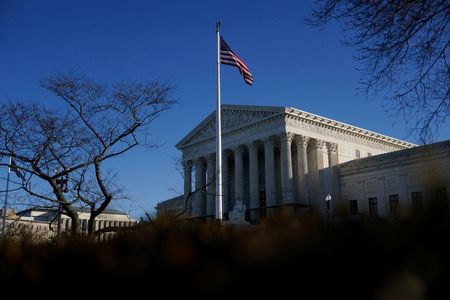

The nation’s highest court is diving into complex legal disputes stemming from decades-old tensions between the United States and Cuba, as justices examine how far a federal law should go in helping Americans recover property taken by the Cuban government.
On Monday, the Supreme Court will hear arguments in two significant cases involving the Helms-Burton Act, legislation passed in 1996. One case features oil giant ExxonMobil, while the other involves major cruise companies including Carnival, Royal Caribbean, Norwegian Cruise Line and MSC Cruises.
The heart of these disputes centers on Title III of the Helms-Burton Act, which permits Americans to file lawsuits in federal court against companies that use or benefit from property seized by Cuba’s government following Fidel Castro’s 1959 revolution.
Both cases ask fundamental questions about how Congress intended this legal tool to work. The Supreme Court could potentially remove obstacles that have made it difficult for property owners to pursue these claims successfully.
This marks the first time the high court has examined Title III, which includes a provision allowing U.S. presidents to halt its enforcement if they determine suspension serves “the national interests of the United States.”
For years, Title III remained inactive because presidents chose to suspend it. However, former President Donald Trump, who adopted an aggressive stance toward Cuba, ended that suspension during his presidency, triggering approximately 40 lawsuits filed between 2019 and 2020 that are now working through the court system.
The Trump administration labeled Cuba as “an unusual and extraordinary threat” to American national security, blocking Venezuelan oil shipments to the island and threatening tariffs on nations providing Cuba with fuel.
The financial stakes are enormous. After Castro’s revolution, Cuba’s communist leadership took control of American-owned assets now valued in the billions, including manufacturing facilities, sugar processing plants, oil refineries and electrical generation stations.
The Helms-Burton Act made official the U.S. trade embargo against Cuba that had existed through presidential orders since the Kennedy administration in the 1960s.
Title III established a legal pathway for Americans whose property was confiscated to seek enhanced financial damages in federal courts from entities that knowingly utilize the seized property, including both Cuban government-owned companies and international corporations.
Presidents Bill Clinton, George W. Bush and Barack Obama all kept Title III suspended to prevent diplomatic tensions with allies such as Canada and Spain, whose businesses had invested in Cuba. Trump ended the suspension in 2019, with the State Department stating the action would “increase pressure on the Cuban government” and “punish those who profit from Americans’ rightful property.”
In the ExxonMobil case, the company is pursuing more than $1 billion in damages from CIMEX, a Cuban state-controlled enterprise, for petroleum and natural gas facilities taken in 1960. The second case involves a smaller firm that constructed dock facilities in Havana’s harbor before the revolution, now seeking compensation from four cruise companies whose vessels utilized the terminal.
ExxonMobil filed its lawsuit in Washington during 2019, asking the justices to overturn a 2024 lower court ruling that determined Cuban state-owned businesses facing Helms-Burton Act claims can invoke foreign sovereign immunity as a defense. This legal principle typically protects foreign governments and their agencies from lawsuits in American courts.
The lower court’s ruling “creates another obstacle in a series of barriers preventing recovery for those harmed by the Castro government’s unlawful seizures,” ExxonMobil’s attorneys stated in a 2024 court document.
CIMEX has countered in legal filings that the 2024 ruling should stand because it “honors and protects congressional decision-making in this delicate matter.”
Legal professionals noted that the 2024 ruling and similar decisions interpreting Helms-Burton have made pursuing compensation from Cuban entities expensive and lengthy for American companies.
“The time commitment and financial resources needed have become overwhelming for many claimants,” explained Washington attorney Jared Butcher, who handles commercial litigation cases.
The second case scheduled for Monday’s arguments doesn’t involve sovereign immunity since the cruise line defendants are privately-owned rather than state-controlled companies. The central question in this dispute is whether a Helms-Burton Act plaintiff must prove they would maintain current property rights to the assets in question if nationalization had never occurred.
Havana Docks Corporation, an American company that constructed harbor facilities in Havana before the revolution, filed suit against the cruise lines in Florida federal court during 2019. Castro eliminated the company’s legal claim to the docks soon after assuming power.
The four cruise operators utilized the docks between 2016 and 2019, following Obama’s relaxation of Cuba travel restrictions. In shared court documents, the companies argued it makes no sense that they “should pay hundreds of millions of dollars for following the executive branch’s guidance in resuming Cuba travel.”
A federal judge determined the cruise companies were liable for a total of $440 million, ruling they had engaged in trafficking confiscated property. However, an appeals court overturned those judgments last year, demonstrating the challenges Helms-Burton Act plaintiffs encounter.
“Claimants are struggling to obtain recovery under the Helms-Burton Act for numerous reasons, and it’s likely more challenging to recover than Congress expected when passing the legislation in 1996,” observed Vanderbilt Law School professor Ingrid Brunk. “However, that doesn’t mean every plaintiff deserves to prevail.”