
FRANKFURT – German officials are weighing an emergency strategy to prevent Italy’s UniCredit from acquiring Commerzbank by significantly expanding the government’s ownership through state development bank KfW, according to sources familiar with the discussions.
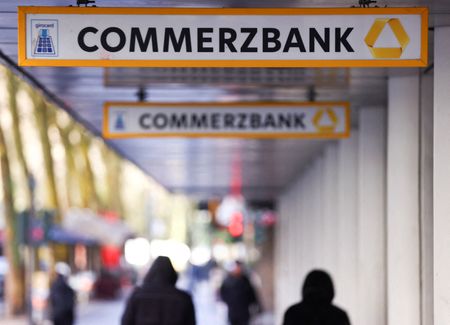
Currently, Germany holds a 12% ownership position in Commerzbank following a rescue package implemented during the financial crisis twenty years ago. Now, some Berlin officials are exploring whether KfW could purchase additional shares to create a substantial enough ownership block to prevent a complete acquisition, two sources with direct involvement told Reuters anonymously.
While this approach would encounter multiple obstacles, including securing several billion euros in funding, officials argue it could be warranted given Commerzbank’s importance in financing Germany’s Mittelstand companies that serve as the foundation of Europe’s biggest economy.
Armand Zorn, a prominent Social Democratic Party member whose party currently oversees Germany’s finance ministry, expressed support for exploring a KfW investment. “A potential KfW stake should certainly be considered,” Zorn stated.
The vice chair of the SPD’s parliamentary group emphasized the significance of such action: “It should be viewed as a last resort if all other options fail… The impact would go far beyond the symbolic.”
Both government officials and Commerzbank leadership are becoming increasingly frustrated as efforts to deter UniCredit CEO Andrea Orcel’s 37 billion euro international acquisition attempt continue to fail.
Since 2024, Orcel has been targeting Commerzbank, accumulating close to 30% ownership while German Chancellor Friedrich Merz and bank CEO Bettina Orlopp have raised concerns about the takeover.
“The government should continue to signal that a hostile takeover of Commerzbank is not in the interests of Germany’s financial centre,” Zorn explained. “Commerzbank plays a central role for the… economic resilience of Germany.”
Representatives from KfW, the finance ministry, and Commerzbank refused to provide statements on the matter.
Given Germany’s current budget constraints, implementing such a strategy would prove challenging, and it remains uncertain whether the free-market oriented Christian Democrats, who share power in an unstable coalition with the more progressive SPD, would support the initiative.
Nevertheless, the Commerzbank situation has become a measure of the German government’s determination, following repeated warnings from ministers and the chancellor against UniCredit’s pursuit of the acquisition.
Failing to act could further undermine Berlin’s credibility, particularly after disagreeing ministers have struggled to implement promised economic reforms while Germany’s economy has essentially stagnated.
Losing control of Commerzbank would represent another setback for Germany, which confronts potential tariffs on exports to the United States, its largest trading partner for products ranging from automobiles to machinery. Adding to the challenge of accelerating job losses in Germany, China has evolved from a low-cost manufacturer to a competitor in some of the country’s most valuable industries.
The contentious ownership dispute reached a turning point when Orcel officially initiated a takeover bid at an undervalued price on Tuesday. Orcel contends that Commerzbank has failed to reach its full potential and that Europe would benefit from larger banking institutions in an era of unstable global politics.
This Friday, Commerzbank plans to release a revised business plan that management hopes will demonstrate to investors the benefits of remaining independent. The bank will announce expense reductions that will probably include workforce reductions, according to two additional sources, marking the third round of cuts this decade.
During a presentation to investors last month, Orcel warned that Commerzbank’s “current trajectory will put at risk its survival in the medium term” and initiated a critical advertising campaign on social media platforms.
Germany’s financial oversight authority responded by directing UniCredit to cease advertisements attacking Commerzbank, while over 3,000 individuals are participating in a WhatsApp group organized by Commerzbank’s workers’ council to oppose the merger.
A recent post featured a cartoon depicting a Trojan horse containing UniCredit warriors armed with spears and shields, accompanied by text stating: “Andrea Orcel can’t be trusted.”
Commerzbank eliminated 10,000 positions, representing one-third of its German workforce, earlier this decade and revealed plans to reduce another 3,900 jobs last year. Orcel has indicated he would significantly reduce the Frankfurt-based headquarters.
Several established Commerzbank business clients are also voicing opposition to the transaction and threatening to switch banks if UniCredit’s bid succeeds.
“I see a takeover very critically and don’t see any benefits,” stated Juergen Lindhorst, chairman of Lindhorst Group, which employs 4,000 people and converts farmland into solar installations while developing real estate projects.
Prior to 2024, Germany maintained an even larger ownership position in Commerzbank, but a mishandled effort to reduce its holdings resulted in shares going to UniCredit instead of a diverse group of institutional investors.
The government’s present ownership is valued at over 4.5 billion euros. Increasing that amount by more than double to achieve a 25% blocking minority through market purchases could cost at least that amount and might not prevent Orcel’s plans.
KfW was created in 1948 to fund Germany’s post-World War Two reconstruction efforts. In recent years, it assisted in rescuing Lufthansa during the COVID-19 crisis.
Michael Wisser, CEO of WISAG, a facilities management company with 60,000 employees and a client of both banks who opposes the transaction, believes the federal government’s position will largely determine whether the takeover proceeds.
“There will be no deal if the federal government takes a very clear stance,” Wisser declared.