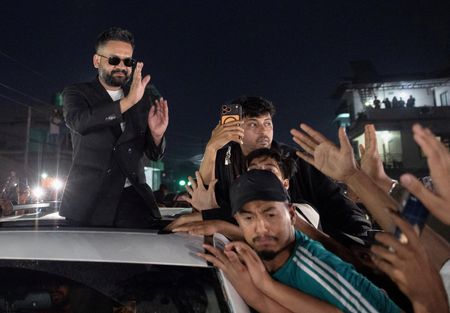

A political newcomer who once performed rap music criticizing Nepal’s government has led his upstart party to an overwhelming electoral triumph that could bring much-needed stability to the troubled Himalayan nation.
Balendra Shah’s Rastriya Swatantra Party (RSP) captured a commanding 182 seats out of 275 in parliament during the March 5 elections, election officials announced Thursday. The victory represents the most decisive parliamentary majority achieved by any single party in more than six decades.
The stunning results position Shah, a former Kathmandu mayor whose anti-establishment rap songs made him a social media sensation, to become Nepal’s next prime minister. He would be the first leader from the country’s southern Madhesh region to hold the top office.
The electoral success follows violent demonstrations last September that claimed 77 lives and forced the previous government from power. Young protesters had taken to the streets after authorities imposed social media restrictions, sparking nationwide unrest in the nation of 30 million people situated between China and India.
Constitutional scholar Purna Man Shakya expressed optimism about the prospects for governmental continuity. “If everything goes well, we can expect that it can give a stable government for five years,” Shakya stated, referencing how previous administrations fell apart due to disputes over power-sharing arrangements.
The electoral outcome offers hope for political consistency in a country that has endured 32 government changes over the past 35 years. This chronic instability has undermined investor confidence and hampered both economic development and job creation.
“We are encouraged by the victory,” declared Sisir Khanal, a newly-elected RSP legislator and senior party official. “The mandate has made us very responsible.”
Traditional political forces suffered crushing defeats in the voting. The established Nepali Congress party managed only 38 seats, while the Communist Party of Nepal (Unified Marxist-Leninist), led by former Prime Minister K.P. Sharma Oli, secured just 25 seats. Former Chief Justice Sushila Karki had served as interim leader following Oli’s departure.
Shah’s campaign focused heavily on anti-corruption measures, employment generation, and an ambitious pledge to more than double Nepal’s $42 billion economy within five years. His rise from musician to mayor to potential prime minister has captivated voters seeking change from conventional politics.
However, the party faces challenges ahead. RSP’s prominent leader Ravi Lamichhane, a former television personality, is currently fighting allegations of financial misconduct involving small savings companies. Lamichhane has denied any wrongdoing and remains free on bail.
Regional parties from the Madhesh plains, where Shah originates, failed to win any parliamentary representation despite the area’s significant population.