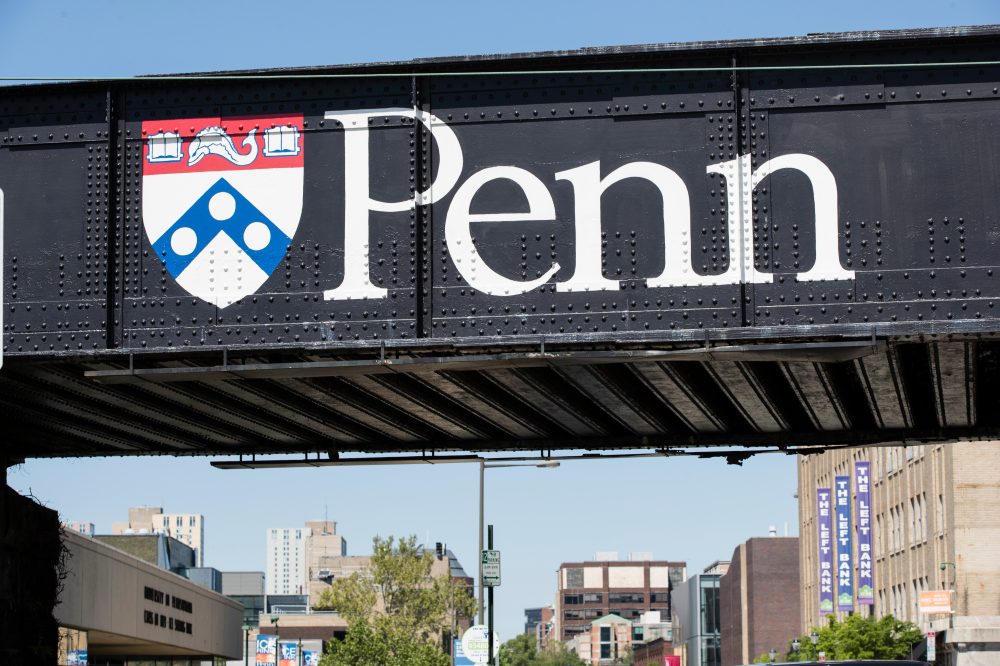

PHILADELPHIA — A federal judge heard arguments Tuesday on whether the University of Pennsylvania should be compelled to turn over employee membership information for Jewish organizations as part of a federal investigation into alleged workplace antisemitism.
The Equal Employment Opportunity Commission is investigating whether antisemitic incidents at the Philadelphia Ivy League institution have created a hostile work environment for staff members. The probe has documented multiple troubling events, including someone screaming antisemitic slurs and vandalizing a Jewish student life center, a Nazi swastika being painted on a campus building, and hateful graffiti appearing outside a fraternity house.
Federal investigators are also examining the university’s handling of protests related to the Gaza conflict and its response to various antisemitic incidents on campus.
During Tuesday’s four-hour hearing before U.S. District Judge Gerald Pappert, attorneys debated the EEOC’s November petition against Penn’s Board of Trustees to enforce an administrative subpoena. The subpoena seeks information as part of the agency’s investigation into allegations that the school has created an illegal hostile workplace for Jewish faculty and staff based on their national origin, religion, or race.
Judge Pappert did not indicate when he might issue his ruling following the lengthy hearing.
The controversy started in December 2023 when the EEOC formally accused Penn of exhibiting a pattern of antisemitic conduct. In court filings last fall, the agency stated it was taking action “in light of the probable reluctance of Jewish faculty and staff to complain of a harassing environment due to fear of hostility and potential violence directed against them.”
In November filings, the EEOC declared that Penn’s “workplace is replete with antisemitism,” and informed the court that investigators believe “identification of those who have witnessed and/or been subjected to the environment is essential for determining whether the work environment was both objectively and subjectively hostile.”
University attorneys countered in January that Penn has been cooperative throughout the more than two-year investigation, providing approximately 900 pages of documentation to federal investigators.
The university maintains that the only remaining disagreement involves what it characterizes as the EEOC’s “extraordinary and unconstitutional demand” for compiled lists of employees that would reveal their Jewish faith or heritage, connections to Jewish organizations, participation in Penn’s Jewish studies programs, and other sensitive information — including personal home addresses, telephone numbers, and email addresses.
Vic Walczak, an attorney with the American Civil Liberties Union, explained that five organizations his group represents in the matter have serious concerns about gathering and potentially misusing the information demanded by federal officials.
These organizations — including some with specific Jewish connections and others representing broader faculty groups — support examining antisemitism but believe “this is not the way to do it,” according to Walczak.
“We’re on the same side as Penn — we’re not opposing an investigation, what we’re opposing is the court forcing Penn to create, essentially, lists of participants in Jewish organizations and turning over confidential information, including home addresses,” Walczak explained.
A Penn representative stated via email that the institution will wait for Judge Pappert’s decision.
The university proposed an alternative approach last fall, offering to inform all employees about the federal investigation and provide them with contact information for the agency. However, the EEOC rejected this suggestion. Penn argued this method would “not invade employees’ privacy, sense of safety, and constitutional rights or echo terrifying periods of history for Jewish communities.”
Attempts to reach EEOC regional attorney Debra Lawrence and the agency’s Philadelphia office for comment were unsuccessful Tuesday.