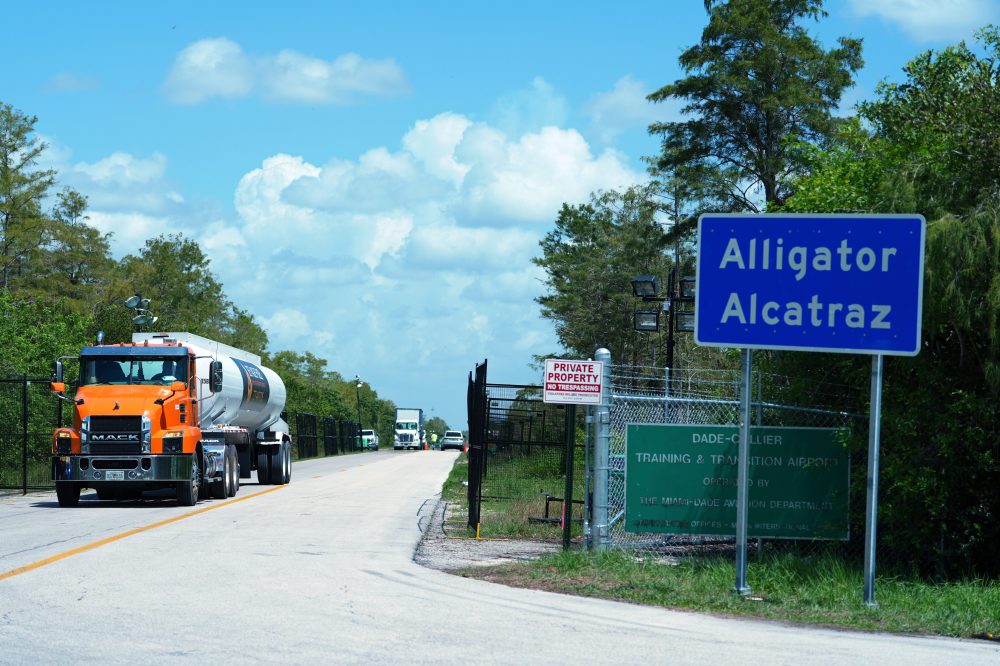

FORT MYERS, Fla. — A federal judge has mandated that Florida’s remote immigration detention facility in the Everglades must dramatically improve legal access for those held there, following complaints that detainees couldn’t reach their lawyers.
U.S. District Judge Sheri Polster Chappell issued the preliminary injunction on Friday, requiring the facility nicknamed ‘Alligator Alcatraz’ to establish confidential, unmonitored phone access for legal calls without charge or delay. The ruling also mandates one working telephone for every 25 detainees and requires multilingual information to be available to both detainees and their legal representatives.
Legal representatives had previously told the federal court in Fort Myers that their clients couldn’t reach them through staff mobile devices and that lawyers were prohibited from making surprise visits to the remote location.
During January testimony regarding adequate legal representation at the facility, a state contractor claimed both communication methods and attorney visits were accessible to detainees and their lawyers.
The Florida Department of Emergency Management, which oversees the detention center, did not provide a response to media inquiries on Friday. The Everglades facility was constructed last summer at an isolated airstrip under Republican Gov. Ron DeSantis’ administration to align with President Donald Trump’s immigration enforcement initiatives. Florida has also established a second immigration detention facility in the state’s northern region.
The legal challenge brought by former detainees alleges violations of their First Amendment protections. They contend that legal counsel must schedule visits three days ahead of time, contrasting with other immigration facilities where attorneys can arrive during standard visiting periods. The complaint also states that detainees are frequently relocated before scheduled attorney meetings and that scheduling obstacles have prevented legal consultations before critical court deadlines.
State officials named in the lawsuit have rejected claims of restricting attorney access, pointing to security protocols and staffing limitations as reasons for any difficulties. Federal defendants have similarly disputed allegations of First Amendment violations.