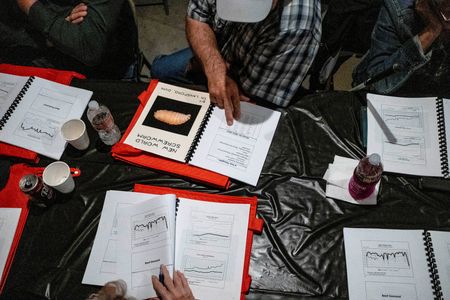

Federal agencies are rushing to implement emergency measures against the New World screwworm, a dangerous parasite that poses a serious threat to America’s struggling cattle industry, even as staffing shortages and resource limitations raise questions about the government’s readiness.
An extensive outbreak of this pest could inflict billions of dollars in damage to the beef sector, which is already suffering from persistent drought conditions. With beef costs reaching near-record levels, the situation adds to Americans’ financial worries ahead of November’s midterm elections, where President Donald Trump’s Republican party battles to keep its narrow congressional majority.
Since early last year, the USDA has collaborated with animal health manufacturers, state livestock authorities, agricultural organizations and other federal departments to prepare for a possible screwworm invasion on U.S. soil, according to agency announcements and interviews conducted by Reuters.
However, the department now operates with 25% fewer animal health specialists compared to the beginning of Trump’s second term, following the departure of hundreds who accepted financial incentives as part of the administration’s previous federal workforce reduction initiative.
Preparatory efforts have encompassed expediting screwworm medications for livestock and companion animals, establishing a treatment reserve in Texas, and deploying additional personnel to confirmed case areas in Texas.
“We have been prepared and preparing since early last year for the re-emergence in America,” Agriculture Secretary Brooke Rollins stated Monday during a news conference in Kerrville, Texas, where she announced the USDA would release $100 million in funding ahead of schedule for innovative screwworm-fighting technologies.
Rollins informed the Senate Agriculture Committee on Wednesday that more than 100 agency employees are working full-time on screwworm issues. To date, the USDA has verified six screwworm incidents in Texas and New Mexico, impacting four cattle, one goat and one dog.
Several Texas cattle ranchers have expressed dissatisfaction with the USDA’s response efforts. Susan Storey, 62, who operates a ranch in La Salle County, criticized the agency’s public communication as inadequate for addressing her worries about the parasite’s potential spread.
“We just want more action,” she said.
Since September, the Food and Drug Administration has granted 12 emergency use permits or conditional approvals for screwworm medications as part of federal preparation efforts. Both approval types enable treatment use after companies submit safety and limited effectiveness data, bypassing the FDA’s complete review procedures.
This expedited process involved coordination between the FDA, USDA and Environmental Protection Agency, which oversees certain pesticides that might be deployed against screwworm, according to Jeff Simmons, CEO of animal health company Elanco.
Elanco has participated extensively in preparations, with two of the company’s fast-tracked medications being delivered to a USDA reserve facility in Texas, Simmons noted.
“It is something that we were preparing for, expecting — it was probably a matter of if, not when,” Simmons said.
The animal health division of biopharmaceutical company Merck has also collaborated closely with the USDA and Texas animal health authorities over the past year to prepare for potential screwworm incidents, receiving conditional FDA approval for its topical screwworm medication in December, said Justin Welsh, executive director of livestock technical services.
Welsh described the USDA response as proactive while anticipating additional cases will surface.
“It’s safe to say we’ll see it continue to spread, but hopefully very slowly,” Welsh said.
The USDA faces a critical shortage of sterile male flies, one of its primary weapons against screwworm flies. These sterile males mate with females, preventing reproduction. While the USDA is constructing a Texas facility to produce additional sterile flies, it won’t become operational until late 2027.
The department is currently utilizing 100 million sterile flies produced weekly at a Panama facility, though officials acknowledge millions more are required to effectively combat the pest.
“We don’t have enough (flies) to do the complete push, but we do have enough to manage … the growth of the development of it in Texas,” the USDA’s undersecretary for research, Scott Hutchins, explained at Monday’s news conference.
The agency has experienced a substantial decline in animal health response personnel since Trump’s second term began.
Data from the USDA’s Office of Inspector General shows that over 2,100 employees departed the USDA’s Animal and Plant Health Inspection Service between January and June 2025, representing approximately 25% turnover.
A coalition of Democratic senators addressed a Tuesday correspondence to Rollins and her deputy secretary, Stephen Vaden, warning that personnel reductions at APHIS and other USDA divisions could undermine the agency’s screwworm response capabilities.
“The reemergence of the New World screwworm in the U.S. highlights the urgent need to fully staff the USDA’s Services, which are on the frontlines of disease outbreak detection and rapid response to dangerous threats to agricultural security,” stated the letter from Oregon Senator Jeff Merkley and 10 colleagues.
Rollins assured the Senate Agriculture Committee that reduced staffing levels have not impacted the agency’s screwworm response operations.
Veterinarians employed by APHIS play crucial roles in screwworm response by collaborating with local, state and federal officials to monitor and advise on suspicious cases while directing response efforts, explained Michael Bailey, a veterinarian and president of the American Veterinary Medical Association.
“We don’t have enough veterinarians in those public health areas to begin with, and anything that leads to them leaving the government, any area of government, is going to have a negative impact,” Bailey said.