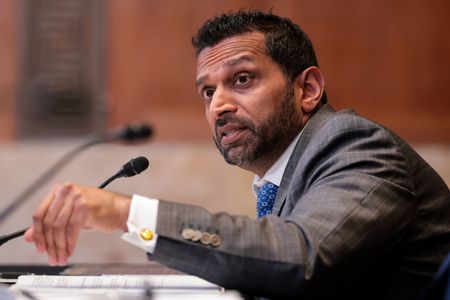

The upcoming World Cup tournament represents the most demanding security operation the FBI has ever tackled, according to Director Kash Patel, who spoke during an exclusive interview while traveling on the agency’s aircraft.
With 48 participating teams, 36 training facilities, and 11 venues hosting matches beginning Thursday, the scale of the security challenge is unprecedented. Add to that 3 million expected attendees, including world leaders, plus potential dangers from unmanned aircraft, espionage activities, terrorist threats, unruly spectators, criminal organizations, and explosive devices.
“It’s a huge lift, probably the biggest lift in FBI history, in American history,” Patel stated during the mid-flight conversation aboard the bureau’s Gulfstream aircraft.
During the comprehensive discussion in late May, as Patel traveled from Joint Base Andrews in Maryland to Dallas for a law enforcement gathering, he discussed the agency’s extensive preparations for the global sporting spectacle. This comes amid ongoing controversies and regular speculation that his tenure may be cut short.
The 46-year-old Patel assumed the FBI director role in February 2025 and has already overseen multiple significant investigations, including the homicide of Charlie Kirk. However, he emphasized that major sporting events present unique security challenges due to elevated terror and other risks.
“Literally the first week in office when I got to the FBI I said we have to prepare for the Olympics, the World Cup, two Formula One races and the Super Bowl,” Patel explained. The FBI, working alongside the Department of Homeland Security, bears ultimate responsibility for safeguarding the tournament “not just here but overseas,” he noted.
As the primary domestic intelligence agency for the World Cup, which the United States is jointly hosting with Canada and Mexico, the FBI coordinates with state and local law enforcement agencies. The bureau must conduct 300,000 background investigations of athletes, coaching staff, and other personnel, while regional and municipal authorities handle security beyond venue perimeters and assist with anti-drone operations.
DRONE SCHOOL
Unmanned aircraft pose among the most significant risks to the competitions and host communities, Patel explained. The FBI established an anti-drone training initiative in October 2025, successfully training 70 local officers in American host cities.
Drones represent “one of the biggest ways that people who want to conduct adversarial attacks can effectuate them cheaply and from a distance, and with not much planning,” Patel observed.
The FBI has also created a collaborative operations hub featuring international law enforcement from 46 of the 48 tournament nations — excluding Iran and Haiti — to share real-time security intelligence from their respective countries.
This approach mirrors a similar coordination center established in Milan for the 2026 Winter Olympics, where American officials worked with Italian authorities to safeguard U.S. visitors and competitors.
That Milan experience also became controversial when Patel was photographed celebrating with the victorious U.S. hockey team, joining in songs, spraying beverages in the locker room, and placing President Donald Trump on speakerphone. Critics characterized the trip as an inappropriate use of taxpayer funds.
This incident coincided with multiple news accounts alleging excessive alcohol consumption, which both Patel and the FBI have categorically rejected. Patel has filed a personal lawsuit against The Atlantic over what he characterizes as inaccurate reporting.
Patel maintains the Milan journey was essential preparation for World Cup security.
“We learned a ton from Milan,” he said.
THREAT ASSESSMENT
Reuters obtained the 78-page joint FBI and DHS security evaluation from May regarding the World Cup, revealing the intricate nature of tournament protection. The document outlines numerous threats both nationally and specific to individual host cities and training locations, providing guidance to local law enforcement across all 11 American host cities.
The assessment notes that Trump’s potential attendance at games will add complexity to security operations and highlights increased risks to law enforcement and venue personnel if they are confused with National Guard or ICE immigration officers.
“Recent conflicts in the Middle East, such as with Iran, have resonated with some U.S.-based violent extremists and some hate crime perpetrators and could further exacerbate anti-U.S., anti-Israel, anti-Semitic, or anti-Muslim grievances,” the evaluation states.
The document specifically addresses concerns surrounding Iran’s two preliminary matches at SoFi Stadium near Los Angeles, including potential violent demonstrations from team supporters or Iranian government opponents.
Patel attributed a cyber attack on the Los Angeles Metro system in March to Iran, which disrupted portions of the transit network. The pro-Iran organization Ababil of Minab took credit for the incident.
AIR PATEL
Congressional Democrats have criticized Patel’s use of government aircraft, with lawmakers requesting a Government Accountability Office investigation.
Patel considers these allegations unjustified. Legal requirements prohibit him from using commercial flights, and he must compensate the bureau for personal travel.
FBI data provided to the GAO shows Patel has taken fewer personal flights than his two predecessors while providing required reimbursements.
The FBI informed the GAO that Patel made 11 trips to his personal residence in 2025, roughly half the annual trips of former director Christopher Wray and more than one-third fewer than former director James Comey.
The GAO investigation continues and is anticipated to conclude next year, according to a GAO representative.
Patel also claims to have saved the agency millions by departing from Joint Base Andrews rather than Ronald Reagan National Airport.
“We use military government airfields every chance we get,” he stated.
Reuters compensated the FBI for the reporter’s one-way flight.