
A growing number of employers are planning to stop paying for weight-loss medications, and that shift could turn out to be a significant financial opportunity for telehealth provider Hims and Hers Health, according to investors and analysts.
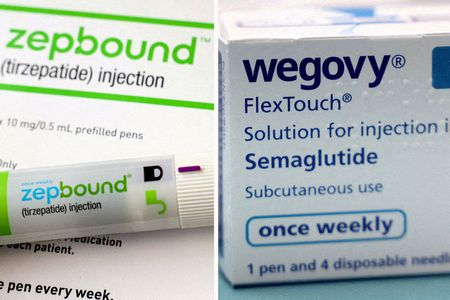
The rising cost of obesity drugs like Novo Nordisk’s Wegovy and Eli Lilly’s Zepbound and Foundayo has pushed many companies to reconsider their benefits packages. Industry experts say some employers intend to notify workers that those medications will no longer be covered starting in 2027.
When employer coverage disappears, workers are expected to turn to direct-to-consumer options — including subscription-based telehealth services like Hims, which bundle provider appointments with access to the medications.
Analysts currently project Hims will bring in $2.89 billion in revenue this year, rising to $3.45 billion in 2027. Seven analysts have raised their 2026 revenue estimates for the company since May, partly because of a new partnership Hims struck with Novo Nordisk to sell its branded drugs.
Raul Shah, CEO of DocShah Financial — which holds less than 1% of Hims shares — noted that about a third of the company’s revenue now comes from its weight-loss segment, and it continues to expand. “I project that ratio to continue increasing as more Americans partake in the GLP-1 mania,” Shah said, adding that he believes the U.S. weight-loss market is moving away from dependence on insurance coverage.
A spokesperson for Hims and Hers declined to provide comment.
Employer-sponsored health plans remain the most common form of health insurance in the country, with more than 150 million Americans enrolled, according to data from KFF. In 2025, about 43% of employers covered weight-loss drugs, and projections for 2026 are roughly the same. However, 10% of employers currently offering GLP-1 coverage for weight loss said they plan to eliminate it in 2027, according to the Business Group on Health, a policy research organization serving large employers.
Truist analyst Jailendra Singh said employers are actively steering workers toward cash-pay options through benefits guides and platforms like TrumpRx and manufacturer pharmacies. Health insurer Cigna, for example, has already dropped coverage of the medications for its own employees.
Both Novo Nordisk and Eli Lilly offer cash-pay pricing through their own pharmacy programs — NovoCare and LillyDirect, respectively. Cash-pay pricing for Novo’s Wegovy and Lilly’s Foundayo weight-loss pills starts at $149 per month.
Hims had grown into one of the largest telehealth providers of weight-loss drugs in the United States, even after moving away from mass compounding of alternative versions of the Novo and Lilly medications. The company fell short of earnings and revenue targets last quarter as it adjusted to updated compounding regulations following the end of the branded drug shortage.
In March, Hims announced a partnership with Novo Nordisk to carry its branded products, while continuing to offer compounded versions in specialized doses or formulations as permitted by regulations. Jamey Millar, executive vice president of U.S. operations at Novo Nordisk, said Hims and Hers has since delivered the highest volume among the company’s telehealth partners.
Analysts said it remains too early to estimate exactly how many new subscribers Hims has gained through the Novo deal. In the first quarter, Hims reported 2.6 million subscribers — a 9% increase compared to the same period last year.
“Second-quarter results should give us a little bit more perspective on how many new subscribers are joining the platform and how well the weight-loss portfolio is performing,” said Morningstar analyst Keonhee Kim.
Most of Hims’ revenue is generated through auto-renewing subscriptions. For GLP-1 users, that means $39 for the first month and $149 for each month after, which includes unlimited access to clinical consultations but does not cover the cost of the medication itself.
Shares of Hims and Hers closed at $32.70 on Wednesday, down more than 50% from a high of $72 reached in July 2025.
Competitor telehealth companies — including Noom, Ivim Health, and Ro — also expect demand to keep climbing as medication prices decline. A spokesperson for Columbus, Ohio-based Ivim said the company has experienced a 345% surge in demand for the Wegovy pill since January. Ro reported that the Wegovy pill has attracted new customers, including men, to its platform.
Because Hims already maintains a large and recurring subscriber base, analysts say drugmakers find the company a more attractive distribution partner than smaller rivals. Truist estimates that between 70% and 80% of new Hims weight-loss subscribers renew month to month, suggesting the company has stayed competitive in the market.
As employer coverage shrinks, pharmaceutical companies like Novo may find it more efficient to reach patients already enrolled in subscription telehealth services rather than seeking out new ones on their own. “Pharma knows how to sell business to business,” said Rajiv Leventhal, a healthcare analyst at commerce data firm eMarketer.