
A Delaware-based company that played a central role in the Trump administration’s effort to obtain critical minerals from Congo has misrepresented its mining expertise, according to an investigation by Reuters.
Virtus purchased Chemaf’s mining operations in March for $30 million from the company’s shareholders. The firm claimed on its website that it had an established presence in Congo through its operation of a copper and cobalt processing facility.
Reuters discovered that Virtus never obtained ownership of the plant, which has remained dormant since 2012, based on corporate documents, court filings concerning the disputed plant sale, and statements from five sources with firsthand knowledge.
The Chemaf acquisition marks the initial tangible investment stemming from the U.S.-Democratic Republic of Congo strategic minerals agreement established last year.
The United States committed to assisting Congo in attracting American investment in its mining operations in return for priority access to essential minerals, as part of an effort to challenge China’s established control over Congo’s mining sector.
A high-ranking Congolese official with knowledge of the approval process indicated that the security background of Virtus leadership influenced Kinshasa’s approval, given Washington’s role in mediating peace discussions between Congo and Rwanda.
Virtus refused to provide official commentary regarding the scope of its mining industry experience for this report.
Congo’s mining ministry and state-owned mining company Gécamines, which controls the lease for Chemaf’s operations, did not respond to inquiries about Virtus’ background in Congo or how the company presented its qualifications.
The U.S. State Department expressed that it “fully supports” Virtus Minerals’ acquisition and development efforts.
“This acquisition will serve as an initial flagship U.S. investment in the DRC, to showcase that the U.S. private sector interest is real and will catalyze further investment,” a spokesperson said.
The spokesperson did not address questions about whether Virtus executives’ security backgrounds influenced Congo’s decision or if the agreement includes U.S. security assurances.
An expert suggested that Virtus’ mining background raises concerns about the U.S.-DRC partnership’s transparency and whether proper vetting occurred.
“It is essential that the DRC government satisfies itself that Virtus has the necessary technical, financial and operational capacity,” said Jean-Pierre Okenda, executive director of Sentinel of Natural Resources, an NGO promoting good governance and transparency in the mining sector.
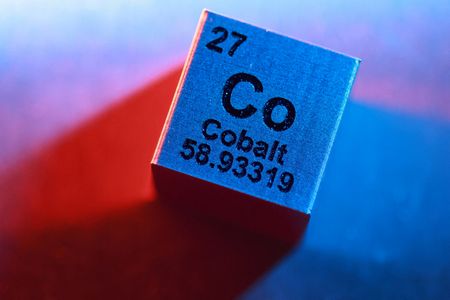
Congo generates over 70% of global cobalt production, an essential element in electric vehicle batteries, and possesses significant copper and lithium deposits.
In April 2025, Virtus Minerals’ website featured a biography of CEO Phil Braun stating he “has established and operates the only American-owned copper and cobalt mining and processing company in the DRC through the subsidiary ROK Metals.”
Reuters determined that ROK Metals, Virtus’ sole known presence in Congo, failed to acquire the long-dormant copper-cobalt processing facility it attempted to purchase in Likasi, located in southeastern Haut-Katanga province.
Virtus operates under the leadership of Braun, a former U.S. Army Green Beret, and Andrew Powch, a former U.S. Navy officer. Braun did not respond to comment requests, while Powch declined to provide official statements regarding the article’s findings.
Virtus’ leadership previously conducted business in Congo through Virtus Capital and Operations (VCO).
Through mid-March, VCO’s website featured only one operational example: Congolese company ROK Metals. The ROK Metals reference disappeared from the website in mid-March, shortly after Reuters contacted Virtus for comment.
ROK Metals sought to purchase the Likasi copper-cobalt processing plant that had been inactive since 2012 following its owner’s financial difficulties.
A May 2024 court document from the Likasi tribunal overseeing the plant sale revealed the facility remained unsold, with multiple sale attempts delayed or canceled after bidders failed to provide complete payment.
A senior judicial source informed Reuters that the plant continues under its original owner CAM Resources’ control and has never resumed operations.
State-owned lender Sofide, CAM Resources’ primary creditor seeking repayment through a potential plant sale, confirmed to Reuters that the facility has not been sold and remains non-operational.
Despite the unresolved ownership of the Likasi plant and its continued inactivity, Virtus and ROK Metals maintained their presentation of the site as an active operation.
ROK Metals’ website continues to describe the company as “actively developing a copper/cobalt leaching beneficiation plant in Likasi, which is set to yield high-grade copper cathode production in the latter half of 2023.”
In June 2024, USAID announced a $2 million grant to ROK Metals for increased production. A USAID announcement described ROK Metals as “a Congolese copper cathode processing plant in Likasi that has U.S. private sector investment.”
Documentation reviewed by Reuters indicates the grant was suspended in August 2024. The document did not specify suspension reasons but noted that reinstatement required ROK Metals to demonstrate acquisition of the Likasi plant.
A source with direct knowledge revealed the grant suspension occurred after USAID discovered ROK Metals did not own the plant, contrary to earlier claims made by company leadership.
The U.S. State Department, which manages media inquiries for the now-defunct USAID, did not respond to requests regarding the agency’s interactions with ROK Metals.
Five months following the suspension, correspondence shows Braun continued updating USAID officials about efforts to finalize the plant purchase.
The source indicated no USAID funding was distributed, as ROK Metals had not acquired the plant before USAID’s dissolution in July 2025.