
NICOSIA, Cyprus (AP) — The old saying that location determines fate couldn’t be more accurate when describing Cyprus and its turbulent history.
For thousands of years, this small Mediterranean island has attracted conquerors from ancient Greece and Persia to the Roman Empire, Ottoman Turks, and British colonizers. The reason remains the same: Cyprus sits dangerously close to what many consider the world’s most volatile region — an area shaped by centuries of religious conflict as the cradle of three major faiths, and more recently by massive oil and gas reserves.
Today, almost 66 years after gaining independence, Cyprus finds itself once again caught in Middle Eastern turmoil, largely due to two major British military installations that remain from its colonial era.
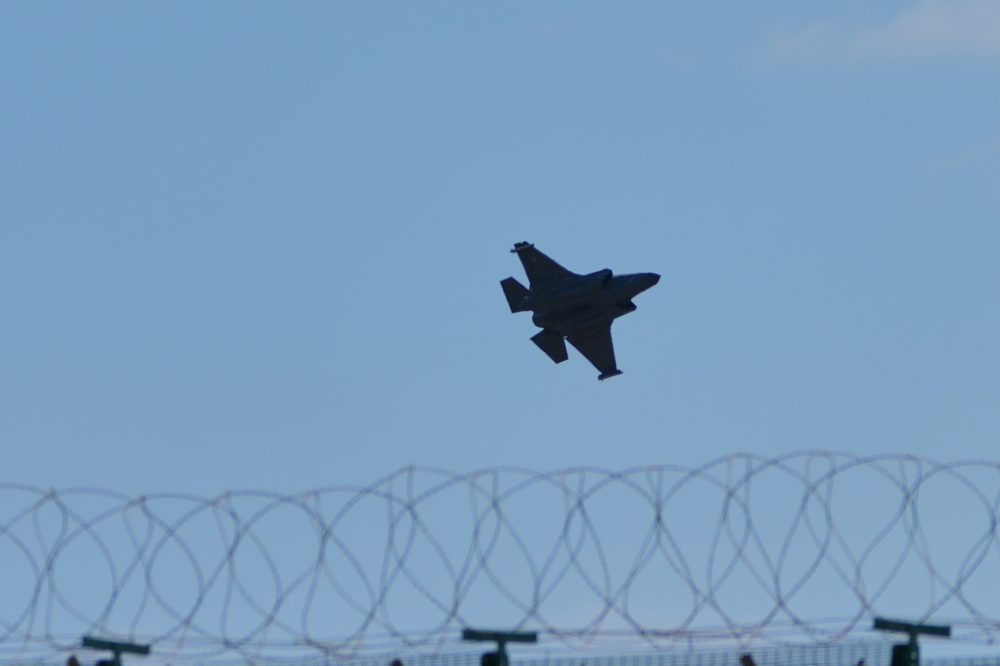
Just after midnight Monday, a Shahed drone slipped past sophisticated radar systems at the Royal Air Force facility in Akrotiri. British forces scrambled Typhoon jets and six advanced F-35 fighter aircraft to intercept the unmanned vehicle, which authorities say caused minimal damage to a hangar structure near the airfield’s main runway.
While no casualties occurred, the assault marked a dangerous escalation of the U.S.-Israeli conflict with Iran onto European soil. The incident also represents the first time any foreign power has attacked Cyprus since Turkey’s 1974 military operation that divided the island between Greek and Turkish communities.
Fighter jets successfully stopped two additional drones in a follow-up attack Monday afternoon, confirming that the morning strike wasn’t an isolated incident.
Neither Cypriot nor British authorities have revealed the drone’s launch location, though many suspect Iran’s Lebanese ally Hezbollah orchestrated the attack. British officials maintain the drone assault wasn’t connected to Prime Minister Keir Starmer’s Sunday evening decision to permit American use of UK facilities for operations against Iran, noting the unmanned aircraft was already airborne before that announcement.
However, that timing may be irrelevant. If Iran or Hezbollah sought to retaliate against Britain, they wouldn’t target the remote Diego Garcia base in the Indian Ocean when RAF Akrotiri sits just 160 miles away.
The Akrotiri facility, featuring an enormous runway, anchors Britain’s Cyprus military complex alongside the western Episkopi Garrison and eastern Dhekelia Garrison, covering approximately 99 square miles total.
During the 2003 Iraq War, RAF Akrotiri functioned as a crucial supply center for American forces. The base continues hosting the legendary U2 reconnaissance aircraft that conducts high-altitude intelligence missions throughout the Middle East.
During its early independence years, Cyprus maintained careful neutrality in regional disputes, attempting to balance relationships between East and West, Arab nations and Israel — efforts that frequently fell short. European Union membership firmly aligned the country with Western interests. The decisive shift occurred with President Nikos Christodoulides’ election — an American-educated academic who clearly declared Cyprus’ Western and pro-American stance.
Christodoulides has used Cyprus’ geographic position to establish the island as a diplomatic connector between the EU and Middle East, promoting humanitarian-focused foreign relations while building robust ties with Israel, Lebanon, the United Arab Emirates, and other regional powers.
Following the Akrotiri drone attack, Christodoulides and other government leaders emphasized that Cyprus “has not, is not and will not take part in any military action.”
Responding to Christodoulides’ request for enhanced air defense support, Greece deployed four F-16 fighters and two modern frigates, while France committed one frigate plus ground-based anti-drone and missile defense systems, officials confirmed. Germany plans to contribute a naval vessel, and Starmer announced Britain would send additional warships and helicopters to protect RAF Akrotiri.
Nevertheless, the British military presence consistently influences Cypriot government decisions. While UK authorities supposedly inform Cyprus before using the bases for military operations, this notification serves more as diplomatic courtesy than binding requirement.
Anna Koukkides-Procopiou, a Yale Fellow and president of the Politeia think tank, compared Cyprus’ predicament to a billiard ball sitting quietly in a corner until other balls suddenly knock it into a pocket.
“We’ve chosen sides and we have to face the music now,” Koukkides-Procopiou told The Associated Press, adding that Cyprus must now determine how to reduce its vulnerability to geographic circumstances beyond its control.