
BOGOTA, Colombia — Colombia’s most significant remaining insurgent organization announced Monday it would temporarily halt military operations before next month’s crucial legislative elections, which have been disrupted by violent incidents targeting political candidates in remote regions.
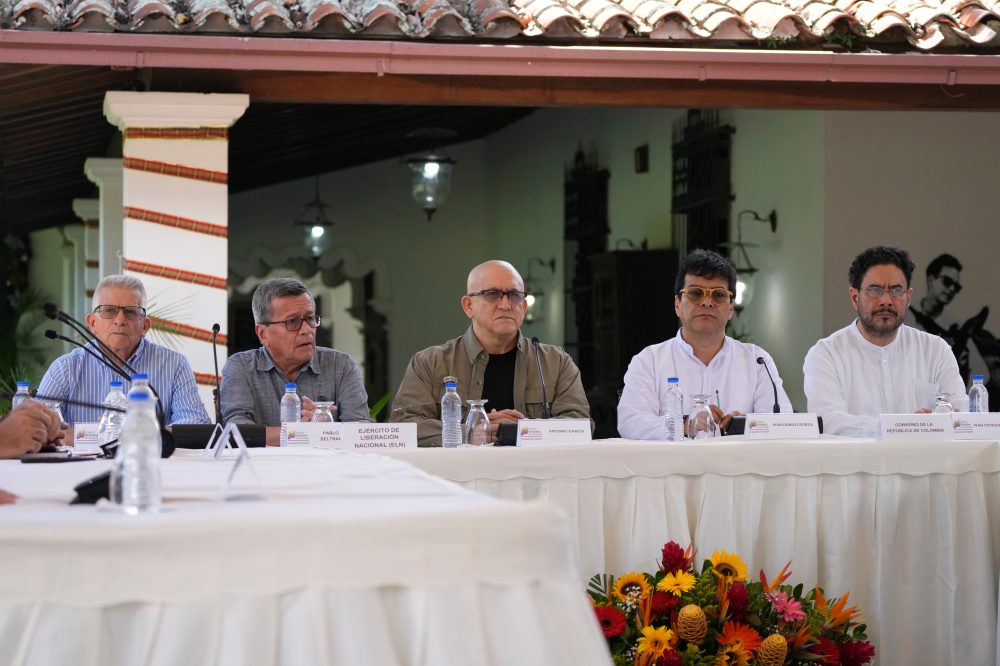
The National Liberation Army, known as ELN, released a statement on its official website declaring it would suspend attacks on government forces and election officials to ensure voters can participate “in liberty,” though the organization did not specify an end date for the temporary truce.
The insurgent organization has faced longstanding allegations of targeting political figures who challenge its agenda and maintaining control over local government positions in territories under its influence to divert government resources.
The group disputed these accusations in its announcement, stating it does not seek electoral victories and “does not finance any campaigns as drug traffickers do.”
“For the ELN it is very important for the people to vote for whom they think is best, or to abstain if they feel that is most appropriate,” the statement read.
Colombian officials suspended negotiations with the insurgent organization last year after a series of ELN operations in the nation’s northeastern regions displaced over 50,000 residents from their communities.
On March 8, Colombian voters will select new members for both chambers of Congress, with political candidates vying for more than 300 legislative positions.
The same day will feature primary contests to determine representatives for a progressive political alliance and a moderate-conservative coalition in the upcoming May presidential race.
These legislative contests represent a crucial moment for President Gustavo Petro as he works to secure a congressional majority for his progressive movement, the Historical Pact, which could potentially support efforts to draft a new national constitution.
However, the electoral process has already been disrupted by violent incidents targeting candidates and campaign workers across multiple Colombian regions, where insurgent influence has expanded during the Petro presidency.
This month, Indigenous Senator Aida Quilcue was abducted while traveling between communities in the southwestern Cauca province but was freed without harm several hours later after military forces mobilized for her rescue.
In Colombia’s eastern territories, two security personnel protecting Senator Jairo Castellanos were killed when ELN militants opened fire on his convoy. The organization later claimed they had not targeted the senator specifically, explaining they fired on the vehicle after it failed to halt at their checkpoint.
Last year, conservative presidential candidate Miguel Uribe was wounded during a political gathering in Bogota and succumbed to his injuries two months afterward. This assassination represented the first attack on a Colombian presidential contender in thirty years and prompted some current candidates to reduce public campaign events due to safety considerations.
The Movement for Electoral Observation, a Colombian democracy monitoring organization, reported this month that 11% of the country’s municipalities face “extreme risk” of election-related violence.
This assessment considers various factors including armed group presence, recent population displacement incidents, and violence against civil rights advocates.