
The Carolina Hurricanes have demonstrated an exceptional ability to bounce back from setbacks and remain composed when facing challenging road environments or sudden-death overtime situations during their playoff run.
These qualities under intense pressure help explain their current position in the Stanley Cup Final, having evened the series with the Vegas Golden Knights after dropping the opening game. The team appears to flourish in these high-stakes moments, boasting flawless records in both overtime situations and away games throughout the postseason, while successfully preventing back-to-back defeats since mid-January.
“It’s a special time of year, and it’s a really cool opportunity and experience we all get to have,” goaltender Frederik Andersen said Friday. “And if we weren’t enjoying it as well, it would be a big shame, right?”
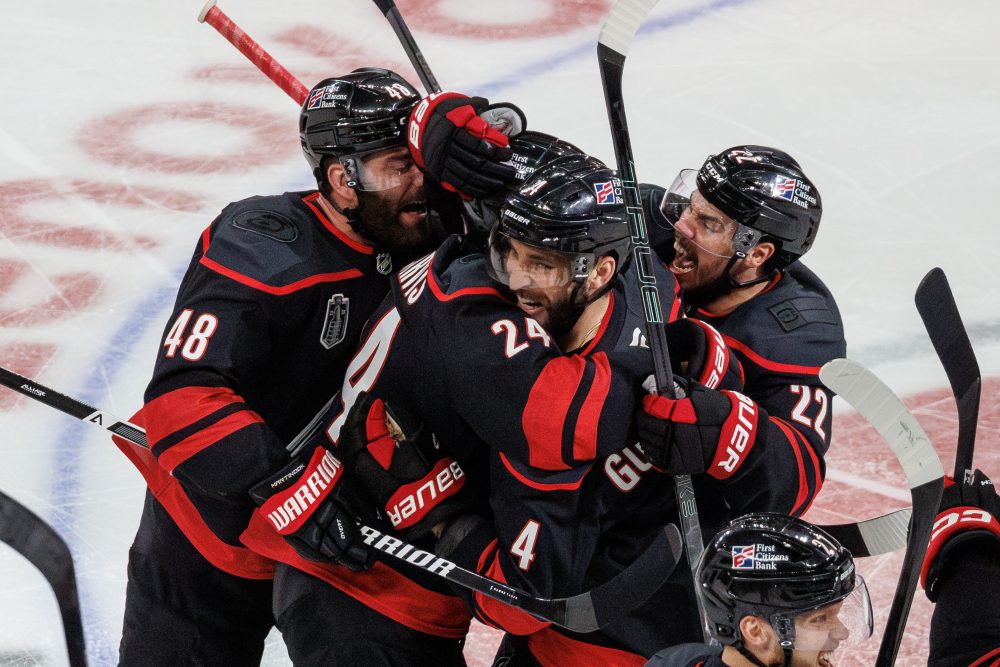
Carolina enhanced their playoff record to 13-2 through spectacular circumstances on Thursday, overcoming a two-goal third-period disadvantage to secure a 4-3 overtime victory and even the best-of-seven championship series. The dramatic finish featured Seth Jarvis delivering a powerful one-timer past Carter Hart from the left wing while on the power play, potentially serving as a pivotal moment for both the team’s top regular-season scorer and their struggling man-advantage unit.
Equally impressive is Carolina’s capacity to handle adversity throughout their campaign. Thursday’s victory extended the Hurricanes’ remarkable streak to 13 consecutive wins following defeats, a stretch that began after back-to-back setbacks in Detroit and St. Louis on Jan. 12 and 13.
“It goes to talking about belief,” forward Andrei Svechnikov said. “I think we believe in the group. We’re confident in what we’re doing and how we’re doing it. We believe in our system, and we just try to go there and play our game, and that’s what we’ve kind of been doing.”
The Hurricanes’ initial postseason defeat occurred during the Eastern Conference Final against Montreal, when Carolina emerged from an unprecedented 11-day layoff between rounds and surrendered four opening-period goals in a 6-2 defeat.
Their response was emphatic: four consecutive victories, including two in overtime and two dominant performances with a combined 10-1 scoring advantage to eliminate Montreal.
After falling 5-4 in the series opener against Vegas, Carolina again demonstrated their resilience, despite facing a daunting 2-0 deficit and struggling through what coach Rod Brind’Amour described as a second period that was “kind of a dud.”
The Hurricanes netted three consecutive goals within approximately five minutes of the final period, culminating with captain Jordan Staal’s deflection from close range during a power play opportunity.
Carolina then overcame Vegas tying the contest with 1:21 remaining in regulation, capitalizing on their second consecutive power play when Jarvis scored the decisive goal. The winning sequence featured excellent execution from Shayne Gostisbehere, who had assisted on Staal’s earlier score.
Gostisbehere effectively feinted a shot attempt, drawing the attention of Vegas defenders positioned in the middle, while Nikolaj Ehlers even jumped in the slot as if avoiding a shot. This deception kept Hart focused centrally for an extra moment as Gostisbehere instead found Jarvis on the left side for the championship-clinching goal.
Prior to these crucial scores, Carolina’s power play had struggled at 7 for 60 (11.7%) during the playoffs after finishing fourth in regular-season efficiency (24.9%).
The Hurricanes now stand 6-0 in overtime playoff situations, including victories in all four Game 2 home contests, and maintain a perfect 6-0 road record.
“For almost 50 minutes there (emotions are) kind of low, and then kind of even, then really high, then low again, and then high,” Gostisbehere said. “It’s a roller coaster, for sure. But it’s just managing them. We’re still human beings. We’re going to be nervous out there and have emotions, but the more you do it, the more you do anything, you get used to it.”