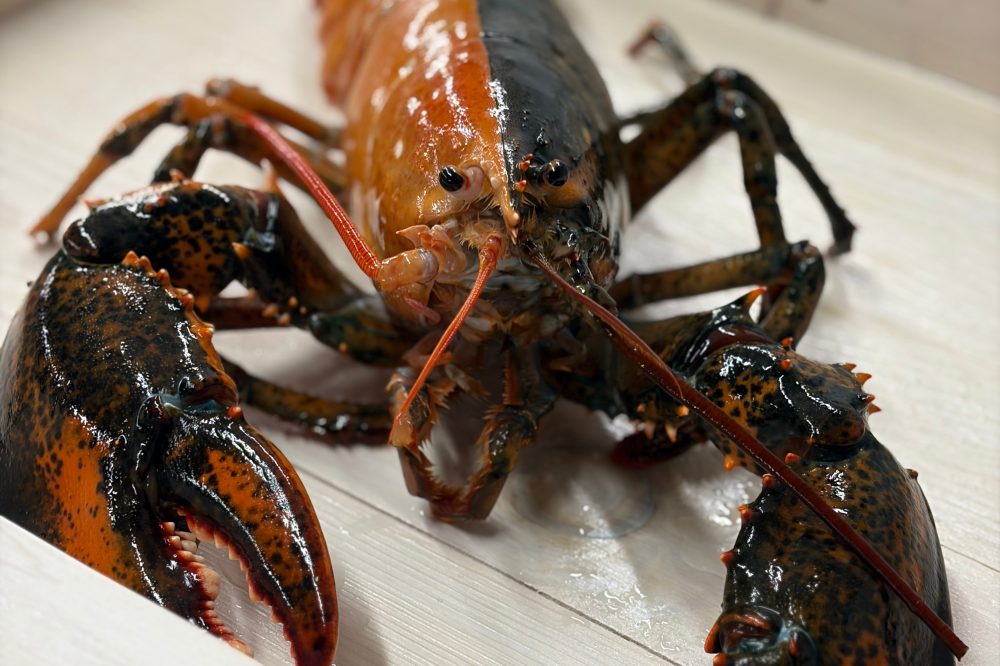

A Massachusetts seafood operation has rescued an extraordinary crustacean from the dinner plate, donating an incredibly unusual lobster to researchers due to its stunning split coloration.
The remarkable specimen displays standard brown coloring along one half of its body while showing vivid orange hues on the opposite side, with this dramatic contrast extending completely from head to tail.
Officials at Wellfleet Shellfish Company in Eastham, Massachusetts, announced Monday they’ve received numerous calls about the fascinating creature over recent days. The business has transferred the lobster to Woods Hole Science Aquarium in Falmouth, Massachusetts, where it will become a public exhibit once the facility completes renovations.
“The lobster is now with Woods Hole Science Aquarium’s animals currently being housed in holding tanks at the Marine Biological Laboratory during the aquarium’s construction period. When the aquarium reopens, the lobster will be on display, offering visitors a rare look at one of the ocean’s most striking natural anomalies,” the shellfish company said in a statement.
Local fishermen hauled in the unique lobster during their April 16 fishing operations off Cape Cod. While unusually pigmented lobsters frequently appear at New England fishing docks throughout spring and summer months, this split-colored variety represents an exceptionally uncommon discovery.
American lobsters typically display mottled brown shells, but genetic mutations can alter the proteins responsible for binding pigments, creating color variations. Some specimens appear blue or orange, others show calico-style spots, while certain brightly colored varieties earn the nickname “cotton candy” lobsters.
According to University of New England marine sciences professor Markus Frederich, split-colored lobsters develop when two separate lobster eggs merge and mature as a single organism, as he explained to The Associated Press in 2024. While scientists have estimated the probability of various lobster color mutations, Frederich notes these calculations remain rough approximations.
Representatives from Wellfleet Shellfish Company described their split-colored discovery as a “remarkable and exciting find.”