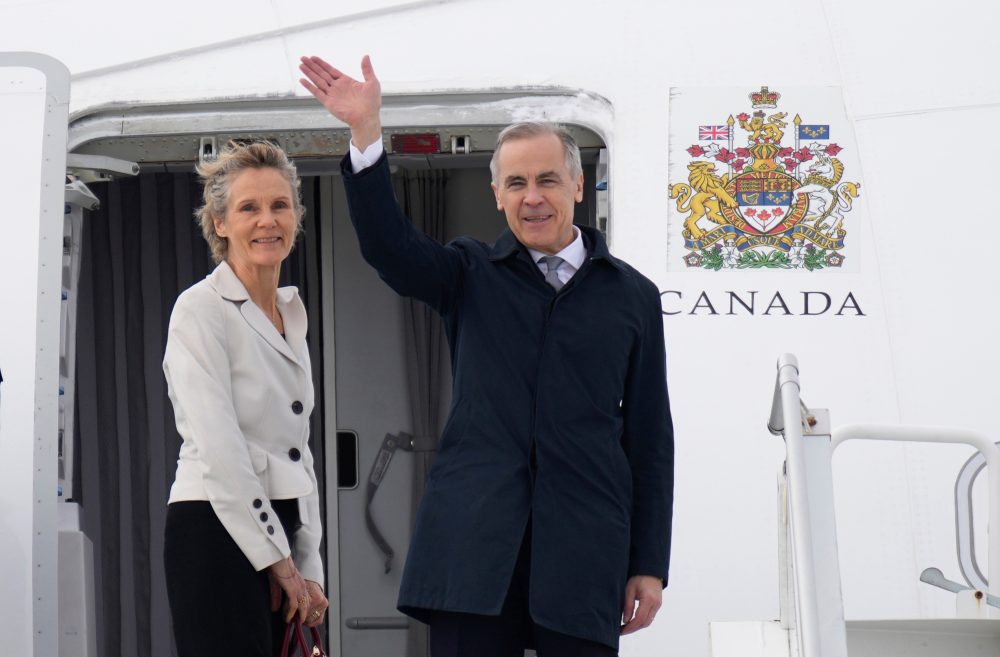

Canadian Prime Minister Mark Carney embarked on his inaugural visit to India this week as part of a broader strategy to expand trade relationships beyond the United States and mend ties with one of the world’s largest economies.
The Prime Minister touched down in Mumbai on Friday following his departure from Ottawa the previous day. His international tour will continue next week with stops in Australia and Japan.
The diplomatic mission comes as President Donald Trump’s policies and rhetoric have raised concerns in Canada about economic independence and national sovereignty, particularly following Trump’s suggestions that Canada should become “the 51st state.”
“Donald Trump’s rhetoric and policies are clearly pushing Canada to diversify its economic and trade relations, not only with other non-US Western countries but also countries like China and India,” explained Daniel Béland, a political science professor at McGill University in Montreal.
The relationship between India and Canada has been working toward normalization since both nations agreed to resume diplomatic services last year. The diplomatic crisis began in 2023 when Ottawa publicly accused New Delhi of orchestrating the assassination of a Sikh separatist leader, creating significant tension between the two countries.
Former Prime Minister Justin Trudeau created international headlines in September 2023 when he told Parliament that credible evidence suggested India’s connection to the murder of Canadian citizen Hardeep Singh Nijjar near Vancouver. India strongly rejected these claims and countered by accusing Trudeau’s administration of providing safe haven to extremist elements.
Nijjar was a vocal supporter of the Khalistan movement, which India has outlawed, seeking to establish an independent Sikh nation. Sikh advocacy groups regarded him as a champion of human rights.
The diplomatic crisis deepened approximately 16 months ago when Trudeau and law enforcement officials publicly alleged that Indian diplomatic personnel were conducting surveillance on Sikh separatists living in Canada and sharing intelligence with New Delhi. According to these officials, senior Indian authorities were subsequently providing this information to criminal organizations within India, who then targeted these Canadian citizens through violent means including shootings, extortion, and assassination attempts.
“The whole episode led to a spectacular deterioration of Canada-India relations and Prime Minister Carney’s visit to India is part of a broader strategy to improve the diplomatic and trade relations between the two countries,” Béland noted.
Similar allegations against Indian officials have emerged from other nations. In 2023, American prosecutors revealed that an Indian government representative orchestrated an unsuccessful assassination attempt against another Sikh separatist leader in New York. Earlier this month, an Indian national pleaded guilty to conspiring to hire an assassin for the same target.
Canadian Public Safety Minister Gary Anandasangaree acknowledged that “there’s a lot more work to do” to prevent Indian government operatives from threatening or intimidating Canadian residents.
Nevertheless, University of Toronto political scientist Nelson Wiseman observed that “the attitudes of India and Canada toward one another have taken a 180-degree turn” due to Carney’s business-focused approach, which differs significantly from Justin Trudeau’s methodology.
Members of the Sikh community view Carney’s diplomatic approach as surrendering to pressure.
“We are deeply disappointed by this government’s absolute capitulation and appeasement and unprincipled approach when it comes to ties with India,” stated Danish Singh, President of the World Sikh Organization of Canada.
“Activists are continuing to be harassed. We continue to see families get warnings for risks to their lives and yet we are supposed to believe this problem has been solved. We cannot accept that.”
Both countries began pursuing a trade agreement last year following years of mutual suspicion. By 2024, India had become Canada’s seventh-largest commercial partner.
Carney has established an ambitious target of doubling Canada’s exports to non-American markets within ten years, citing concerns that potential American tariffs are discouraging business investment.
Trump has recently warned of imposing 100% tariffs on Canadian imports in response to Canada’s proposed trade arrangements with China, escalating tensions with the neighboring ally and directly challenging Carney.
During last month’s World Economic Forum in Davos, Carney criticized the practice of economic intimidation by major powers against smaller nations. His speech garnered significant international attention and praise, effectively overshadowing Trump’s presence at the event.
“Cordial relations with countries like India are at the heart of the Davos doctrine enunciated by Carney,” explained Robert Bothwell, a professor of Canadian history and international relations at the University of Toronto.
“India would at least be open to discussions given the effect of Trump’s tariff warfare on that country. There is a mutual interest in stability in contrast to the whimsical, capricious and aggressive use of tariffs as a weapon to bend other countries to Trump’s will.”