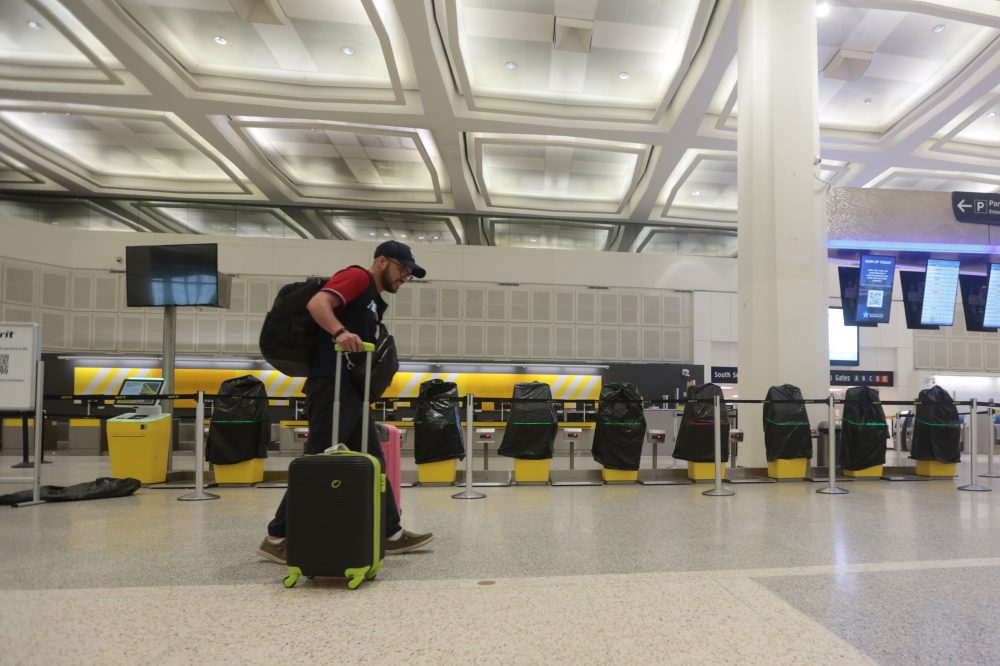

Attorneys representing Spirit Airlines appeared before a federal bankruptcy judge in New York Tuesday, requesting permission to liquidate the budget airline’s assets and convert them to cash for creditors.
This liquidation represents a stunning reversal for Spirit, which sought bankruptcy protection in August 2025 in an attempt to avoid financial collapse. The carrier’s parent company had been working to reorganize the business for a second time since November 2024 when operations suddenly ceased over the weekend.
Following Saturday’s early morning closure announcement, legal teams submitted multiple court documents outlining an accelerated shutdown strategy focused on selling all Spirit assets – including aircraft, engines, and replacement parts – while minimizing ongoing expenses for payroll, leases, and operations.
Company officials carefully orchestrated the shutdown timing. Spirit Aviation Holdings Inc. explained they made the closure announcement during overnight hours to ensure all aircraft completing final flights landed safely with crew members properly accounted for.
Three days following the shutdown, lawyers maintained their urgent pace in federal court, requesting expedited judicial approval for their proposed liquidation strategy. They contended that rapid action would serve the interests of both creditors and passengers.
“Any delay will cause chaos, confusion and cost the estate significant time and money,” one motion stated, noting the airline was “not generating any revenue.”
During Tuesday’s court proceedings, Spirit’s legal representative Marshall Huebner explained that escalating aviation fuel prices following military strikes by the U.S. and Israel against Iran “engulfed Spirit entirely.”
The carrier’s fuel costs increased by approximately $100 million “in March and April alone,” rapidly depleting Spirit’s available cash and undermining restructuring plans, according to Huebner.
Huebner offered direct apologies to Spirit workers and travelers, particularly noting passengers who may now find themselves completely “priced out” of certain flight routes without the ultra-low-cost option.
He outlined coordinated assistance efforts by competing airlines and aviation industry segments to help Spirit personnel and customers once the carrier’s demise became unavoidable.
“The entire industry sprang into action to get our people home,” Huebner stated. Spirit maintained approximately 17,000 workers and transported roughly 50,000 travelers during its final operating day. The carrier’s last flight departed Detroit for Dallas, touching down after midnight Saturday.
With aircraft now grounded, Spirit announced plans to retain a minimal workforce of roughly 150 employees initially, eventually reducing to about 40 staff members. This core group, consisting primarily of experienced personnel and leadership, including certain “senior management employees,” will handle aircraft security, logistics coordination, and liquidation oversight.
The company additionally sought approval from Judge Sean Lane for retention bonuses to maintain these essential workers throughout the liquidation timeline.
During the past two weeks, Spirit engaged in negotiations with the Trump administration regarding a potential rescue package that ultimately failed, eliminating what company officials characterized as their final viable option. Regarding the proposed bailout, Transportation Secretary Sean Duffy commented Saturday, “We oftentimes don’t have half a billion dollars laying around.”
Duffy announced that competing U.S. carriers, including United, Delta, JetBlue and Southwest, were providing $200 one-way tickets for a limited period to travelers possessing Spirit confirmation numbers and purchase documentation.
Other airlines also provided assistance to displaced Spirit crew members, with some establishing preferential hiring procedures for former Spirit workers seeking new employment opportunities.