
Ken Morrow has long enjoyed being the answer to a unique trivia question – he remains the sole American hockey player to capture Olympic gold and claim the Stanley Cup within the same calendar year. Morrow achieved this rare feat as a member of the legendary 1980 U.S. “Miracle on Ice” squad before contributing to the New York Islanders’ initial championship in their four-year dynasty.
While six Canadian players have managed this accomplishment since NHL athletes began competing in Olympic competition, fewer Americans have achieved Morrow’s double than have set foot on the lunar surface. He stands alone in this exclusive category.
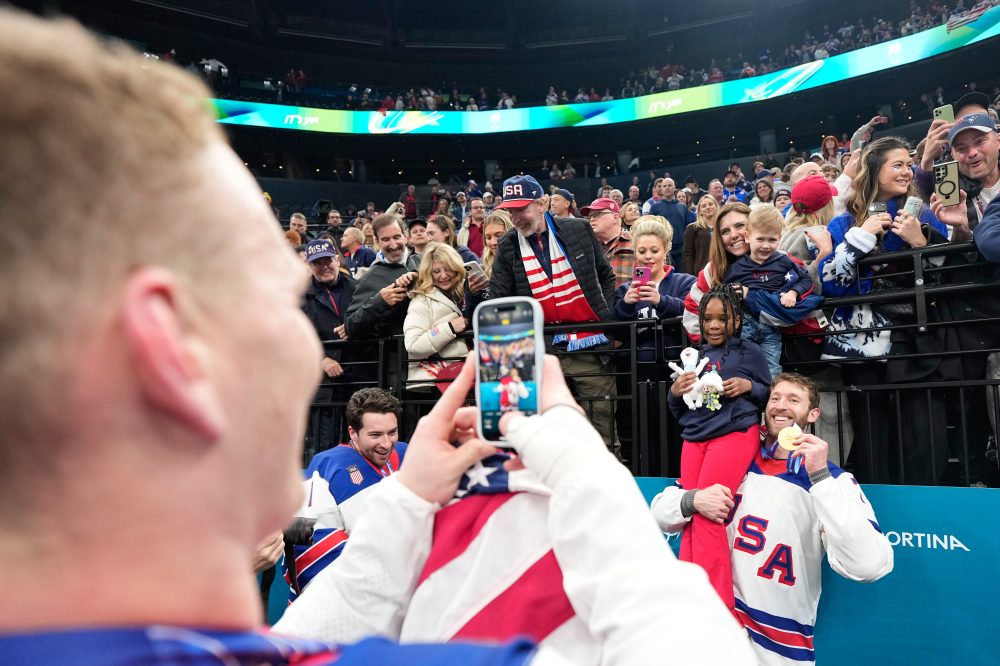
This unique distinction will inevitably change regardless of the Cup final’s outcome. Following the U.S. team’s first Olympic gold medal triumph in 46 years, Carolina’s Jaccob Slavin needs just one more win to match Morrow’s achievement, while Vegas could propel Jack Eichel and Noah Hanifin into this select group if they capture Games 6 and 7.
“I’ve had my 46 years,” Morrow told The Associated Press by phone Friday. “I’m always one that likes to see new people win the Cup, guys get a chance to do something that they’ll remember the rest of their lives. And for whoever does it this year, yes, I think it’s great.”
Morrow captured four consecutive Stanley Cup championships during the Islanders’ dominant era. Among U.S. players in the current final, only Eichel possesses a Cup championship, having played a crucial role in the Golden Knights’ 2023 title run.
Following his contribution to the U.S. gold medal victory in Milan during February, Eichel notes both parallels and contrasts between these championship pursuits.
“One’s nine, 10 months; one’s two weeks,” Eichel said. “One of them is winner-take-all of just one game at a time. These are seven-game series, so it’s different in that sense. I think from an emotional standpoint and a mentality, I think there’s a lot of similarities: just the investment in winning and the feeling in the room and everything that comes with it.”
While Eichel describes the single-elimination aspect as a useful way to approach playoff hockey, Hanifin emphasized the stark contrast between preparing for individual Olympic contests versus navigating a postseason’s emotional roller coaster.
“When you’re playing seven-game series, you can kind of build over time and if you hit a little bit of a setback or some adversity, you can kind of learn from it and build and come back better,” Hanifin said. “Whereas Olympics, when you get into those medal rounds, it’s a one-and-done situation, so it’s different in that regard.”
Should the Hurricanes prevail, it would provide some redemption for Seth Jarvis, who represented Canada in the Olympic final and fell to the U.S. in overtime on Jack Hughes’ decisive goal.
During a team photo session featuring Slavin, Jarvis, and bronze medalist Sebastian Aho displaying their Olympic medals while wearing their national jerseys, Jarvis joked in a behind-the-scenes video about revisiting his worst memories and mentioned the plush mascot toys that IOC representatives distributed to players following their devastating championship loss.
Prior to the final’s commencement, Jarvis recognized these competitions as separate entities.
“Obviously, losing in the gold medal is going to suck forever,” Jarvis said. “But now I get a chance to be a winner and win something big here with a group of guys that I’ve been grinding with for five years, been through the ups and downs of it and people that I just really care about.”
Two additional defeats would place Jarvis in an identical position, though without another commemorative stuffed animal. Another Golden Knights loss would mean experiencing two final defeats this year for Mitch Marner, Shea Theodore and Mark Stone.
Prior to the series’ start, Slavin worked diligently to prevent his thoughts from wandering to this historic possibility.
“It crosses my mind,” Slavin said. “But we’ve got to go out and do a job first, so not trying to give it too much thought.”
During the nearly five decades since Morrow achieved the Olympic gold-Stanley Cup combination, the entire landscape has transformed. The NHL has sent players to six Olympic Games since 1998, meaning today’s athletes are already established professionals.
At 23 years old, Morrow experienced less than 10 days between defeating the Soviet Union in the “Miracle on Ice” at Lake Placid, New York, visiting the White House, attending his initial Islanders practice, and making his NHL debut.
“I was trying to earn a living,” Morrow said. “I had to kind of really change focus quickly into trying to earn a job with the New York Islanders, and it wasn’t a sure thing for me when I first came to them right after the Olympics. Am I going to be able to play in the league? Those were questions that I was facing in trying to make a living. And these guys certainly didn’t have that facing them after the Olympics.”
They simply needed to return to their professional responsibilities, which presented its own set of challenges. Both Vegas and Carolina topped their respective divisions and advanced through three playoff rounds.
This success provided Eichel, Hanifin and Slavin the chance to join Morrow, Steve Yzerman and Brendan Shanahan from Detroit in 2002, Jonathan Toews, Brent Seabrook and Duncan Keith from Chicago 2010, and Drew Doughty from Los Angeles in 2014 in the record books.
“For myself, it’s been a pretty surreal year: Winning gold was awesome, and then having the chance to play for a Stanley Cup is awesome,” Slavin said. “I take it as a blessing and just thankful for it.”