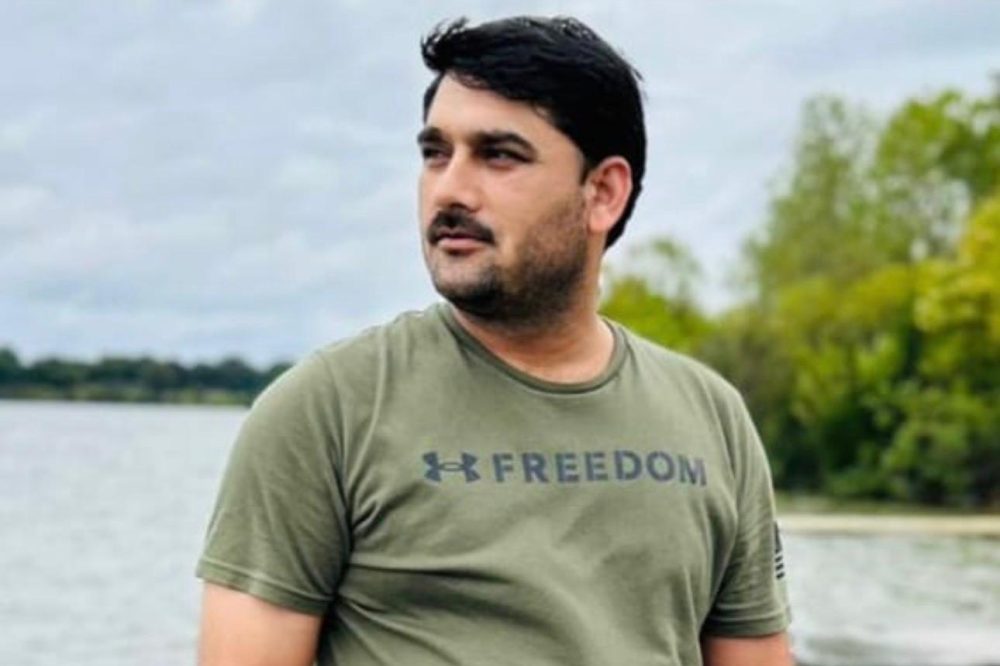

An Afghan man who spent a decade fighting alongside U.S. Special Forces died from a severe allergic reaction while being held by Immigration and Customs Enforcement — just one day after agents arrested him for deportation proceedings, according to his death certificate.
Mohammad Nazeer Paktiawal, 41, experienced what the document describes as “an adverse drug reaction” to an unknown substance, which set off anaphylaxis and worsened his existing asthma condition. His death on March 14 at a Dallas hospital was officially classified as an accident.
The circumstances surrounding Paktiawal’s death have sparked widespread anger, given that he had put his life on the line as a U.S. ally in Afghanistan for ten years. Advocacy organization AfghanEvac and several members of Congress have been pushing for a full accounting of what took place.
Among more than 50 deaths that have occurred in ICE detention during President Donald Trump’s second term, Paktiawal’s is the only one so far to be ruled an accident, based on tracking by The Associated Press. The majority of the other deaths have been attributed to natural causes or suicide.
On Monday, AfghanEvac called on Texas officials to make public the complete autopsy report. Authorities have been fighting to keep it sealed, arguing that releasing it could compromise an active criminal investigation into the death.
“This family has a right to know what happened. Why won’t they release the report?” said Shawn VanDiver, president of AfghanEvac. He pressed authorities to explain what triggered the allergic reaction, how that substance entered Paktiawal’s body, and why the death certificate lists the date of injury as the day before he was actually taken into custody.
Paktiawal was among the thousands of Afghans evacuated to the United States when American forces withdrew from Afghanistan in 2021. He came through a legal immigration process and applied for asylum. That application was still pending when ICE agents showed up at his home in Richardson, Texas, on March 13 and arrested him as he was in the process of taking some of his six children to school.
ICE has defended its decision to pursue deportation against Paktiawal, pointing to prior arrests on food stamp fraud and theft charges. He had not been convicted in either case.
According to a one-page ICE summary of the incident, Paktiawal was screened at the agency’s Dallas field office and told staff he had no known medical conditions or allergies. A few hours later, he began having trouble breathing and complained of chest pain while in a holding room, and was transported to Parkland Memorial Hospital.
The following morning, hospital workers noticed his tongue had swollen while he was eating breakfast and administered epinephrine, a medication used to treat severe allergic reactions. Despite life-saving efforts, he was pronounced dead roughly 40 minutes later.
The death certificate lists the official cause of death as “anaphylaxis complicating acute asthma exacerbation.” Anaphylaxis is an extreme allergic response that can be triggered by food, medication, or insect venom. The document also notes that methamphetamine toxicity, heart disease, and cigarette smoking were contributing factors.
People who knew Paktiawal — including family members and coworkers — said they had never seen him use methamphetamine. A second autopsy conducted privately on behalf of the family was unable to confirm whether meth was present in his system because no blood was available for testing, according to VanDiver. Paktiawal’s wife has stated that he used an inhaler to manage his asthma, but ICE agents turned her away when she tried to hand over the device at the time of his arrest.
The Dallas County Medical Examiner’s Office conducted the official autopsy and established both the cause and manner of death.
County officials have declined to release the full autopsy report, citing guidance from ICE that doing so could hinder a federal investigation. They have asked Texas Attorney General Ken Paxton’s office for authorization to withhold the record under a “law enforcement exception” in the state’s open records law.
In a written response to an AP request for the report, Dallas County official Jennifer Rose stated that releasing it “would interfere with the detection, investigation, and prosecution of a crime,” without providing further detail. The medical examiner’s office declined to comment on the matter.
Paxton’s office has not yet issued a ruling, but it previously approved a comparable request from another Texas county to block release of an autopsy report for a Vietnamese man who died in ICE custody in July 2025, according to documents the AP obtained.