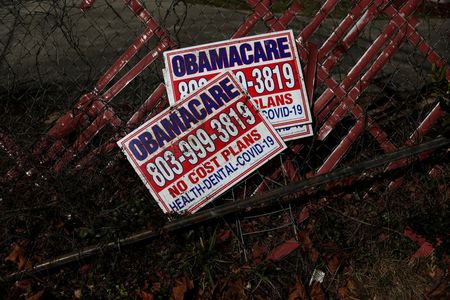

Health insurance enrollment under the Affordable Care Act is declining at a faster rate than previous years, with data from six state-run marketplaces showing increased cancellations and non-payment issues through April.
The coverage losses are creating political challenges for President Donald Trump and the Republican party as November midterm elections approach, with affordability expected to be a central campaign issue.
Kentucky experienced the most dramatic increase, with three times more people losing coverage compared to the previous year. Idaho saw enrollment drop by 24,402 members, significantly higher than the 15,866 lost during the same period last year. California’s cancellations increased by a more modest 6%.
Approximately 23 million Americans enrolled in or were automatically renewed for 2026 health plans under President Barack Obama’s Affordable Care Act, representing a 5% decrease from the prior year. The drop stems primarily from the elimination of enhanced subsidies that were implemented during the COVID-19 pandemic to help maintain coverage.
Premium costs surged an average of 114% to $1,905 per year without the subsidies, according to health policy research group KFF.
“Consumers are being exposed to the actual unsubsidized cost of these premiums and are choosing to leave the marketplace,” said Matt McGough, a policy analyst at KFF.
The U.S. Centers for Medicare & Medicaid Services, which administers the Affordable Care Act and operates HealthCare.gov for approximately 30 states, did not respond to requests for comment.
Healthcare affordability ranks as a primary concern for voters, with its influence expected to grow throughout the year like “a gathering storm,” according to Jonathan Oberlander, a professor of health policy at the University of North Carolina School of Medicine.
KFF polling indicates affordable healthcare tops the list of public concerns, matching worries about rising gasoline and transportation expenses related to the U.S.-Israeli war with Iran.
More than three-quarters of independent voters courted by both political parties indicate healthcare costs will influence their voting decisions and candidate preferences in November.
An Idaho health exchange spokesperson confirmed affordability as the primary factor driving increased disenrollments in their state.
By November’s midterm elections that will determine Congressional control, more Americans will likely have lost coverage while media focus on the issue intensifies, Oberlander predicted.
Total Affordable Care Act enrollment probably decreased between 17% and 26% through March, according to Wakely Consulting Group, a health insurance consulting firm that examined premium payment information covering roughly 80% of the individual marketplace.
Wakely reported that over 14% of enrollees failed to pay their January premium, consistent with a March KFF survey finding approximately 15% of enrollees had not paid premiums, primarily due to higher costs.
The Centers for Medicare & Medicaid Services had indicated it would release premium payment data during the spring.
Among 20 states and the District of Columbia operating their own marketplaces contacted by Reuters, 12 provided recent enrollment snapshots.
Connecticut, Massachusetts and New Mexico reported thousands of consumers either failed to pay initial premiums or lost coverage during early months due to missed payments.
Most states and the federal government provide grace periods of 90 days or longer for non-payment situations.
In Kentucky, 15,067 people who selected 2026 plans lost coverage due to non-payment between January and April, compared to 5,034 disenrollments during the same timeframe last year.
The state also experienced an 8.5% decrease in overall January enrollment, according to a spokesperson for Kentucky’s Cabinet for Health and Family Services.
Kentucky and Idaho may have been particularly affected by the limited number of insurers common in rural areas, which reduces competition and increases prices, KFF’s McGough noted. A Kentucky spokesperson said the state exchange now includes three insurers in 2026, down from four in 2025.
Some states like Colorado provided state-based assistance that helped reduce affordability issues and terminations, McGough said, while Idaho and Kentucky did not offer such support. Colorado experienced a 2% enrollment drop, matching Pennsylvania’s decline.
Michele Eberle, executive director at Maryland’s Health Benefit Exchange, reported enrollment has decreased by 8% with over 60% of people who disenrolled citing increased or unmanageable costs. The state anticipates a 15% enrollment decline this year.
“We’re going to see month-over-month declines, especially with gas prices that are continuing to climb,” said Eberle. “We have to see where the breaking point is for people.”