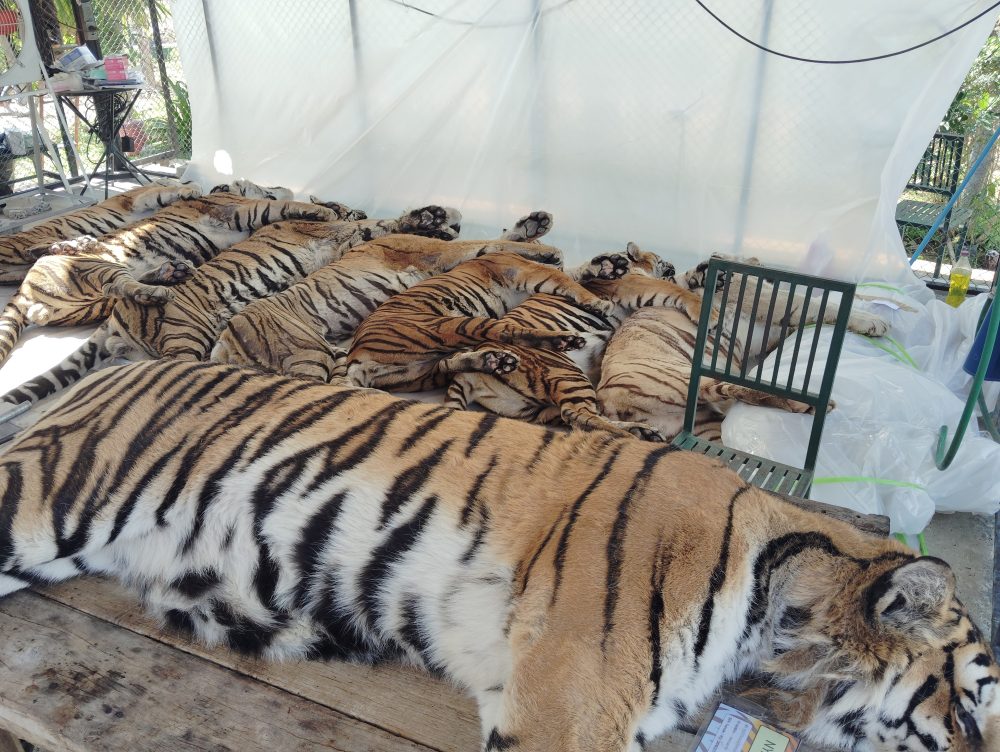

BANGKOK — Thai health authorities announced Tuesday that the deaths of 72 tigers at two northern Thailand tourist attractions resulted from canine distemper virus, not bird flu, easing public health concerns about human transmission.
The tiger deaths occurred over approximately 10 days from February 8-18 at animal parks located in Mae Taeng and Mae Rim districts within Chiang Mai province.
“There has not been an animal-to-human infection case,” Public Health Minister Pattana Promphat stated during a Bangkok news conference at Government House.
Laboratory examinations conducted by the Chiang Mai regional livestock office revealed genetic material from canine distemper virus and bacterial infections in the deceased animals, but confirmed no presence of avian influenza type A virus, commonly called bird flu.
Health officials continue monitoring individuals who recently handled the tigers, though no symptoms have appeared among staff or visitors so far.
“If we detect any sick persons, we will prepare for a nationwide monitoring measure,” explained Monthien Khanasawat, who leads the Public Health Ministry’s Disease Control Department. “This will include contact tracing and treatment as necessary.”
The announcement appeared designed to calm public fears about bird flu, which has resurged across parts of Asia. Between 2004 and 2007, Thailand recorded 17 fatalities among 25 people infected with poultry-related influenza, according to ministry data.
Canine distemper virus affects both dogs and cats, but produces more severe symptoms in large felines like tigers. The infection spreads through bodily fluids and airborne transmission. Thai officials noted that tigers in captivity face heightened vulnerability due to stress and inbreeding conditions.
Livestock Development Department Director-General Somchuan Rattanamangklanan reported that all tiger remains underwent complete necropsies before cremation and burial. Workers properly disinfected, photographed and disposed of carcasses to prevent any unauthorized use.
However, veterinarian Visit Arsaithamkul, who participated in the post-mortem examinations, raised concerns about the infection’s unclear origins. Through a Facebook post, he suggested that contaminated food from a shared supplier might explain the outbreak, given that both facilities sit just 30 kilometers apart.
When contacted for additional details, Arsaithamkul declined further comment. Both attractions, operating under the Tiger Kingdom brand, remain temporarily closed. Park operators have not responded to requests for statements.
Thai health officials maintain vigilance regarding potential bird flu threats. Monthien advised citizens to exercise caution with poultry consumption after an unnamed neighboring country reported a human bird flu infection.
Bird flu first jumped from animals to humans in Hong Kong during 1997, followed by a pandemic that spread throughout Asia beginning in 2003. Thailand’s previous outbreak led to the destruction of tens of millions of birds and dramatically reduced poultry consumption due to infection fears.