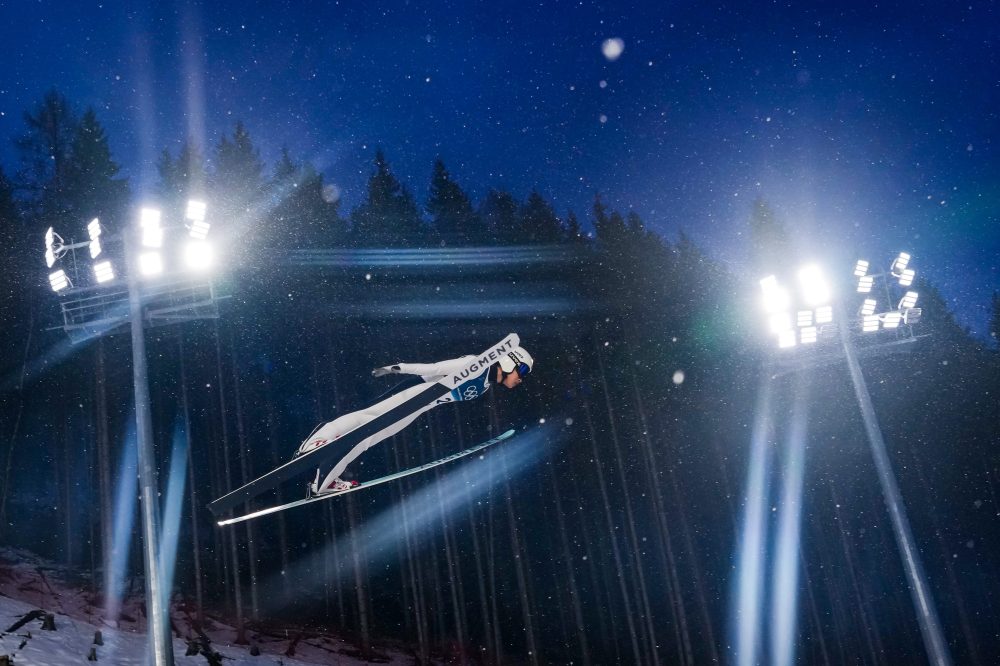

CORTINA D’AMPEZZO, Italy — The massive power demands of hosting a Winter Olympics — from lighting venues to producing artificial snow — will be met entirely through renewable energy sources at the 2026 Milan Cortina Games, marking an unprecedented commitment to environmental sustainability.
Event planners identified electricity consumption as their biggest opportunity to reduce environmental impact, recognizing it as a primary contributor to carbon emissions at large-scale sporting events. Italy’s major utility provider, Enel, has committed to delivering completely certified green power to all Olympic facilities.
According to the organizing committee’s September sustainability report, all electrical power during the Games will come from verified renewable sources. When temporary generators are necessary, officials plan to use hydrotreated vegetable oil instead of conventional diesel fuel.
“This is also an opportunity to contribute to a broader shift — showing athletes, spectators and future host cities that cleaner energy solutions are increasingly viable for events of this scale,” organizers stated in a Friday announcement to The Associated Press. “We hope the steps taken for these Games can support ongoing progress across major events.”
Enel will deliver 85 gigawatt-hours of electricity for both the Olympic and Paralympic competitions. The company purchased “guarantee of origin” certificates from renewable energy facilities to match the Games’ complete power requirements.
These GO certificates represent a European trading system established in 2001, where each certificate equals one megawatt hour of electricity generated from verified renewable sources.
Companies trade these certificates through market transactions or broker arrangements. After use, certificates are permanently retired to prevent duplicate claims for the same renewable energy production. This framework aims to accelerate renewable energy development by helping organizations achieve their environmental goals.
Enel described its clean energy commitment as translating “the values of sustainability and inclusion inherent in the Games into concrete terms, combining technological innovation and environmental protection.”
However, the certificate system faces criticism from some experts. Matteo Villa from the Italian Institute for International Political Studies called it a “great way to promote your event,” but argued it doesn’t actually make Italy’s energy system cleaner or more renewable.
Villa emphasized that the Games’ environmental impact can only be as sustainable as Italy’s overall energy infrastructure.
Enel’s 2025 preliminary data shows nearly 75% of its Italian electricity production was carbon-free. Hydroelectric power accounted for roughly 50%, geothermal provided 17%, and wind, solar, and other renewables contributed under 10%. Natural gas plants supplied the remaining power.
Northern Italy hosts numerous hydroelectric facilities that benefit from mountainous terrain and abundant water resources. Nevertheless, Italy’s national power grid continues to depend significantly on fossil fuels, based on International Energy Agency country data.
Enel constructed new primary electrical substations in Livigno and Arabba to distribute power across the Olympic region. The company also built and enhanced distribution networks in Livigno, Bormio, and Cortina areas, creating lasting infrastructure benefits for local communities beyond the Games.
Environmental responsibility has become central to these Games as both organizers and the International Olympic Committee demonstrate methods for reducing carbon emissions while managing major events. Climate researchers warn that the number of locations capable of reliably hosting Winter Olympics will decrease dramatically in coming decades.
“Every Games we strive to push innovation in sustainability, reduce the overall impact and the carbon footprint,” Julie Duffus, the IOC’s sustainability director, told the AP on Friday. She emphasized the clean power initiative, energy infrastructure improvements, and the decision to use primarily existing or temporary venues.
Matteo Di Castelnuovo, an energy economics professor at Milan’s SDA Bocconi School of Management, expects Olympic organizers will maintain their clean energy focus, noting “the challenge lies somewhere else to make them greener.” The more complex issue involves reducing emissions beyond direct control, particularly transportation-related pollution.
The Games’ estimated greenhouse gas emissions equal those produced by 4 million typical gasoline vehicles traveling from Paris to Rome, according to the organizing committee’s carbon management plan. The largest portion of the environmental footprint comes from indirect activities including visitor accommodations and spectator transportation. Aviation contributes significantly because jet fuel combustion releases substantial carbon dioxide.
Karl Stoss, who leads the Games’ Future Host Commission, has suggested potentially reducing the number of sports, athletes, and attendees in future Olympics.
Several prominent skiers, including U.S. team members Lindsey Vonn and Mikaela Shiffrin, have voiced concerns during competition about climate change accelerating global glacier melting.