
Officials organizing security for the upcoming World Cup tournament are identifying unmanned aircraft as among their most challenging security concerns, working to safeguard venues, fan gathering areas, team accommodations, practice facilities, and transportation corridors spanning numerous American cities and governmental jurisdictions.
According to industry leaders and federal officials, the dangers span from thoughtless fans trying to capture aerial video for social platforms to individuals performing reconnaissance or trying to interfere with games.
Melissa Swisher, chief revenue officer of SkySafe, a company specializing in unmanned aircraft detection and airspace protection, explained that affordable flying devices have “fundamentally changed” security preparations for major athletic competitions because they can penetrate prohibited zones before law enforcement can respond.
“A thousand-dollar drone that’s going 40 to 45 miles per hour could cross two miles in under three minutes,” Swisher said. “By the time somebody sees it, that’s already over.”
According to Swisher, the most probable application during the World Cup might involve reconnaissance instead of aircraft carrying dangerous materials. Unmanned vehicles could gather intelligence on security procedures, track team activities, or capture prohibited video. Additional flights may come from enthusiasts, journalists, or supporters unaware of temporary aviation restrictions, she explained.
These flying devices can circumvent standard venue security including barriers, metal detectors, and extended foot traffic zones, according to Tom Adams, public safety director at anti-drone firm DroneShield and former FBI agent.
“You have something that can overcome all those traditional security measures and get right over everything,” Adams said. “In a lot of cases, it’s just a careless and clueless person who wants to get a cool picture to put on their social media page.”
Anti-drone firms are collaborating with police and emergency services to establish detection systems surrounding tournament locations. SkySafe reports its equipment can recognize drone transmissions, monitor flight routes, and when feasible, pinpoint the pilot’s location.
DroneShield is assisting a Kansas City-area operation coordinated by law enforcement and regional allies to help identify drones across various jurisdictions.
Company representatives noted that destroying drones is seldom a straightforward solution above crowds since falling pieces could harm viewers. Rather, locating the pilot may provide the safest approach when an aircraft appears to be gathering intelligence instead of creating an immediate physical danger.
The current administration has allegedly allocated $250 million since December to assist American host cities in addressing drone dangers.
The money, delivered via the Federal Emergency Management Agency to 11 host states and Washington, D.C., aims to help monitor and reduce unauthorized aircraft. During game days, aircraft and drones will be prohibited within 3.5 miles of venues and beneath 3,000 feet according to Federal Aviation Administration rules.
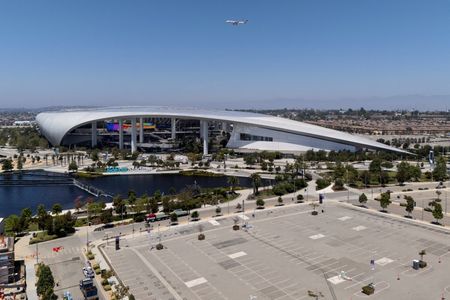
The competition’s broad geographic spread increases the difficulty. In areas including New York-New Jersey, Boston, Kansas City, and Los Angeles, security efforts may cross municipal, county, and state boundaries. California, where SoFi Stadium in Inglewood and Santa Clara will stage games, obtained the highest FEMA funding at nearly $34.6 million.
Swisher indicated that insights from the World Cup will probably influence security preparations for the 2028 Los Angeles Olympics in two years.
“They’re not going away,” she said of drones. “Tech continues to get more and more sophisticated.”