
ETTRICK, Va.—Research at Virginia State University is revealing the untapped commercial and wellness potential of edible flowers, offering new opportunities for farmers looking to diversify their operations.
During a February 27 workshop at VSU Randolph Farm, Professor Theresa Nartea shared her findings with young farmers from across Virginia as part of the 2026 Virginia Farm Bureau Federation Young Farmers Winter Expo.
“Flowers are food for the soul and tummy,” said Nartea, who serves as VSU professor and Virginia Cooperative Extension small farm marketing and agribusiness specialist.
As participants received dried organic lavender bouquets, Nartea demonstrated the therapeutic benefits by having them crush the buds to release the calming fragrance.
“I carry a few stems of dried lavender with me in my pocket so I can keep going, because if you crush just one bud between your fingers, the fragrance becomes even more beautiful,” she explained. “Life’s trials are like this—you feel a crushing, but the beauty comes from those hard times in our life.”
Nartea pointed to growing research showing lavender’s effectiveness in addressing anxiety, depression and cigarette cravings, along with mounting scientific proof of various edible flowers’ therapeutic qualities.
Referencing a 2021 University of Pisa study, she outlined numerous scientifically documented health benefits, including Indian chrysanthemums’ cancer-fighting compounds, nasturtiums’ weight management properties, Aztec marigolds’ vision support benefits, roselles’ potential against Alzheimer’s disease, and the antioxidant content present in nearly all edible flower varieties.
“There are little things we can do every day to help in our healing process,” Nartea observed.
Her Nourishing Blooms Program at Randolph Farm investigates edible flowers, herbs and specialty products such as wellness-focused tea blends designed to support mental health and community wellness.
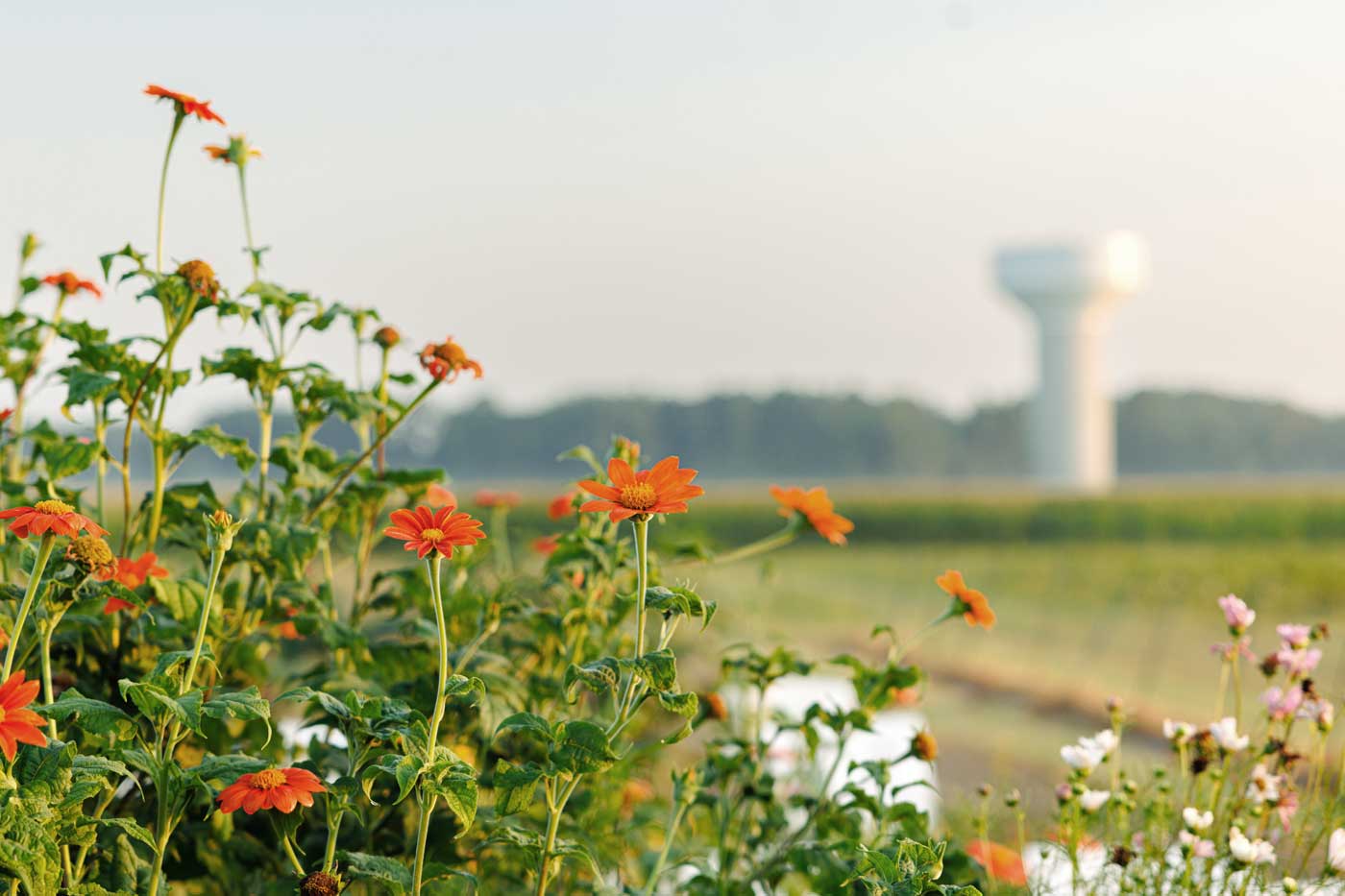
The demonstration garden, established in 2024, has allowed Nartea to examine various culinary applications of plants suitable for Virginia cultivation. These include hibiscus with its tart leaves popular in Jamaican cooking, cut-leaf coneflower leaves resembling kale that served as a Cherokee nutritional staple, and traditional applications for African blue basil flowers.
“You don’t have to ignore a whole plant—there are things yet to be studied that indigenous cultures have been using for over millennia to feed themselves,” she explained.
The market research component involved hosting Extension field days where community members could harvest their own flower arrangements from the half-acre demonstration plot. The 2025 season yielded approximately 2,550 bouquets with an estimated value of $38,250.
“There is definitely money to be had in this,” Nartea stressed. “People stayed even though we were done with the demonstration, because they found so much joy in cutting their own flowers.”
Several field day participants received seeds for hibiscus, butterfly pea and other plants suitable for therapeutic tea production to enhance their farming enterprises.
Nartea warned against pesticide use when cultivating herbs and flowers intended for consumption, recommending companion planting and alternative pest management strategies instead.
“That means some things won’t be as beautiful, you’ll have to pick things off and do things that are tedious,” she acknowledged. “But if it’s your passion, you make time for it.”
Future research plans include exploring additional value-added applications for butterfly peas and sunflowers in collaboration with other VSU researchers.
Nartea’s work was featured in an October 2024 “From the Ground Up” segment on Real Virginia, Virginia Farm Bureau’s weekly television program, and additional information about edible flowers appeared in the organization’s 2024 summer Cultivate magazine.