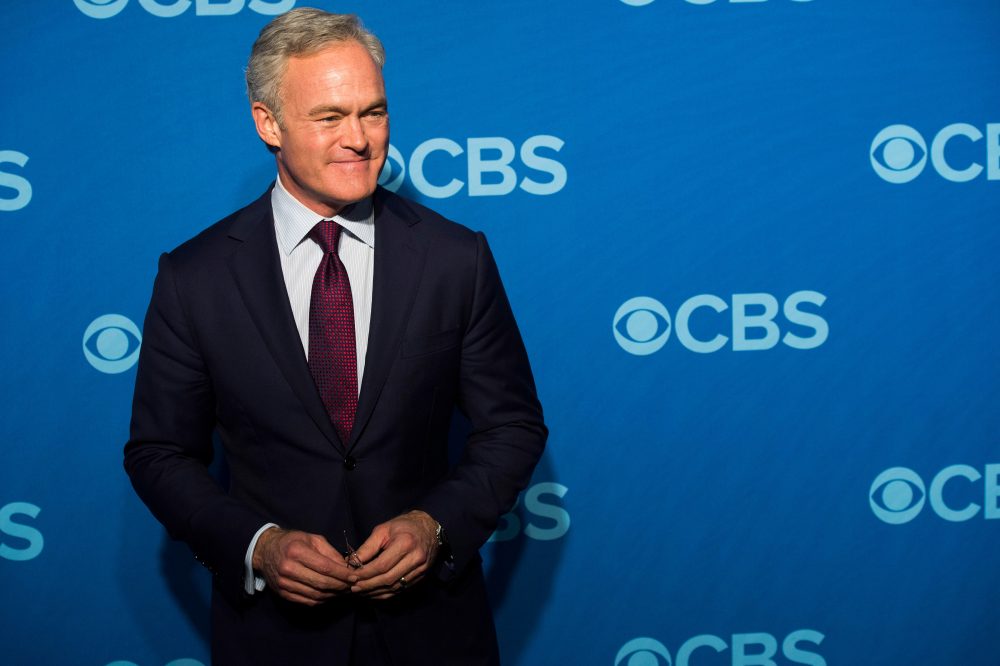

NEW YORK (AP) — Scott Pelley thought he was heading into a routine discussion when CBS News President Tom Cibrowski requested a meeting last Tuesday. The veteran ’60 Minutes’ correspondent had scheduled roughly an hour, expecting to address tensions from his heated exchange the previous day with new supervisor Nick Bilton.
Pelley was surprised to find Bari Weiss, the news division’s editor in chief, present at the meeting. His first thought was positive, he revealed to The New York Times in an extensive podcast conversation. He anticipated being able to pose questions and receive explanations about her dramatic organizational changes from the week before, which included dismissing executive producer Tanya Simon and releasing two correspondents plus other essential staff members.
What never crossed his mind was that he would be terminated after what he describes as a roughly 10-minute meeting. “I just didn’t connect the dots,” he explained.
During an emotionally charged conversation with the Times’ Lulu Garcia-Navarro that aired Sunday, Pelley, who spent 37 years with CBS, presented his perspective on the events. He became visibly emotional multiple times throughout the discussion. He characterized the entire situation as feeling “like your spouse was murdered.”
Here are key points from the interview.
THE CONTEXT: The dramatic personnel changes were announced five days prior to his dismissal, on the preceding Thursday. Weiss replaced Simon with Bilton, a former technology writer at the Times and documentary filmmaker who lacked television broadcast background. While Weiss, who had rapidly become a controversial figure in the field, was anticipated to implement changes, Pelley states that what he terms “Black Thursday” was completely unexpected.
THE STATEMENT: “No one saw the Black Thursday massacre coming. This is our entire senior staff. Tanya Simon, our boss, she’s the first woman ever to be executive producer of ’60 Minutes.’ And she concluded this season with a growth in our audience of nine percent, which is unheard-of in broadcast television.”
THE CONTEXT: The correspondent became emotional repeatedly while discussing the tight bonds among show staff members.
THE STATEMENT: “That’s a family at ’60 Minutes’. My colleagues and I have worked together 10, 20, 30 years. We travel together. We dine together. We go into literal combat together. My former boss and former producer Bill Owens saved my life in a firefight in Iraq. So, Lulu, these bonds are pretty tight, and when somebody wipes out, murders, a large number of your family members, people are hurt, and shocked, in disbelief and just desperate for some explanation. And as you and I sit here today, there still has been none.”
THE CONTEXT: Bilton had sent an introductory message to staff members. Pelley found it offensive.
THE STATEMENT: “It was so insulting … He told us that it wasn’t 1968 anymore, and he helpfully noted that gasoline doesn’t cost 32 cents anymore, and suggested that we had all been frozen in amber in 1968 when the program first went on the air, and that nothing had improved.”
THE CONTEXT: Pelley described a room filled with individuals “who have devoted their lives to ’60 Minutes’” who had received no clarification about the situation. He says they expected Weiss to provide answers. She was absent. Instead, Bilton retrieved his phone and began reading from it.
THE STATEMENT: “Nick makes his way to the front of the room and does something absolutely jaw-dropping to me. He pulls out his phone and begins reading a statement off his phone in a room full of 50 heartbroken people. The callousness, the tone-deafness of that, you could hear the groan in the room. They put out a big spread of bagels like we were all going to feel better. … I felt that somebody had to stand up, not just for the broadcast, but for the people. There are people in that room who go to war zones when they are pregnant.”
THE CONTEXT: The confrontation at the meeting is now public knowledge, with Pelley questioning Bilton’s credentials and accusing Weiss of “murdering” the program, among other remarks. Nevertheless, he didn’t believe his position was in jeopardy.
THE STATEMENT: “Oh gosh, furthest thing from my mind. …Some reporter I turned out to be. I just didn’t connect the dots. I mean, was this meeting (on Monday) contentious? Yes, but ’60 Minutes’ is known for two things: a ticking stopwatch and hard questions.”
THE CONTEXT: Regarding the story about Renee Good and Alex Pretti’s deaths during encounters with federal immigration officials in Minneapolis this year, Pelley claims he and his team independently worked to include instances of protester aggression. However, Weiss requested additional content he says he couldn’t provide. Pelley ultimately refused the modifications and the segment aired as planned.
When asked about the allegation, CBS News stated: “In an email, Bari made four points in the course of editorial back-and-forth. They had no political motivation and were proposed solely to make the piece as strong, fair, and accurate as possible. As is frequently the case in any newsroom that operates with collaboration, not everything she raised made it into the final piece.”
THE STATEMENT: “We get the piece approved by everyone. And about four hours after our deadline, Bari Weiss sends an email to my boss, Tanya Simon. Two of the things in the email include, ‘Can we make the protesters look more violent?’ Now, I’m paraphrasing. I don’t have the quote, but that’s what was communicated to me. And the other thing, Renee Good’s car. You need to describe her as driving toward the officer … This is not what you see on the video.. But that’s how that happened. There was a thumb on the scale for the president’s version of events that I felt was a level of political influence that I had never seen in 37 years at CBS News.”
THE CONTEXT: Pelley reveals he hasn’t communicated with Lesley Stahl, Jon Wertheim and Bill Whitaker, who have announced their decision to remain based on promises of editorial independence. He expresses doubt about the reliability of such guarantees. He also implies that Anderson Cooper, who cited family obligations for not renewing his contract, actually departed due to the new management.
THE STATEMENT: “I haven’t talked to them. …. we have had conversations before this about staying to maintain the principles of the broadcast. If we leave, we can’t help. There have been other times — when Anderson left, when others were fired — that we could have stormed into a meeting and quit, but those very distinguished correspondents and myself did have conversations about this and decided that we were better working on the inside, and that we could influence things for the better. And we did. And it was my intention to stay and do exactly that. … (Now) I would venture to say that trust is broken.”