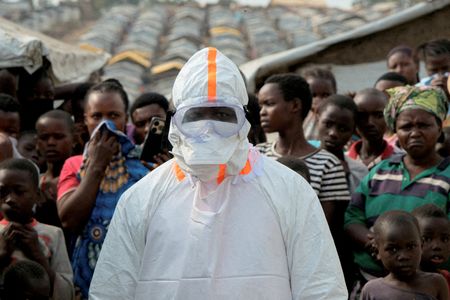

A United Nations agency is warning that the movement of Ebola victims’ remains between different parts of the Democratic Republic of Congo is putting more communities at risk of infection, particularly when families transport bodies back to home villages for burial.
The International Organization for Migration reported Friday that more than 2,000 Ebola cases and at least 700 deaths have been documented in Congo and neighboring Uganda as of July 14. Notably, roughly two-thirds of those deaths occurred outside of medical facilities.
Ebola is caused by a virus that spreads through direct contact with bodily fluids from infected people or animals. Symptoms can include high fever, vomiting, and both internal and external bleeding. The current outbreak is being driven by the Bundibugyo strain of the virus. Critically, the virus remains highly contagious even after a person has died, making how bodies are handled a key factor in controlling the spread.
Andrew Mbala of the International Organization for Migration stressed the importance of proper body management and community involvement. “If we don’t really manage the dead bodies well, if we don’t engage the community … then it means there will be more spread within the community,” he said.
IOM officials identified the movement of bodies between districts within Congo as a particularly difficult challenge to address, as grieving families often wish to bury their relatives in their ancestral communities.
Mbala noted that while no bodies have been transported across international borders, movement within the country has been widespread. “There hasn’t been any crossing of dead bodies to another country, but we have seen a lot of crossings of dead bodies within the country,” he said.
The IOM cautioned that if remains are not handled safely during transport, the virus could take hold in areas that have not yet been affected by the outbreak.