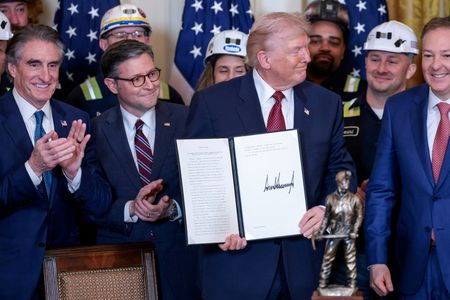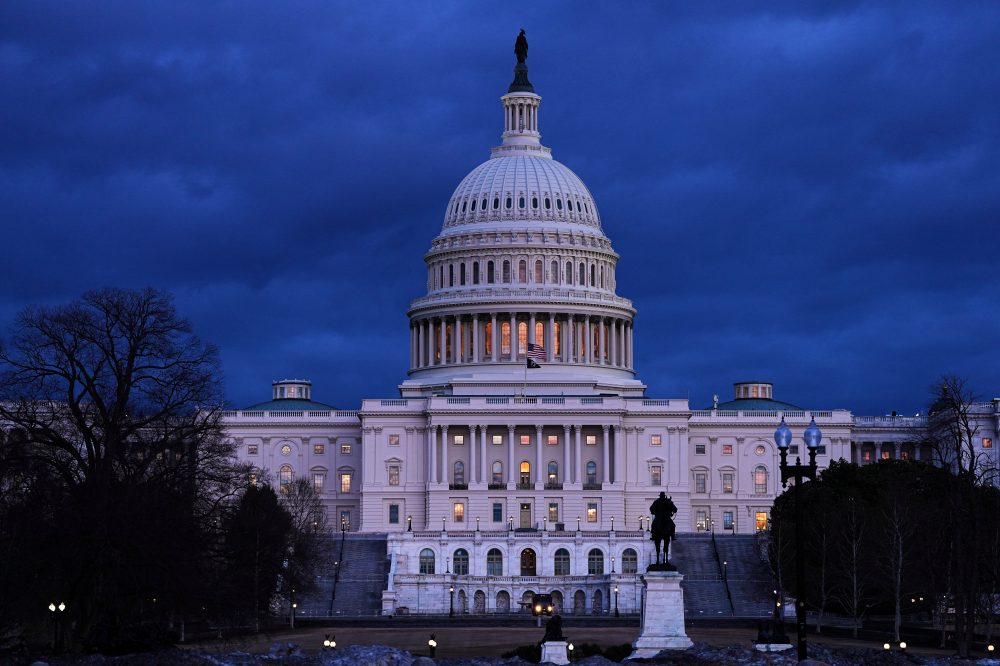

WASHINGTON — During Tuesday evening’s State of the Union address, President Donald Trump plans to highlight his administration’s immigration enforcement efforts, federal government reductions, and recent military operations in Iran and Venezuela.
The Republican president aims to persuade skeptical Americans that his administration’s policies have benefited their daily lives and strengthened the nation’s economy beyond what many citizens perceive — hoping to boost Republican candidates in November’s midterm contests.
Balancing praise for his second-term accomplishments while building support for his party in races where his name won’t appear presents challenges for any commander-in-chief. This task may prove particularly difficult for Trump, given his tendency to abandon prepared remarks and stray from carefully planned messages.
A central focus will emphasize national prosperity through increased domestic manufacturing and job creation, even as many citizens don’t experience such improvements. “It’s going to be a long speech because we have so much to talk about,” Trump stated, promising extensive economic discussion.
The commander-in-chief will likely criticize the Supreme Court’s rejection of his key tariff initiatives and discuss efforts to circumvent that ruling without relying on Congressional approval or alarming financial markets. He’s expected to call for increased defense spending and stricter voter ID laws while defending immigration enforcement that has faced criticism from both parties following fatal shootings of two American citizens.
Jeff Shesol, who wrote speeches for Democratic President Bill Clinton, noted Trump typically adopts more traditional tones during State of the Union speeches compared to his usual rhetoric — though he remains prone to frequent exaggerations.
“His job, for the sake of his party, is to show the silver lining,” Shesol explained. “But if he’s going to insist that the silver lining is gold, no one’s buying it. And it will be a very difficult position on the campaign trail for Republicans to defend.”
Michael Waldman, Clinton’s former head speechwriter, observed that second-term presidents “have a tough job because what they all want to say is, ‘Hey, look what a great job I’ve been doing — why don’t you love me?’”
Regardless of his written speech, Trump enjoys departing into personal complaints, suggesting Tuesday will likely include topics such as disputing his 2020 presidential election defeat.
His messaging inconsistency became apparent after concerns about living expenses contributed to Democratic victories nationwide last November. The administration subsequently pledged the president would tour the country weekly to demonstrate his commitment to addressing affordability concerns. Instead, Trump has focused more on criticizing Democrats and dismissing suggestions that everyday economic issues require attention.
Trump frequently claims credit for controlling inflation and maintaining economic momentum, pointing to the Dow Jones Industrial Average recently surpassing 50,000 points for the first time.
However, such market achievements feel meaningless to Americans without investment accounts. Ongoing concerns persist that tariffs have increased consumer prices, potentially damaging economic growth and employment opportunities. Economic expansion decelerated during the final quarter of last year.
Waldman, currently leading the Brennan Center for Justice, which supports democratic principles, civil rights and election fairness, said previous presidents confronted similar periods of “economic disquiet.”
This situation raised questions about “how much do you sell vs. feeling the pain of the electorate,” he explained.
Shesol observed that Trump has “always believed — going back to his real estate days — that he can sell anyone on anything.”
“He’s still doing that. But the problem is, you can’t tell somebody who has lost their job and can’t get a new one that things are going great,” Shesol said. “He can’t sell people on a reality that for them, and frankly for most Americans, does not exist.”
This disconnect poses political risks before November elections that could grant Congressional victories to Democrats, similar to 2018’s “blue wave” that significantly constrained his first-term agenda.
Multiple Congressional Democrats plan to boycott Tuesday’s address, instead participating in a demonstration called the “People’s State of the Union” at Washington’s National Mall.
Trump’s speech occurs as two American aircraft carriers have been sent to the Middle East during heightened tensions with Iran.
The president will describe how American air attacks last summer targeted Tehran’s nuclear facilities, praise the operation that removed Venezuelan President Nicolás Maduro, and highlight his administration’s role in negotiating a Gaza ceasefire between Israel and Hamas.
However, he has also damaged American military partnerships within NATO through his efforts to acquire Greenland from Denmark and his reluctance to take stronger action against Russian President Vladimir Putin regarding the Ukraine conflict.
Connecting foreign policy achievements to domestic concerns remains challenging for any president.
Jennifer Anju Grossman, who wrote speeches for Republican President George H.W. Bush and currently heads the Atlas Society promoting Ayn Rand’s philosophy, suggested Trump could demonstrate how Maduro’s socialist agenda devastated Venezuela’s economy so severely that one of the world’s most oil-rich nations couldn’t satisfy its own energy requirements.
Venezuelan oil will now contribute to reducing American gasoline costs.
Nevertheless, regarding international developments, she noted, “I think it’s going to be a bit of a challenge to make clear why this is relevant to the domestic situation.”