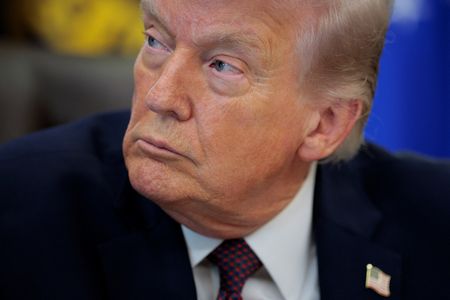

President Donald Trump issued a stark warning Wednesday, threatening to withdraw the United States from the NATO alliance after European member nations declined to deploy naval vessels to help clear the Strait of Hormuz near Iran, escalating his criticism of the military partnership.
Legal scholars remain divided on whether Trump possesses unilateral authority to exit the nearly eight-decade-old transatlantic alliance, despite his history of making significant policy decisions without legislative backing, many of which face judicial challenges.
CONSTITUTIONAL FRAMEWORK
While the Constitution grants the president authority to negotiate treaties with Senate guidance and approval from two-thirds of senators, it provides no specific guidance on withdrawing from existing treaties.
NATO TREATY PROVISIONS
The North Atlantic Treaty Organization, established in 1949 to defend against Soviet aggression and serving as the foundation of Western security since, includes European nations alongside the United States and Canada.
The treaty’s Article 13 permits any member nation to exit after providing twelve months’ written notice to the U.S. government, which then notifies other member governments of the withdrawal declaration.
No NATO member has ever terminated its membership in the alliance’s history.
CURRENT U.S. LEGISLATION
Congress enacted legislation in 2023, signed by then-President Joe Biden, that prohibits any president from ending, suspending, or withdrawing from the NATO treaty without approval from two-thirds of the Senate.
The provision was incorporated as an amendment to the 2024 National Defense Authorization Act, the comprehensive annual Pentagon policy legislation. Democratic Senator Tim Kaine of Virginia and then-Republican Senator Marco Rubio of Florida co-sponsored the amendment.
Rubio, currently serving as Trump’s Secretary of State and National Security Adviser, stated Tuesday that Washington must reassess NATO relationships following the Iran conflict that commenced February 28 with American and Israeli airstrikes.
The defense authorization amendment additionally prohibits federal funding for any NATO withdrawal efforts.
TRUMP’S POSITION
Trump has maintained years of harsh NATO criticism. During his previous presidency in 2020, the Justice Department’s Office of Legal Counsel concluded that presidents hold exclusive treaty withdrawal authority, not Congress.
A Congressional Research Service analysis from February 2026 indicated that if court challenges arise, the executive branch could reference that legal opinion to argue the defense authorization amendment violates constitutional principles.
Speaking to Reuters Wednesday, Trump confirmed he would “absolutely” consider alliance withdrawal in a national address, expressing his “disgust with NATO.”
Trump’s statements followed Defense Secretary Pete Hegseth’s refusal to reconfirm America’s commitment to NATO’s mutual defense obligations.
Policy experts suggest this commitment uncertainty, rather than legal constraints, represents the crucial factor.
“If the president and the military are not committed to NATO and European security, then I don’t think there’s much Congress can actually do to hold that back,” said Max Bergmann, a former State Department official who is now director of the Europe, Russia, and Eurasia Program at the Center for Strategic and International Studies.
POTENTIAL OUTCOMES
International law typically grants heads of state authority to withdraw from treaties when such withdrawal is permitted and proper procedures are followed.
American law remains less definitive, though presidents have exited multiple treaties without congressional consent, including Trump’s 2020 withdrawal from the 35-nation Open Skies treaty permitting unarmed surveillance flights over participating countries.
Should the matter reach federal courts, challengers would face significant obstacles, including demonstrating legal standing through personal stakes in the outcome to contest the withdrawal.
The Supreme Court’s conservative majority, which frequently supports Trump’s positions, has never ruled on the substance of a treaty withdrawal case.