
The Trump administration has declined diplomatic overtures from Middle Eastern partners seeking to broker peace talks and end the ongoing conflict with Iran that began two weeks ago following a large-scale U.S.-Israeli military operation, according to three sources with knowledge of the diplomatic efforts.
Iranian officials have similarly dismissed any possibility of a ceasefire while American and Israeli military strikes continue, two high-ranking Iranian sources revealed to Reuters. They noted that multiple nations have attempted to facilitate negotiations between the warring parties.
The unwillingness of both Washington and Tehran to engage in dialogue indicates both nations are preparing for a prolonged military confrontation, despite mounting civilian deaths and Iran’s blockade of the Strait of Hormuz causing global oil prices to spike dramatically.
Friday evening’s American military strikes against Iran’s Kharg Island, the nation’s primary oil export facility, demonstrated Trump’s commitment to continuing the military campaign. Iran’s new Supreme Leader Mojtaba Khamenei has pledged to maintain the Strait of Hormuz blockade and threatened to escalate attacks against regional nations.
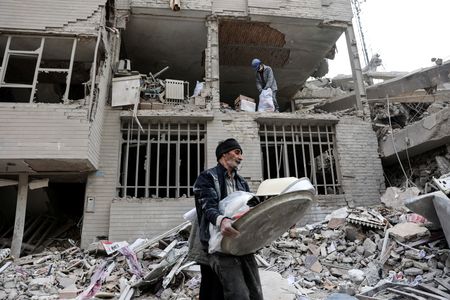
The conflict has resulted in over 2,000 deaths, primarily Iranian casualties, and has created an unprecedented disruption to global oil supplies as shipping through the Strait of Hormuz has ceased. This critical waterway normally handles one-fifth of worldwide oil transportation.
DIPLOMATIC CHANNELS REMAIN CLOSED
Oman, which previously facilitated diplomatic discussions before hostilities began, has made repeated attempts to establish communication channels, but the White House has indicated no interest, according to two sources who requested anonymity to discuss sensitive diplomatic matters.
A senior White House official verified that Trump has rejected these diplomatic initiatives and remains focused on advancing military operations to further diminish Tehran’s defense capabilities.
“He’s not interested in that right now, and we’re going to continue with the mission unabated. Maybe there’s a day, but not right now,” the official stated.
During the conflict’s initial week, Trump posted on his Truth Social platform claiming Iran’s leadership and military forces were so damaged by U.S.-Israeli attacks that they sought negotiations, but declared it was “Too Late!” His track record of unexpected foreign policy reversals makes it difficult to completely dismiss the possibility he might explore diplomatic options.
“President Trump said new potential leadership in Iran has indicated they want to talk and eventually will talk. For now, Operation Epic Fury continues unabated,” a second senior White House official commented when asked about this report.
The Iranian sources indicated Tehran has refused mediation attempts by various countries to arrange a ceasefire until the United States and Israel halt their air campaigns and satisfy Iran’s conditions, which include a permanent cessation of U.S. and Israeli attacks plus financial compensation as part of any ceasefire agreement.
Egypt, which participated in pre-war mediation efforts, has also attempted to reestablish communication channels, according to three security and diplomatic sources. While these initiatives appear unsuccessful, they have achieved some military restraint from neighboring countries targeted by Iran, one source reported.
Representatives from Egypt’s foreign ministry, Oman’s government, and Iran’s government did not respond to comment requests.
ESCALATING TENSIONS ON MULTIPLE FRONTS
The conflict’s effects on international oil markets have substantially increased costs for the United States.
Some U.S. officials and Trump advisers advocate for rapidly ending the war, cautioning that rising fuel prices could create significant political consequences for the president’s Republican Party as midterm elections approach.
Other advisers encourage Trump to continue the offensive against the Islamic Republic to eliminate its missile capabilities and block its nuclear weapons development, according to Reuters reporting.
Trump’s dismissal of diplomatic initiatives suggests the administration currently has no intentions of quickly concluding the war.
Both the United States and Iran now appear even more reluctant to negotiate than during the war’s early days, when senior U.S. officials contacted Oman about reducing tensions, multiple sources confirmed.
One source revealed that Iran’s top security official, Ali Larijani, and Foreign Minister Abbas Araghchi had attempted to utilize Oman as an intermediary for ceasefire negotiations that would have included U.S. Vice President JD Vance.
However, those discussions never occurred.
Instead, Iran’s stance has become more rigid, a third senior Iranian source indicated.
“Whatever was communicated previously through the diplomatic channels is irrelevant now,” the source explained.
“The Guards strongly believe that if they lose control over the Strait of Hormuz, Iran will lose the war,” the source continued, referencing the Islamic Revolutionary Guard Corps, an elite paramilitary organization that controls significant portions of the economy.
“Therefore, the Guards will not accept any ceasefire, ceasefire talks, or diplomatic efforts, and Iran’s political leaders will not engage in such talks despite attempts by several countries.”