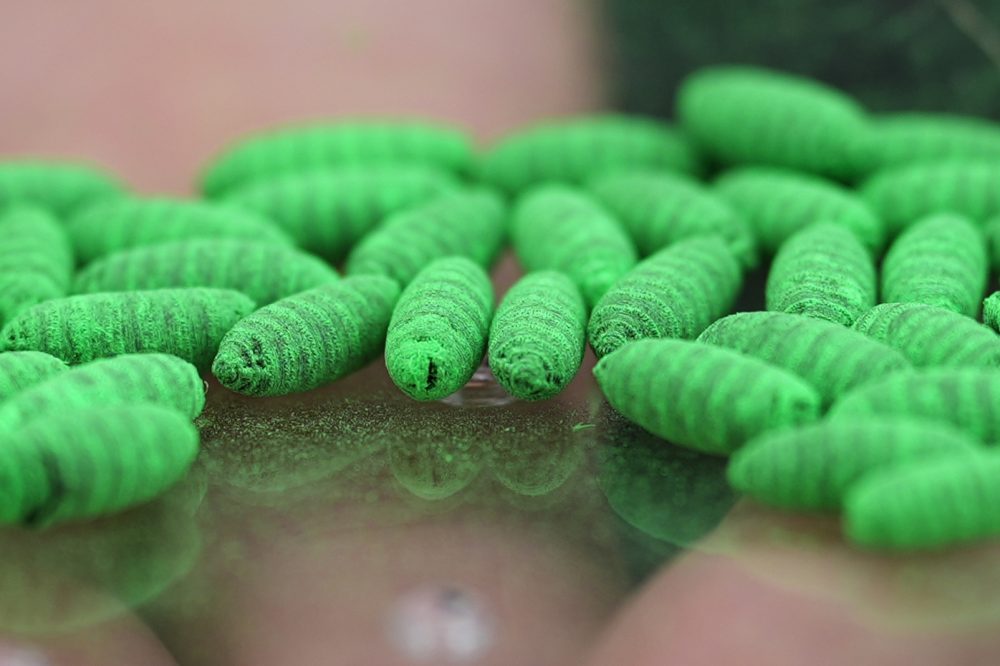

Agriculture Secretary Brooke Rollins observed the release of sterile flies designed to combat the New World screwworm during a Thursday visit to a Texas ranch where one of the initial cases was discovered. This parasite poses a serious threat to America’s cattle industry.
During her visit, she reiterated her claim that the previous administration under former President Joe Biden bears responsibility for the parasite’s reappearance in the United States after being eliminated six decades ago. Democratic officials counter that budget reductions to the agriculture department during President Donald Trump’s tenure are the real culprit.
According to Rollins, screwworms are developing into a billion-dollar global crisis, though containment remains possible if ranchers stay alert, monitor their livestock and wildlife, and address infestations promptly. She indicated the calf where screwworms were discovered six days prior in its umbilical cord wound area.
“He couldn’t be happier. He’s bouncing around the pasture,” Rollins said.
These parasitic flies deposit eggs in open wounds of warm-blooded creatures and consume living tissue instead of dead matter. Researchers indicate that releasing sterile flies to breed with females represents the most successful population control method, a tactic proven effective for decades. Rising global temperatures are complicating containment efforts by expanding suitable habitats for screwworms, which flourish in hot, humid conditions.
The U.S. Department of Agriculture is organizing a comprehensive campaign against the screwworm, which had been restricted to Panama’s narrow isthmus for decades.
Regardless of the underlying cause, pushing screwworms southward and preventing their return will require significant funding. The USDA projects spending more than $1 billion on protecting cattle herds and other livestock.
Approximately $750 million will fund construction and operation of a facility capable of producing up to 300 million sterile flies weekly. This established technique works because female screwworms mate only once, so pairing with a sterile male results in non-viable eggs and declining populations.
The objective is safeguarding the U.S. cattle industry. Specialists believe the parasite shouldn’t immediately drive up already near-record beef prices provided it doesn’t escalate into a widespread outbreak killing large numbers of cattle. Screwworms don’t compromise food safety.
The parasite has already disrupted Mexico’s beef industry. The U.S. shut down southern ports to Mexican livestock last summer.
Mexico has recorded over 28,000 screwworm cases since the flies returned two years ago, primarily concentrated in southern states. The Mexican government halted importation of nearly all live animals from the U.S. after screwworms were found here.
The U.S. had remained virtually screwworm-free for 60 years, with researchers across North and Central America eventually confining it to Panama’s containment zone. However, in 2023, the flies reemerged and started migrating northward.
Specialists say screwworms will persist at least through this summer. Seven cases have been identified in Texas and New Mexico. A 12-mile quarantine zone is established around each confirmed case location.
While working toward solutions, researchers remain uncertain about what caused screwworms to leave their confined Panama region.
“I don’t have the answer to that one, and I don’t know if anyone does. It doesn’t help us to speculate,” said Jonathan Cammack, a professor of livestock entomology and parasitology at Oklahoma State University.
The priority now involves expanding the sterile fly program and securing international cooperation to push the pests back to Panama, he explained.
Climate change is also contributing to screwworm expansion, said Lee Haines, an associate research professor of biological sciences at the University of Notre Dame.
“The fly is a creature of warmth as its entire life cycle, from egg to adult, can complete in as little as three weeks under tropical conditions,” Haines said.
Even Canada has temporarily halted livestock imports of cattle, horses and other animals from Texas. The parasites favor humid regions with temperatures of at least 77 F (25 C), and such conditions are becoming more common further north.
While Rollins rapidly implements a billion-dollar screwworm response, she has also criticized the Biden administration, pointing out it held office as the parasite resumed its northward movement.
She attributed the flies’ presence to animals accompanying or following immigrants traveling north, as well as transportation with cattle and other livestock sold by Mexican cartels outside official markets.
“Tens of millions of people moving north to America, bringing their livestock with them, the Mexican cartels with the illicit cattle traffic, we knew it was coming,” Rollins told the U.S. Senate Agriculture Committee on Wednesday.
Nearly a dozen Democratic U.S. senators sent a letter to Rollins this week questioning whether job losses at the USDA have hurt food inspections and livestock safety programs.
Nearly 20% of the counties in the U.S. that started 2025 with at least one employee from the federal Animal Plant and Health Inspection Service ended the year with none, the letter said.
Rollins said she has moved over 100 USDA employees into the screwworm response. She said it has been one of her top priorities since Trump picked her to lead the USDA.
But Democratic U.S. Rep. Ted Lieu of California said blaming Biden is shortsighted and again shows the Trump administration creates problems through reckless spending cuts.
“The life cycle of a screwworm is about 14 to 54 days, depending on temperature and humidity. The Trump administration has been in office for over 500 days,” Lieu said earlier this week. “This is on the Trump administration. They need to own up to it, and they need to apologize.”