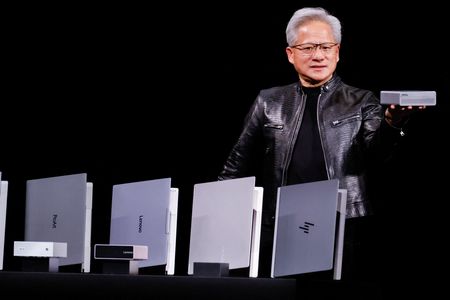

Nvidia has placed artificial intelligence-powered computers in the spotlight following CEO Jensen Huang’s introduction of a new processor designed to integrate AI capabilities straight into personal computers and laptops, even as the market shows varying levels of interest in these devices.
While HP reported last week that computers optimized for artificial intelligence helped boost its quarterly earnings, Dell stated in January that the AI surge hadn’t created the level of consumer interest the company had expected.
Here’s what you need to know about AI-enabled computers:
UNDERSTANDING AI-POWERED COMPUTERS
According to manufacturers, these AI-enhanced machines can analyze information faster than conventional computers and manage larger amounts of artificial intelligence operations directly within the device itself, including running chatbot programs.
These systems don’t need to depend on remote cloud servers that currently power most AI programs like OpenAI’s ChatGPT and Anthropic’s Claude. Some versions can even support the training of AI models locally on the machine — a resource-heavy process usually performed on specialized servers.
The emergence of AI agents, which are programs capable of completing computer tasks independently with little human oversight, is also bringing renewed focus to AI-powered personal computers.
Nvidia’s RTX Spark, revealed before the Computex technology conference in Taiwan, represents what the company described as a partnership with Microsoft to “reinvent the PC” for the artificial intelligence age. This new processor was created working alongside MediaTek to operate agents directly on the device instead of depending on cloud-based computing.
Computer manufacturers hope these advanced AI capabilities will attract customers as more consumers rely on generative artificial intelligence for tasks ranging from composing emails to organizing travel plans.
HP announced in late May that AI computers represented 44% of its PC sales in the second quarter, an increase from over 35% in the prior quarter, helping the company exceed revenue and profit projections.
Nevertheless, widespread adoption of AI computers might face obstacles due to memory chip shortages and increasing costs.
Research company IDC anticipates that worldwide PC sales will drop in 2026 because of memory shortages, rising component costs and supply limitations, despite higher average prices boosting overall market value.
TECHNOLOGY BEHIND AI COMPUTERS
AI-powered computers feature specialized chips known as neural processing units that manage most of the artificial intelligence work performed on the device.
These NPUs collaborate with standard processing units and graphics chips to handle complicated operations, provide faster processing capabilities and run programs such as AI assistants.
CURRENT AI COMPUTER OPTIONS
Nvidia announced that RTX Spark laptops and small desktop computers are anticipated this fall from ASUS, Dell, HP, Lenovo, Microsoft and MSI, with Acer and Gigabyte planning to release models later.
Many of these manufacturers, together with Microsoft and Qualcomm, currently sell Copilot+ PCs, which need processors specifically built to handle AI operations on the device.
POTENTIAL ISSUES
When Microsoft announced its “recall” function in 2024, it sparked privacy worries. This feature would monitor every activity on the laptop from voice conversations to internet browsing, creating a comprehensive record saved on the device. Users could then search this database and review previous activities.
After facing significant criticism regarding privacy and security issues, Microsoft postponed the feature’s launch and made it available through a testing mode for select users after implementing additional security measures. This optional function is included in the latest Copilot+ PCs.
However, some technology specialists argue that handling more AI-related operations directly on the device provides better privacy protection by removing the requirement to use personal information for training large AI systems.