
Taiwan’s defense chief dismissed concerns Monday about Beijing’s latest economic penalties targeting European defense contractors, stating the sanctions won’t interfere with the island’s weapons acquisition efforts.
On Friday, China’s Commerce Ministry prohibited exports of dual-use materials to seven European firms that have sold military equipment to Taiwan, adding these companies to Beijing’s export restriction registry. This represents an uncommon instance of China imposing Taiwan-related penalties specifically on European businesses.
The self-governing island, which Beijing claims as part of its territory, primarily obtains its military hardware from the United States. European nations have avoided selling major defense systems like combat aircraft to Taiwan for approximately thirty years, concerned about provoking Beijing’s anger.
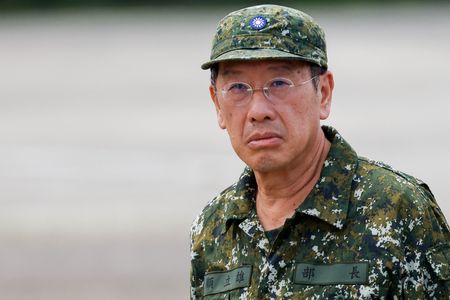
During parliamentary questioning, Taiwan Defense Minister Wellington Koo noted that China has implemented similar measures previously.
“However, I think such an action, as I understand it, does not affect our ability to continue sourcing goods through relevant diversified channels,” he stated, declining to provide additional details.
Although numerous nations, particularly in Europe, remain cautious about defense partnerships with Taiwan due to potential Chinese retaliation, Taipei has gained increased support from certain Central and Eastern European regions, especially following Russia’s 2022 invasion of Ukraine.
Czech companies comprise four of the seven businesses included on China’s new sanctions roster.
Beijing has consistently imposed penalties on prominent American defense contractors for Taiwan weapons sales, most recently in December after the U.S. announced an $11 billion arms package for the island.
Regarding potential Japanese weapons purchases after Tokyo recently eliminated restrictions on international arms exports, Koo explained that weapon recipients must be nations with signed defense equipment and technology transfer agreements with Japan, which Taiwan lacks.
When questioned about future possibilities, Koo replied: “In the future, no possibility can be ruled out. I think I can only say that at present, no transfer agreement exists.”
While nations like the Philippines praised Japan’s policy change, China expressed significant concerns.
Japanese-Chinese relations have deteriorated since Japanese Prime Minister Sanae Takaichi stated in November that a Chinese assault on Taiwan threatening Japan’s security could prompt military action.