
Syrian authorities announced Thursday that they have taken several suspects into custody in connection with a series of recent explosions in Damascus, including bombings that occurred during French President Emmanuel Macron’s visit to the country earlier this week.
According to a statement from Syria’s Interior Ministry, security forces conducted raids in and around the Syrian capital and “succeeded in dismantling the entire cell responsible” for the attacks. Officials did not release any information about who the suspects are or what group they may be affiliated with.
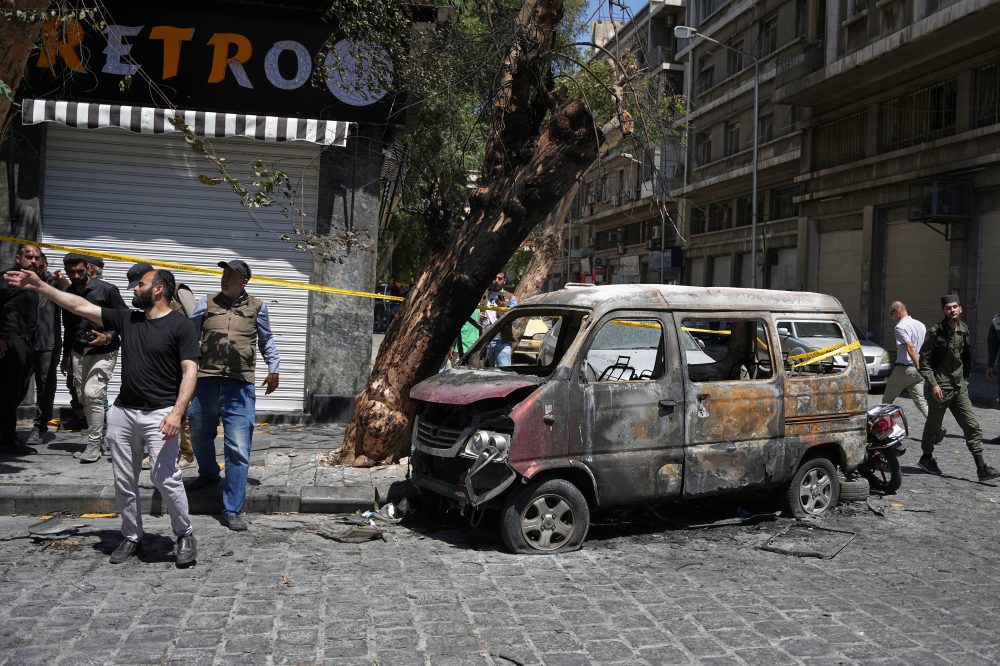
On Tuesday, explosive devices were placed inside a garbage bin and a parked vehicle while Macron was making a historic visit to Syria — a nation still working to recover from years of civil war. Macron was inside the presidential palace when the blasts went off. He was unharmed and proceeded with his scheduled meeting with Syrian President Ahmad al-Sharaa.
Syria’s Ministry of Health confirmed that the explosions resulted in one death and 36 injuries in the final casualty count.
Prior to those bombings, an explosive device went off last week at a cafe located near Damascus’s main judicial complex, leaving at least 10 people dead and more than 20 wounded.
No group has come forward to claim responsibility for either attack.
The bombings represent a significant challenge to al-Sharaa, who has been working to consolidate control over Syria. He has reached out to minority groups who are skeptical of his government’s Islamist-led leadership and has sought backing from Western governments wary of his past role heading Hayat Tahrir al-Sham, a group formerly tied to al-Qaida.
Al-Sharaa’s government has pledged political and economic reforms following decades of authoritarian rule under the Assad family. That era came to an end when former President Bashar Assad was removed from power during an insurgent offensive in December 2024, led by al-Sharaa.
Syria’s nearly 14-year civil war claimed close to half a million lives and forced millions of people from their homes, leaving widespread destruction and crumbling infrastructure. While other nations and businesses have pledged major investments, the country still requires hundreds of billions of dollars to rebuild and lift its population out of poverty.