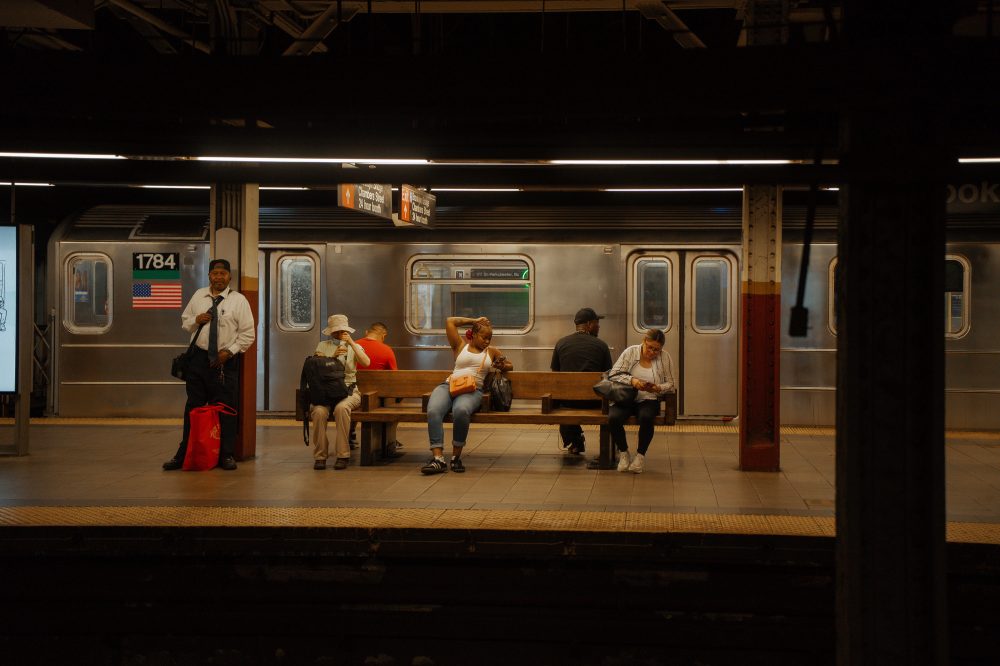

Subway passengers who vent their frustrations about sweltering underground conditions on social media platforms have scientific backing for their grievances, according to new research published Tuesday.
A Northwestern University study examining more than 85,000 social media posts and Google Maps reviews from 2008 to 2024 reveals a direct correlation between rising surface temperatures and increased complaints about underground heat in New York, Boston, and London transit systems. The findings appeared in the journal Nature Cities.
Researchers scoured posts on platform X and review sites, searching for temperature-related keywords like “hot” and “warm” while excluding unrelated terms such as “hot dog.” They focused on these three metropolitan areas because they operate some of the world’s most established and heavily trafficked subway networks.
The data showed striking patterns: when outdoor temperatures increased by just 1 degree Fahrenheit, heat-related complaints jumped 10% in Boston, 12% in New York, and 27% in London. This correlation becomes more concerning when considering that Earth’s average temperature has risen 1 degree Fahrenheit between 2008 and 2024, according to the National Oceanic and Atmospheric Administration.
“Interestingly, over the weekend, people complained less,” noted Giorgia Chinazzo, assistant professor in Northwestern’s Department of Civil and Environmental Engineering, who co-authored the study with associate professor Alessandro Rotta Loria. Chinazzo suggested that weekend clothing choices might contribute to this difference compared to workday attire.
The research team examined posts across different seasons, times of day, and days of the week to identify these patterns.
Flavio Lehner, an assistant professor of Earth and atmospheric sciences at Cornell University who wasn’t part of the research team, explained that the study “follows the template of previous studies that link environmental conditions to human behavior using social media data.” Lehner has conducted similar research on how warmer conditions trigger stronger online responses.
However, Lehner pointed out research limitations, including the focus on only three transit systems and challenges in controlling for other factors that might influence social media activity.
Kris Ebi, a University of Washington professor specializing in public health and climate who also wasn’t involved in the study, believes the actual effects of subway heat exceed what researchers documented because vulnerable populations have limited social media representation.
Ebi emphasized that the study’s scope “provides compelling evidence that cities should be planning for measures to keep people safe during hot weather.”
This type of research could influence how transit authorities and policymakers address extreme heat conditions in the future.
“We’re all experiencing rising temperatures. So those above will be reflected underground, and this will be reflected in people complaining more and more,” Chinazzo explained. “Mitigation and adaptation strategies are things that will be much more implemented in the future.”
Potential solutions could include installing ventilation systems, operating cooling systems during peak heat hours, or providing water stations at strategic times.
“We need new technologies and tools, new methodologies that people can use to face these changes in temperatures that everyone is aware of and experiencing nowadays,” she concluded. “And it will be worse in the future.”