
TSAKANE, South Africa — At 84 years old, Gladys Khoza had been unable to clearly see the faces of her loved ones due to severe vision issues.
That changed when Khoza became one of 133 patients who received their sight back through an intensive series of free cataract operations performed by volunteer doctors at two South African medical facilities during two recent weekends.
“Wow!” Khoza exclaimed with joy as medical staff removed her post-surgery bandage the following day, revealing a world she could see clearly once again.
When the nurse inquired, “Can you see me?” Khoza responded with a wide smile, “Very well.”
Within South Africa’s government healthcare system, patients often endure years-long delays for these routine 15-20-minute procedures. Medical officials noted that some participants selected from hospital waiting lists had been seeking treatment since 2019.
The clouding of the eye’s natural lens, known as cataracts, represents a widespread condition typically linked to aging and stands as the primary cause of preventable blindness worldwide. The surgical solution involves implanting an artificial replacement lens.
For Khoza, who described complete vision loss in one eye from cataracts and ongoing problems with the other, this straightforward procedure represents a dramatic improvement in daily living.
“I just wanted to be able to see,” she explained. Following almost twelve months of waiting, her cherished activities — observing family members, studying her Bible, and enjoying nighttime television dramas — have returned to her life.
Dr. Tebogo Fakude, among the volunteer surgeons who donated their time at two regional medical centers near Johannesburg, shared that his own mother experienced blindness, making vision restoration “beautiful.”
“It’s beautiful because it alleviates depression,” Fakude explained, noting that patients also experience relief from feeling like a burden to others.
According to World Health Organization data, more than 2 billion individuals worldwide experience vision difficulties. For half of these cases, the conditions could have been avoided or patients remain waiting for medical intervention.
Approximately 100 million people globally suffer from cataracts, with half still requiring surgical access, WHO reports indicate. Throughout Africa, this percentage increases to 75% of affected individuals lacking surgical treatment, based on research published in March by the Lancet medical publication.
Surgical delays pose a major challenge in South Africa, where public hospitals provide care for more than three-quarters of the nation’s 62 million residents. Resource constraints force medical facilities to prioritize emergency cases and critical operations over elective procedures.
The Health Department’s surgical marathon initiative launched on Mandela Day in 2023 to honor the legacy of Nelson Mandela, the nation’s first Black leader. The program has evolved into a collaborative effort between public and private sectors, occurring multiple times annually to expand healthcare access.
Ministry officials have committed to utilizing these surgical marathons to eliminate treatment backlogs. Previous events have focused on prostate conditions, cleft palate repairs, and gastrointestinal problems.
Cataract treatment became the most recent priority. Fakude reported that approximately 300,000 new diagnoses occur annually throughout South Africa.
Healthcare organizations report that South Africa faces a backlog exceeding 240,000 individuals awaiting cataract procedures. In Gauteng province, the country’s most densely populated region where this surgery marathon occurred, over 35,000 residents suffer from cataract-induced blindness.
The World Health Organization describes cataract surgery as “one of the most cost-effective medical procedures” and a significant method for restoring personal independence, dignity, and life opportunities.
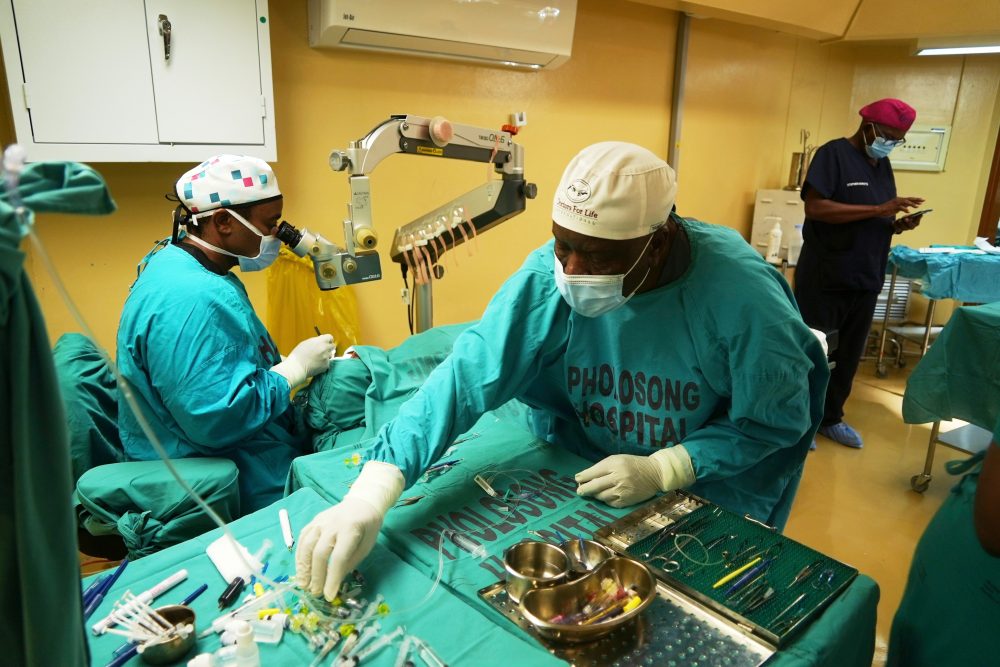
Throughout the three-day surgical marathon at Pholosong Regional Hospital, medical teams brought new patients into the operating room approximately every half hour. Calming gospel music played through speakers to maintain surgeon morale.
Using microscopic equipment, the eye specialists created small incisions for each operation, extracted the clouded lens, and installed an artificial replacement. At certain points, two surgeons operated simultaneously on different patients to accelerate progress. They successfully completed 60 procedures during the marathon’s final weekend.
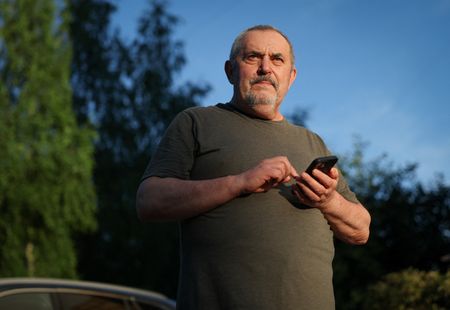
Molefe Mokoena, age 72, expressed anticipation about regaining his self-sufficiency after living with cataracts for four years.
“I want to see my great-grandchildren,” he stated. “I want to drive my car, and I’m happy about this.”