
UMM AL-KHAIR, West Bank (AP) — While the FIFA World Cup commences on June 11, featuring Arab nations including Egypt, Iraq, Jordan, Qatar and Saudi Arabia, football serves as both a beloved pastime and ongoing challenge for Palestinians living in the Israeli-occupied West Bank.
Though the Palestinian national squad narrowly missed securing a spot in the 48-team competition, World Cup matches will draw significant viewership throughout the West Bank, where the sport provides young Palestinians with relief from everyday hardships and surrounding circumstances.
Within the Bedouin community of Umm al-Khair, located in the Masafer Yatta area south of Hebron, youngsters play football on a compact field surrounded by barbed wire installed by Israeli settlers from the adjacent Carmel settlement. During one recent match, a ball kicked toward the net flew past the barrier as young settlers walked nearby. The settlers confiscated the ball, forcing the game to end.
Local residents report these situations happen frequently. The village has lost numerous soccer balls over time. Efforts to recover them may lead to conflicts with settlers and sometimes Israeli soldiers.
Moving northward to Nablus, youth from a regional soccer program practice on a municipal stadium field that has deteriorated over time. Nearby, Palestinians from Gaza who previously held work permits for Israel observe the training while hanging laundry. These individuals have remained stuck in the West Bank since fighting began in October 2023, with many establishing temporary living quarters in the stadium’s changing rooms, according to the facility’s manager, as they worry about potential forced return to Gaza.
The Palestinian Football Federation suspended league competitions during the conflict, pointing to the unstable security conditions across the West Bank, where Israeli military forces regularly perform detention operations and have established numerous roadblocks. Previously bustling soccer venues now sit mostly vacant, with some showing signs of neglect.
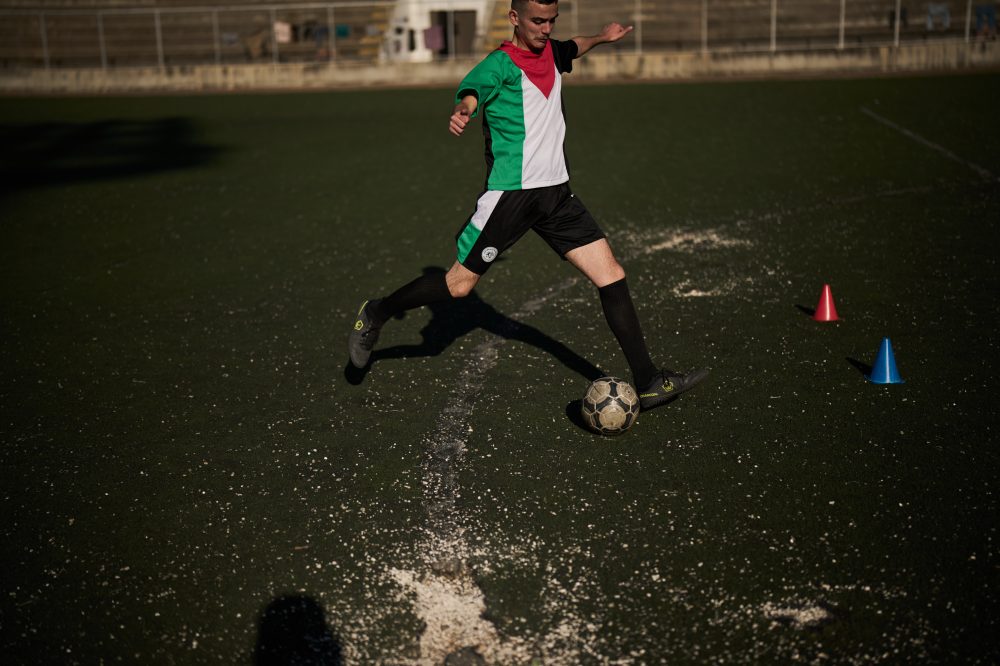
At Faisal Al-Husseini International Stadium in Al-Ram, which serves as the Palestinian national team’s home venue, recreational players meet for practice sessions. In Tulkarem, young athletes, some dressed in national team uniforms, participate in similar activities. FIFA provided some financial support to the Palestinian Football Association, though relocated the national team’s “home” games to different countries, including Jordan, Qatar and Malaysia, citing safety considerations.
With regular league competition suspended, practice sessions have emerged as among the limited remaining opportunities for physical activity, community connection and maintaining routine.
While global focus shifts to soccer’s premier competition, the sport continues delivering instances of togetherness, determination and optimism for Palestinians throughout the West Bank.