
LONDON (AP) — A Ford Mustang Mach-E navigates through London’s heavy traffic, utilizing artificial intelligence to dodge pedestrians and bicyclists while maneuvering around construction zones on its way to its final stop.
This driverless car from British company Wayve Technologies is conducting trial runs before the United Kingdom launches its robotaxi testing program this spring. Major tech firms including America’s Waymo and China’s Baidu are also preparing to participate in these pilot tests, positioning London as the newest battleground in the worldwide competition for autonomous taxi services.
Although self-driving cabs aren’t a novel concept, London’s historic street patterns and crowded urban environment may present unique obstacles for this technology.
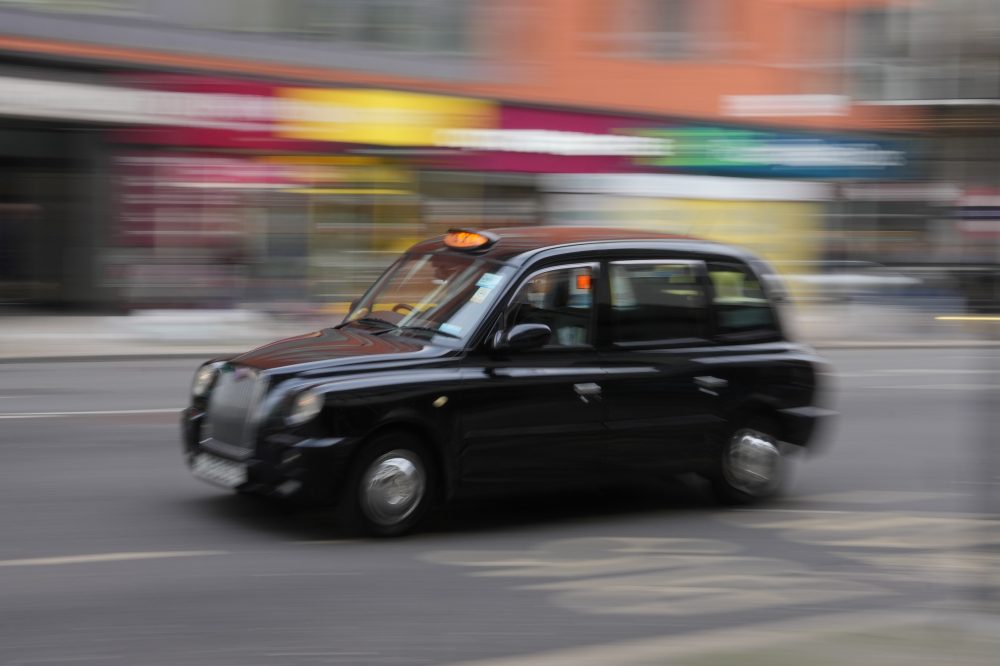
London’s iconic black taxi drivers are also expressing doubt about the new technology. These drivers must complete an intensive training program called “The Knowledge,” requiring them to memorize countless routes over several years. They have historically resisted technological changes that threaten their livelihood, including staging protests when Uber entered the market.
Steven McNamara, general secretary of the Licensed Taxi Drivers’ Association representing black cab operators, described autonomous taxis as “a solution looking for a problem.”
McNamara questions whether robotaxis could offer any benefits on London’s street system, which resembles a complex maze dating to Roman era construction — a stark contrast to the organized grid systems found in American cities like San Francisco and Phoenix where Waymo currently functions.
London has earned a reputation as one of the planet’s most traffic-congested metropolitan areas, with roadways already packed with various transportation methods including personal vehicles, public buses, motorcycles, bicycles and electric rental bikes.
McNamara and numerous others have pointed out that autonomous vehicles must contend with an additional obstacle from people crossing streets. Unlike the United States and many other nations where jaywalking is prohibited, Britain doesn’t consider it a legal violation.
“It’s virtually impossible to drive anywhere (in London) without somebody walking in front of you,” McNamara said. Given London’s population of nearly 10 million residents, he questioned “how these cars are going to deal with those volumes of people?”
Companies developing robotaxis maintain there’s space for this emerging technology.
“I think Londoners are going to love autonomous driving. It’s going to be another choice alongside the Tube, cycling, walking,” said Wayve CEO Alex Kendall during a recent interview at the company’s facility.
Wayve has partnered with Uber for these taxi experiments, which represent Britain’s effort to establish nationwide rules for autonomous vehicles. The country aims to establish itself as a global leader in this technology sector.
Chinese technology corporation Baidu is also collaborating with Uber, along with competing ride-sharing service Lyft, to operate its Apollo Go self-driving vehicle program in London’s pilot project.
Waymo, a subsidiary of Google’s parent company Alphabet, will also participate and intends to begin London passenger operations by the third quarter of 2026, according to company representatives who spoke with reporters last month.
Waymo executives attempted to address worries that the company might immediately overwhelm London streets with robotaxis, pointing out that it has operated 1,000 total vehicles in San Francisco since beginning full operations in 2024.
“We’re not here to replace anyone,” Waymo spokesman Ethan Teicher said. “We’re here to add another option for people who will choose to take black cabs or other modes of transportation when it suits them and choose to take Waymo, when it makes sense.”
Waymo’s autonomous Jaguar I-Pace vehicles have been observed conducting test drives throughout London. Wayve’s Ford Mustang Mach-E cars have also been performing road evaluations with human backup operators seated behind the steering wheel, prepared to take control if necessary.
During a recent demonstration ride for The Associated Press, Wayve’s Ford automatically navigated through a three-mile (five kilometer) circuit in North London without encountering any difficulties.
Traveling along a straight and clear section of roadway, the vehicle maintained a consistent speed of 19 miles (30 kilometers) per hour, slightly below the posted limit.
When a traffic signal changed as the car approached, it was forced to brake sharply and mildly jostled passengers forward — the only instance when the ride wasn’t completely smooth.
Kendall explained that Wayve employs a different strategy compared to conventional self-driving technology. It doesn’t depend on “high definition” mapping systems and “hand-coded” safety protocols created by programmers who try to anticipate every possible situation.
Rather, it utilizes artificial intelligence trained on millions of hours of information collected by its vehicles to learn and comprehend how the world functions.
“This is the key thing for self-driving, because every time you drive on the road, you’re going to experience something different,” Kendall said. “You can’t rely on a self-driving car being told how to behave in every scenario it encounters.”
Kendall stated that Wayve positions itself as a technology provider offering hardware and software that can be integrated into any vehicle to make it autonomous. The company reached an agreement with Nissan in December to manufacture self-driving cars that will be available for purchase in Japan and North America by 2027.
Kendall declined to share additional specific information about the robotaxi service it will run in partnership with Uber, including pricing details.
Waymo, which operates its own ride-hailing application, will offer “competitive” rates and fares aligned with market standards, officials stated last month, while noting that it can often “demand more premium pricing.”
Industry analysts believe there’s a place for robotaxis in Britain, though it may be specialized.
They’re best positioned to address gaps in Britain’s public transportation system, such as serving rural communities that have lost bus connections to larger towns and cities due to budget reductions, according to Kevin Vincent, director of the Centre for Connected and Autonomous Automotive Research at Coventry University.
Demand will continue for human drivers, particularly from visitors and tourists, he noted.
Finding a “cab driver who knows the area, you can ask him questions. You feel confident and comfortable you’re going where you need to go,” represents a service that won’t be easily replaced in the near future, Vincent said.
Autonomous taxis cannot duplicate the personal connection, according to Frank O’Beirne, who has operated black cabs for 14 years.
For instance, one of his recent passengers was a pair of visually impaired individuals traveling to popular Leicester Square. He ended up parking at a taxi stand and escorting them across the street to their destination, a Chinese restaurant located in a casino’s basement.
“They would never have found that, ever, (on their own),” said O’Beirne. “There’s nothing like us. I can’t see the space where autonomous taxis can operate, really.”